The Battle For UKIP’s Soul, Part 2

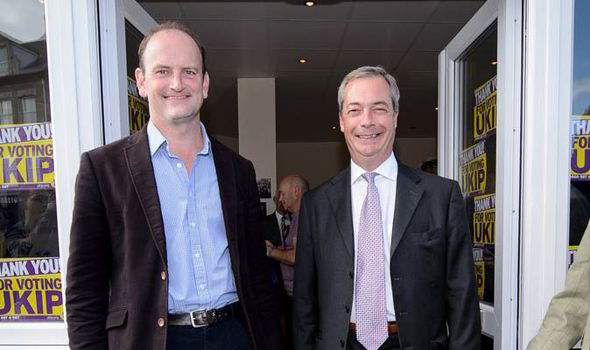
Douglas Carswell - Nigel Farage - Battle for UKIP's Soul


Only a few short years ago, this blog would never have imagined uttering the shocking words “I agree with Nigel Farage”. But in the ongoing internal warfare within UKIP, Farage’s latest intervention is a welcome one.

Yesterday, this blog wrote about the coming battle for UKIP’s soul, as evidenced by a growing movement within the party urging them to move to the political centre, a potentially fatal error of judgement.

This misguided movement should be distinguished from other calls to change the tenor and tone of the party’s messaging – this blog fully supports a calmer, more reasoning style of political engagement by eurosceptics and advocates for individual liberty, but not at the expense of jettisoning core commitments to smaller government and increased personal freedom.

And on this front, Nigel Farage’s latest statement gives some encouragement. From the Telegraph:

Nigel Farage has refused calls to move to the centre ground as tensions with his deputy and only MP grow ahead of meeting with MEPs this week.

The Ukip leader said he would continue to speak out on controversial topics like immigration, despite pressure from his deputy chairman Suzanne Evans and Douglas Carswell.

In television interviews on Sunday, Miss Evans had said that Ukip “needs to go” more into the centre ground, while Mr Carswell said Mr Farage had to moderate his “tone”.

But a defiant Mr Farage told The Daily Telegraph: “I will continue to lead Ukip as I have, broadening policies.

“They don’t want the party to attract opprobrium but if you take on the political class on tough issues you attract opprobrium.

Quite right too. The constant scorn and attacks, just for holding political opinions that would be considered perfectly common sense and mainstream in other countries such as the United States, can become wearing after a time. And as the ad hominem attacks increase the temptation to moderate the message can be very strong indeed. But it must be avoided – for now is the time for eurosceptics and believers in smaller government to stay the course, not dilute their message.

None of this is to argue that UKIP should not tone down the anti-immigration rhetoric or stop courting controversy where it can be avoided. For instance: though the impact of EU migration on the unskilled British workforce is undeniable, there is probably no further mileage to be gained from pointing this out. And though it may be quite right to insist that the National Health Service should cater for British citizens and taxpayers first and foremost, using the example of foreign HIV sufferers was always going to attract the ire of Britain’s virtue signallers and professional outrage-mongers.

So by all means, UKIP should stop doing the things which unnecessarily drive up the party’s negative ratings, and even prepare to take a back seat in the coming Brexit campaign if this will give the broader eurosceptic movement the greatest chance of success. But  it would be unpardonable to change the manifesto commitments to national defence, refocusing international aid, simpler and flatter taxes, welfare reform and smaller government just because they do not fit with a “centrist” political strategy.

Nigel Farage was quite right when he said that opposing the bland British political consensus will attract opprobrium – you know you’re really closing in on the target once you start taking heavy enemy fire. Perhaps UKIP’s leader has started following this blog, which said precisely the same thing (in almost the same words) only yesterday:

Suzanne Evans apparently now believes that UKIP and conservatives in general are to blame for the often hysterical response of many people to right-wing ideas, and that they need to change their “brand” so that people want to “sing and dance” about their beliefs rather than remaining shy Tories or shy Ukippers. But this misses the point. To avoid public opprobrium would be to adopt the same tired, worn-out centrist policies which have led the establishment parties to such unpopularity and irrelevance.

UKIP received just under thirteen per cent of the national vote in the general election because that is currently more or less the ceiling of support for eurosceptic, quasi-libertarian thinking in Britain. But the correct response to this fact is not for UKIP to change the policies to encompass a larger number of potential voters. The correct response is to engage in debate and win over more people to the pro-sovereignty, pro-personal freedom worldview – raising the ceiling rather than lowering the ambition.

UKIP’s future currently stands on a knife-edge, both in terms of ideological direction and the party’s continued political viability – though the two are inextricably linked. On the one hand, there is the impulse to welcome the new ranks of ex-Labour supporters by adopting a more left-wing, big government approach, but on the other is the fact that any move to the centre or embracing of the stale post-war consensus is likely to result in UKIP ultimately becoming seen as just “more of the same”.

The short term political benefit of reducing negative headlines and winning over fickle left-wing voters without doing the hard work of really changing hearts and minds in favour of an anti-big government, pro-freedom agenda is just that: a short term solution. It may temporarily increase support and polling numbers, but only at the expense of shredding UKIP’s hard-won claim to represent a genuinely different political choice.

Britain has more than enough parties eager to bang on about “our NHS”, mindlessly defend the public sector and blindly support the EU, all as part of their grubby quest for centrist support. We do not need another such party.

And UKIP must follow Nigel Farage’s lead and resolutely refuse to become just another party of centrist compromise and disappointment.

The Battle For UKIP’s Soul

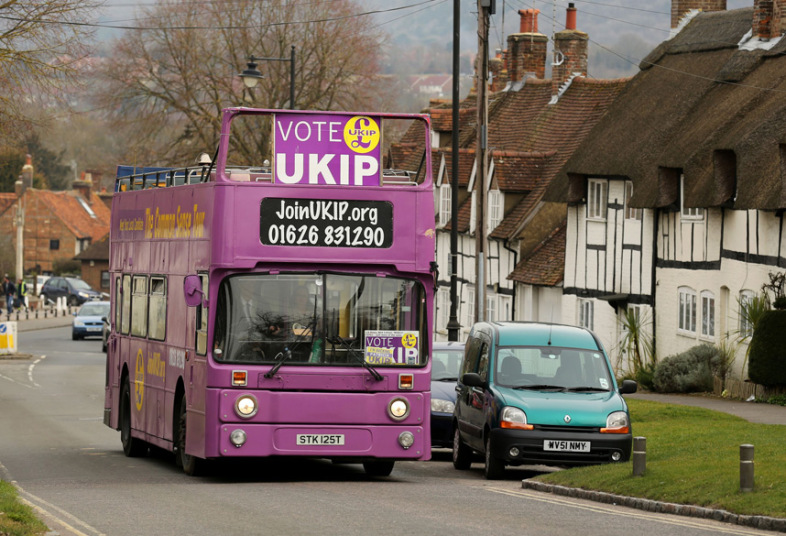
UKIP Battle Bus - General Election 2015


More concerning news about UKIP from today’s Guardian:

The author of Ukip’s general election manifesto has said the party should concentrate on “compassionate, centre-ground” policies, denying the party was riven with bitter infighting.

Suzanne Evans, the party’s deputy chairwoman, said the party’s post-election troubles were related to advisers who had now left. “I don’t think anyone hates anyone,” she said on Sunday […]

“I think if you look at the manifesto – and let’s not forget I wrote the manifesto – I think it was very compassionate, very centre-ground, very balanced and Nigel called it – bless him – the best manifesto ever written. So it was a great sort of feather in my cap. That I think is where he wants to take the party and where the party needs to go.”

On “shy kippers”, a phenomenon repeatedly alluded to by Farage during the campaign, Evans said it was crucial to find out why those people were reticent in showing their support for the party. She added: “If we’ve got it absolutely right and if our party brand is working at the moment, why don’t people want to sing and dance about it?”

This was always the danger for UKIP – not so much the bitter infighting, which is disappointing yet predictable, but rather the growing impulse to move further away from its guiding principles toward the political centre.

The frustration within UKIP is quite understandable – the party dramatically increased its level of support from 2010 to 2015, continuing an exponential rise over the past five years, but was rewarded with only one Westminster seat thanks to the diffusion of its support across the country.

And looking at the parties which performed well (namely the Conservatives and the SNP) it is easy to come away with the impression that the path to electoral success lies in wittering on endlessly about public services – the Tories because they only sold their Long Term Economic Plan on the basis that a stronger economy means more cash for things like the NHS, and the SNP because of their reflexive opposition to ever shrinking the state.

Smarting from the loss of half its Westminster representation and trying to keep a lid on very public infighting which threatens to make the party look foolish, the impulse to move to the political centre is clearly very strong. But it is equally misguided – the British political centre is already overcrowded, with the rudderless Labour Party and David Cameron’s Coke Zero Conservatives fighting over the same ground.

Suzanne Evans apparently now believes that UKIP and conservatives in general are to blame for the often hysterical response of many people to right-wing ideas, and that they need to change their “brand” so that people want to “sing and dance” about their beliefs rather than remaining shy Tories or shy Ukippers. But this misses the point. To avoid public opprobrium would be to adopt the same tired, worn-out centrist policies which have led the establishment parties to such unpopularity and irrelevance.

UKIP received just under thirteen per cent of the national vote in the general election because that is currently more or less the ceiling of support for eurosceptic, quasi-libertarian thinking in Britain. But the correct response to this fact is not for UKIP to change the policies to encompass a larger number of potential voters. The correct response is to engage in debate and win over more people to the pro-sovereignty, pro-personal freedom worldview – raising the ceiling rather than lowering the ambition.

Of course this won’t be easy. It takes time – and the gradual accumulation of evidence that the centrist policies pursued by the other parties are failing – to persuade people  that a radically different direction is needed. And in Britain, so accustomed to the post-war settlement policies of an active, interfering government and welfare state, persuading people that lower taxation and greater freedom can result in more prosperity rather than less is particularly challenging.

This means that despite the strides made by UKIP since the party was founded, dramatic electoral success was never going to come in 2015, and nor will it come in a rush in 2020. Weaning people away from big government is a long, difficult process – especially in a country where 52 per cent of the population receive more in government benefits than they contribute in taxes.

But selling out by becoming just another centrist party that drones on about “compassion” while failing to restrain the state and free the individual is the worst possible idea, and would represent a grave betrayal of all those people who were originally attracted to UKIP’s cause.

UKIP is clearly being moved by the impulse to make a comfortable home for the legions of former Labour voters who have switched their loyalty to Nigel Farage, and we are now witnessing the beginning of a battle for the party’s soul. But the answer is not to recreate the Labour Party under a purple banner – to do so would be hugely insincere, and would undermine the true foundation of the party’s support.

Four million votes in a general election is a huge accomplishment, and the temptation to exploit and artificially increase this number by repositioning to the left is immense. But a principled political party – the party to which this blog, after much soul searching, lent its support on 7 May – should not seek quick shortcuts to greater public favour.

Real progress is difficult, and comes slowly. UKIP’s warring factions must not forget this simple truth.

Anyone, Anyone But Boris Johnson For The Conservative Party Leadership

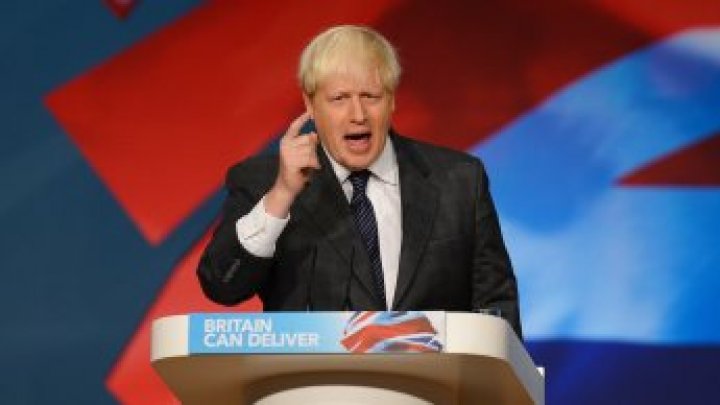
Boris Johnson - Conservative Party - Tory Leadership - General Election 2015


The Conservative Party of 2015 may be an ideologically confused shadow of its former self, but one instinct remains undulled: the hard-headed (some might say recklessly regicidal) way in which senior figures quietly position themselves, ready to quickly and ruthlessly dispatch their leader as soon as he or she is judged to have become an electoral liability.

Some have suggested that there are plans afoot to launch a “Keep Cameron” movement in the event that the Prime Minister fails to win the Conservatives an outright majority for two elections on the bounce, and fails to cobble together a workable coalition to keep the Tories in power. But this is extreme wishful thinking – David Cameron can barely muster the passion and commitment to conservatism to convince the British people he truly wants a second term, let alone that he has any bold new plans up his sleeve. If he struggles to show that he wants to remain Prime Minister after 7 May, he certainly will not want to return to the thankless job of being Leader of the Opposition.

And now many Tories, eager to avoid a prolonged and damaging internal power struggle should Cameron go, are agitating for the swift coronation of London Mayor and Uxbridge parliamentary candidate Boris Johnson.

To be fair to Boris Johnson, he makes a decent pitch for the job, better than most. An a new interview with The Spectator, Johnson was asked why people should vote Conservative, and gave this mini stump speech in reply:

‘If they want Britain to be a strong independent nation, if they want Britain to lead in Europe, if they want an economy which is dynamic and competitive and is based on the spirit of enterprise, then they should vote Conservative. If they believe in a culture of aspiration and achievement rather than scrounging and trying to pull people down, if they believe in levelling up rather than levelling down, they should vote Conservative. If they believe that it is wrong in principle to try to settle the problems of the economy by decapitating the tall poppies in society, they should vote Conservative.’

[…] ‘If they believe that the job of government is to nurture all the flowers in the flower beds rather than attacking some, then they should vote Conservative. That is the essential difference between us and Labour. Every single policy of Ed Miliband and his lot is precisely calibrated to divide society, to foster a sense of injury and injustice. We want to heal any sense of injury and injustice, to bring society together.’

Most of this is good stuff, red meat for true conservatives.

Continue reading

David Cameron’s Creepy, Technocratic Passion Was Better Kept Hidden

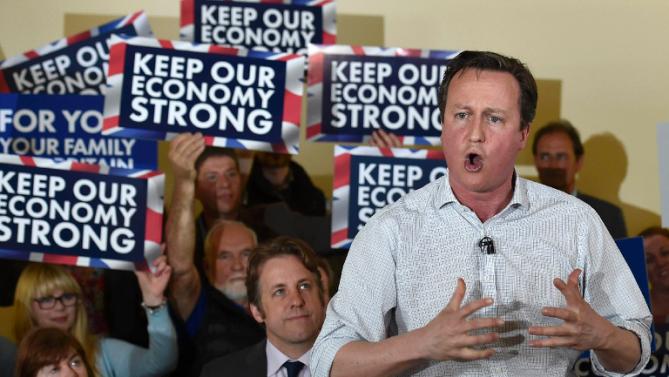
David Cameron - Passion - Bloody Lively - General Election 2015 - Conservatives


Conservative supporters can finally rest easy – apparently the Prime Minister has rediscovered his mojo, just in time to clinch the election next week. Or so say the national press, who all dutifully reported that David Cameron went through some kind of “dip” or “wobble” over the weekend, only to emerge with shirt sleeves rolled up looking as though he had chugged ten Red Bulls, oozing passion and energy from every pore.

The reality is a little different. What we actually saw was a fairly competent technocrat being told that droning on about a strong economy being the prerequisite for good public services was quite literally making voters fall asleep, and responding to this advice by delivering the exact same message ten pitches higher, at twice the volume and with more extravagant hand gestures.

From the ultra-loyal Telegraph:

The Prime Minister on Monday used a speech to reject claims that the Conservative campaign has lacked energy and passion.

He said that he is “pumped up” and has more desire to win this election than he did in 2010.

“If I’m getting lively about it, it’s because I feel bloody lively about it,” he said.

Insisting that he is “hungrier than five years ago”, he added: “I want this very badly. It’s not for me. It’s for people and the jobs in this country.”

You know we’re in for a mind-numbingly, spirit-sappingly uninspiring election campaign when patrician Dave Cameron tries to pump up support by declaring that he is “bloody lively”.

If anything, this awkward turn of phrase recalls Mitt Romney’s coining of the statement “I was a severely conservative Governor” during his last, ill-fated run for the US presidency. If Romney had been a zealous conservative he would never have had to say so, and he would have picked a more convincing word than “severe” when he did. Likewise, if David Cameron was really feeling bullish – and had anything to be bullish about – we would not need to be explicitly told.

Continue reading

Tim Montgomerie, The Good Right And The Battle For British Conservatism

David Cameron - Conservative Party - Tory Compassion - General Election 2015


With the opinion polls still neck-and-neck, David Cameron and the Conservative Party have good grounds to worry that they are not pulling ahead of Labour in the final month of the 2015 general election campaign.

The BBC’s poll of polls puts Labour and the Conservatives on 33% each, which, when constituency boundaries which favour the Labour Party are factored in, means that Ed Miliband’s party are potentially on course to win more seats than the Conservatives, throwing several highly unwelcome left-wing coalition scenarios into play.

Naturally, this is causing much hand-wringing both within the Conservative Party and the Tory-friendly press. But interestingly, much of the free advice being bandied about is encouraging the Conservatives to try to fight the election on Labour’s natural turf (such as emphasising the importance of public services), or to tack even further to the centre, in spite of UKIP’s challenge from the right.

The chief proponent of this strategy is Tim Montgomerie, who uses his most recent Times column (+) to argue that “a show of compassion” (whatever that means) from the Conservative Party could help to “swing the vote” in their favour. Montgomerie is absolutely correct in his diagnosis of the situation – an increasingly coddled, government-dependent British population representing unfertile electoral ground for the politics of individualism and self sufficiency – but hazy on his proposed remedy.

First, the good analysis:

The centre right has to worry that while Tony Blair was wooing Middle England it was really Gordon Brown who was running Britain. Blair was at the front of the shop but Brown was in the control room, overseeing the huge expansion in the number of people who received part or all of their income from the state. Even now, with austerity under way, 52 per cent of Britons receive more from the state than they pay in taxes. There are, to echo Mitt Romney’s infamous and ham-fisted description, more takers than makers. People who are dependent upon the state have every incentive to vote for bigger and bigger government and to get someone else to pay for it — especially, of course, “the rich”.

A redistributive, bash-the-rich message was exactly what helped Barack Obama defeat Governor Romney. If America, land of the free and home of the brave, was willing to choose big state interventionism over small state individualism then it’s hardly impossible that Britain might do the same in a few weeks’ time.

If ever there was a statistic to shock and shame British conservatives, it should be the fact that 52 percent of Britons are net financial beneficiaries from the state. In the conservative model society, there should be generous welfare support available for those suffering true hardship or disadvantage, but a level playing field and light-touch government regulations freeing everyone else to succeed to their potential.

Continue reading