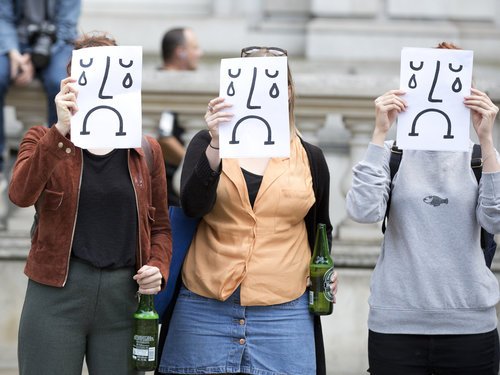
Bitter Remainers Dream Of A Single Issue Anti-Brexit Political Party

EU Referendum - Brexit - Despair

Still firmly stuck in the “denial” stage of the grieving process, some bitter Remainers are now pinning their hopes on a new political party with the sole aim of thwarting Brexit

A number of overexcitable Remainers seem to be getting carried away with the idea that a brand new political party, dedicated solely to the purpose of thwarting Brexit, might be the answer to their prayers.

We first saw this idea floated in the Financial Times by Janan Ganesh, who did a masterful job of suppressing everything he knows about the British political system to convince himself that the idea might actually have merit:

A new political grouping has been in fitful gestation since Britain voted to leave the EU. Uncomfortable in their own parties, a few Conservative and Labour politicians have probed the idea in discreet settings. Donors are primed with start-up capital. Tony Blair has improvised a role as a curator of these forces, and at times as their frontman. An electorate that has withheld a decisive win from any party since his own days as prime minister is plainly open to some disruptive entrant to the market. If it shows promise, Liberal Democrat MPs might subsume themselves into it rather than stagger on as a futile dozen.

For all this, the breakthrough never comes — and not because Britain’s first-past-the-post voting system stymies the new. The project never gets that far. The trouble begins earlier. To avoid caricature as pro-European monomaniacs, and to let their restless energies roam, the people involved aspire to stand for something broad: political moderation in an age of extremes. This requires them to have policies, or at least first principles, across the full spectrum of government business. But each time a putative party settles its view on, say, fiscal policy or healthcare, it will alienate some of its original and potential supporters. It also loses definition. Before the project has a single achievement to its name, it is bogged down in matters of internal theology. It becomes a paradox: a fissiparous political party with no MPs.

Ganesh concludes with a well-rehearsed yet tone-deaf paean to the kind of bland, managerialist centrism which sparked this anti-establishment backlash in the first place:

A wider manifesto for moderate government might emerge, but only over time and as a consequence, not a cause, of the movement’s success. To design an entire worldview upfront is to wallow in detail before any political momentum has been established. And to lose friends in the process.

And yet the foolish idea is now gaining traction, with journalist (and ex-Chief of Staff to Brexit Secretary David Davis) James Chapman promoting the idea, as the Guardian excitedly reports:

A former chief of staff to David Davis has said Brexit is a catastrophe that must be stopped and called on centrist MPs to form a new party.

James Chapman, who worked for the Brexit secretary for a year as the Department for Exiting the European Union was set up, suggested the new party should be called the Democrats and claimed some “very interesting people” wanted to be involved.

[..] Chapman, who previously worked for George Osborne, said anti-Brexit MPs such as Anna Soubry, Grant Shapps and Mark Harper had more in common with party opponents such as Rachel Reeves and Vince Cable than “Owen Paterson et al”.

Let’s all take a moment to appreciate the delicious irony of a political party explicitly founded to overturn the results of a democratic referendum – and all in order to ensure that Britain remains a part of a supranational political union whose very purpose is to undermine nation state democracy – calling themselves the Democrats. This utterly shameless tactic is taken straight from the Karl Rove playbook, with Remainers projecting their own flaws onto their opponents while claiming the virtues of Brexiteers (commitment to democracy) as their own.

Nevertheless, Janan Ganesh and James Chapman both seemingly believe that the best way to overturn the result of the EU referendum and thwart Brexit is for pro-Europeans to band together and campaign only on that single issue, in the name of moderation and to avoid deadly infighting by introducing other ideological squabbles to the debate. But the problem with this thinking is that by definition, only those disaffected MPs who feel most strongly about stopping Brexit would join such a party, and they tend to be the swivel-eyed euro-federalists or dim but enthusiastic EU cheerleaders.

What the Remainers forget is that while the Leave campaign may only have won the referendum 52% to 48%, many of the 48% also have no real love for the EU. Even in my own North London constituency of Hampstead & Kilburn, one of the most defiantly Remain-voting constituencies in the entire country, I have spoken to numerous people who voted Remain either grudgingly or out of alarm at the apocalyptic stories spun by Britain Stronger in Europe.

Arch-Remainers have tended to assume – wrongly – that the full 48% who voted to Remain in the EU did so because they share the same fanatical devotion to the European Union as themselves, but this is not the case. Many people strongly bought into the Leave campaign’s argument about sovereignty and self-determination, but voted Remain because they prioritised short-term economic security over long-term democratic security. And one cannot entirely blame them for doing so – I fully admit that I am something of an outlier with my unfashionable, somewhat fanatical obsession with constitutional issues.

So how would a British public which was probably much more than 52% hostile to the EU at the time of the referendum react to the formation of a new political party created with the expressed intention of overturning the referendum result? Janan Ganesh clearly thinks that such a party would be greeted like liberators, come to rescue benighted Britain from the evil clutches of Nigel Farage and Boris Johnson. I’m not so sure.

While as a country we may be increasingly confused about what “British values” really mean, most of us would still point to the importance we attach to “fair play” being a defining national trait. And I think that the British people would take one look at a bunch of establishment arch-Remainers (led by Tony Blair, no less) attempting to undo the referendum result as a grave insult and a brazen power grab.

The New Party campaigners also totally overlook the dynamics of individual constituency races in favour of national polling. Even assuming that a new political party got off the ground (I’m not holding my breath) it would face exactly the same challenges as the SDP back in the 1980s, squeezed between a rock and a hard place as Labour and the Conservatives refused to stand aside.

Even Owen Jones sees through the scam:

And what then would be the point of such a party with (at best) only a handful of fanatical europhile MPs in Parliament? Even if Theresa May’s government falls before the next scheduled general election, the chances are that Brexit will either be concluded by this point or more likely that negotiations will be so far advanced (perhaps with a negotiation extended) that it is no longer possible to undo without accepting revised membership on harsh new terms (no budget rebate, mandatory joining of both Schengen and the Euro) that an overwhelming number of Britons would find unacceptable.

The whole idea is a complete non-starter, the futile fantasy of an establishment class which still believes that it can simply circumvent or nullify democratic outcomes rather than doing the hard work of convincing people and winning them over to their side. A year on from the referendum and the tantrum continues with no sign of abatement.

Having said that, by all means let them try. Lord knows that the Conservative Party would be an immeasurably better entity without the likes of Anna Soubry and Grant Shapps.

 

The Electoral Commission - EU Referendum Ballot Paper - Brexit - Biased Voting Guide

Support Semi-Partisan Politics with a one-time or recurring donation:

Agree with this article? Violently disagree? Scroll down to leave a comment.

Follow Semi-Partisan Politics on TwitterFacebook and Medium.

Embracing ‘Compassionate Conservatism’ Will Not Make The Rootless Tories More Popular

The Good Right - compassionate conservatism

Compassionate conservatism barely won David Cameron a majority government in 2015, even against the hapless Ed Miliband. Rebooting the flawed concept, especially against Jeremy Corbyn’s turbo-charged ultra-compassionate socialism, means fighting the Left on their own terms and is doomed to failure

Despite its complete and utter failure to deliver a solid electoral victory for the conservatives, or to meaningfully detoxify the Conservative Party’s “nasty party” image, the woolly, nebulous and thoroughly unhelpful concept of “compassionate conservatism” refuses to die.

Following Theresa May’s abject failure in the 2017 general election – losing the Conservative Party their majority by failing to counter the appeal of a marauding socialist who actually has principles, stands for them unapologetically and convinces more and more people of their value – all manner of ideologically limp Wet Tories are now coming out of the woodwork to proclaim that the only way for conservatism to survive is to meet Jeremy Corbyn half way.

These appeasers of the Left (I won’t call them pragmatists because that kinder term suggests a kind of nobility and wisdom for which there is very little evidence) seem to sincerely believe that staying in power means accepting vast swathes of the Left’s argument about the welfare state, wealth redistribution and fiscal restraint. They would have the rest of us believe that conservatives face inevitable defeat unless the Tories compete with Labour to be the loudest cheerleaders of the bloated public sector.

Charlie Elphicke, Tory MP for Dover, is only the latest to advance this defeatist theory, writing in Conservative Home:

Step one to victory is to conquer the idea that the Conservatives are on the side of the rich. Every Conservative I know is in politics because we care about the vulnerable and the least well off. At the election, we failed to explain to people how our values offer the best for people and their families.

Conservatism is at its best when we communicate a vision of Britain as a land of opportunity, aspiration and success. A place where anyone, whatever their background, can achieve and succeed. Where they can climb the ladder of life. A country where people can get jobs, a home to call their own and achieve their full potential. Where Government gives people a hand-up, not handouts – and hard work brings rewards.

Our caring conservative tradition is also central to all that we are. This is why we must showcase our values as the party of compassion. The conservatism that seeks to protect people from the worst excesses of the system.

Protecting people, and being the party of compassion, matters every bit as the land of opportunity. This means standing up against rogue landlords, overcharging utility companies, loan sharks, tax dodgers, and unscrupulous employers.

And yet rather than proposing that the Conservatives do what Margaret Thatcher did to the hard left in the 1980s – namely, steamrollering over their socialist squeals, failed dogmas and entrenched special interests to speak directly to the people and sell them an alternative vision of Britain’s future – Charlie Elphicke proposes instead that we prance around humming The Red Flag and hoping to convince enough wavering voters that we are little more than the Labour Party with a brain and a calculator.

Elphicke proposes capitulation to the false leftist narrative that it is in any way “compassionate” to redistribute wealth and income from those who earned it in order to better fund a welfare machine which encourages dependency and helplessness more than self-sufficiency. Elphicke – though he would never say so out loud – effectively accepts the idea that we should give a man a fish, and then another fish, and then another one until the barrel is empty, rather than teaching people to fish for themselves.

Elphicke continues:

I’ve spoken to colleagues from across the country who were asked by people on the doorstep what our manifesto offered for them. They struggled to find positive things to say.

Now I’ve heard people say we didn’t have a “retail offer.” But, you know, we’re not selling soap powder here. We are about caring for people and changing lives. We failed to explain how we would do that – and so people didn’t know.

It’s not difficult to think how we could have done so much more to support traditionally Conservative motorists, aspirant home owners, small business people, and the elderly. Or how we could have reached out to families and younger people with lifelong learning, greater help for carers, and more support to get on the housing ladder.

We should have showcased our record of action, too, because it is pretty incredible. We brought Britain back from the brink. We have delivered record employment, a strong economy, a powerful recovery from Labour’s crash, along with pumping vast amounts of cash into the NHS. Our failure to highlight our record cost us heavily.

Many of these observations are correct, but the conclusion which Elphicke draws from them are depressingly wide of the mark.

Yes, the Tories did an abysmal job of standing up for their record. At a time when the Labour Party manifesto offered an series of calculated bribes catering even to firmly middle class voters, the Tories went to battle with their mindless slogan of “strong and stable”, and a deafening silence when it came to defending their limited efforts at fiscal restraint since 2010.

But Charlie Elphicke’s vision of “caring conservatism” is not the solution. Rather than standing up to the politics of Me Me Me or turning away from the notion of bribing voters with cynical manifesto pledges, Elphicke merely proposes that the Tories start using the same playbook. Even the term “caring conservatism” should raise the hackles of any self-respecting conservative, suggesting as it does the idea of government as an omnipresent, watchful auxiliary parent, charged with wiping our noses and keeping us safe at the expense of our freedom and individuality.

Worse still, to even talk of “compassionate” or “caring” conservatism is to concede that ordinary, vanilla conservatism is somehow cruel or lacking in compassion. It suggests that there is something fundamentally wrong with our worldview and our politics, and that only by being born again and accepting the “compassionate” modifier do we become semi-respectable people with whom it is just about acceptable to associate in public.

This is incredibly counterproductive. Economically speaking, conservatism at its best means government getting out of the way so that people can succeed according to their merits, and providing a limited but dependable safety net for those in real need by not lavishing unnecessary benefits on over half of the population who are arbitrarily declared “vulnerable” and in dubious need of government assistance. The point that conservatives should be screaming from the rafters is that real conservatism would do more for the truly needy, by rolling back a benefits culture which sees as much as 50% of taxpayers becoming net dependants on the state and compensating for that rollback by lowering general taxation and restructuring the welfare state so as to provide something more than grim subsistence for those who need to use it.

You don’t see Labour MPs or activists describing themselves as “sane Labour” or “grown-up Labour”, effectively conceding that the more statist, big-government policies of their party base are somehow insane or childish (even though they are). They own their left-wingery and proclaim it proudly, not apologetically. Centrist Tories or “compassionate conservatives”, meanwhile, come across as ashamed of their own party and apologetic for their own beliefs, and seem determined to tack as closely to Corbyn’s party as possible before the cognitive dissonance becomes too unbearable.

This is a contest that conservatives can never win. In the race to be more paternalistic, more restrictive of behaviour and more redistributive of wealth, the Tories will lose to Labour every day of the week. And with Jeremy Corbyn in charge of the Labour Party it won’t even be close.

Look, I get the superficial appeal of Charlie Elphicke’s proposal. It offers a quick and easy route to staying in power, where rather than having to do the hard work of challenging voter assumptions and telling the electorate difficult but authentic truths, instead we can just act a bit more like the Labour Party and stay in government forever. But it won’t work.

If the 2017 general election taught us anything, it is that an entire generation of young voters have grown up experiencing all of the wealth, liberty and opportunity which Thatcherism helped secure for them before they were even born, but that these same people have been taught to despise the very things – capitalism, free markets, a less activist state – which made our material wealth possible in the first place.

Corbyn’s cohort of young admirers literally share memes on social media using smartphones and personal computers which were only put in reach of ordinary people thanks to the free market they are busy disparaging, and they do so without a shred of irony because throughout their young lives, nobody has dared to forcefully defend Margaret Thatcher’s legacy or to suggest that real “compassion” means more than blindly firehosing taxpayer money at every social problem and expecting positive results.

An entire generation has grown up (and older voters gone over two decades) without really hearing a stirring argument in favour of smaller-government, pro-market policies from any senior politician. Even most Conservative MPs have preferred to talk about mitigating the “damage” done by the market, or as Elphicke puts it, “protect[ing] people from the worst excesses of the system” rather than explaining how “the system” is a good thing, not to mention a hell of a lot better than socialism.

Neither has there been an adequate effort on the part of Conservatives to rebut the Left’s cynical and dishonest attempt to portray every failure of regulation, every act of crony corporatism as a failure of capitalism itself. Here, Charlie Elphicke’s idea of a “rapid rebuttal” unit actually has real merit. Too often we cower and equivocate whenever the Left trot out their Capitalist Bogeyman of the Day – be it Philip Green or “the bankers” – rather than pushing back and explaining that criminal acts or regulatory failure does not discredit the economic system which has delivered more wealth and prosperity to more people than any other in human history.

But all of this needs to be done under the overall aegis of a vision of conservatism as a force which liberates people and sets them free rather than one which coddles them.

Sure, the Conservative Party might eke out another few general election victories (or at least 2017-style non-defeats) by playing up the “caring conservatism” angle and chasing Jeremy Corbyn’s Labour Party ever further to the left. But any such battles won will come at the expense of losing the wider war. If the Conservative Party is to be nothing more than the Labour Party with a modicum more economic sense then really, what’s the point in even bothering? A succession of such Conservative prime ministers, having totally forsaken their own raison d’être, could be in office for years yet never really in power. Theresa May in perpetuity.

The Thatcherite revolution was made possible partly because years of stultifying, socialist post-war consensus led Britain to a crisis point, teetering on the brink of irreversible national decline. In 1979, the Conservative Party took advantage of that crisis to discredit the status quo and present their alternative offering as both beneficial, necessary and inevitable, shifting the Overton Window of British politics firmly to the right. And while there were negative side effects which should not be overlooked or minimised – particularly outside the southeast – the Thatcherite medicine worked.

We are at another such crisis point today, this time brought about through the confluence of Brexit, the unmitigated side-effects of globalisation, an economic recovery which has been intangible for too many people, an over-centralised Westminster government and a terminally unreformed public sector. Labour are already moving to take advantage of this crisis and shift the Overton Window back to the left. And they are succeeding – ideas which were fringe absurdities twenty years ago, like wage councils and the renationalisation of industry, are now stunningly back on the agenda, while the man who promotes them is a few false moves by Theresa May away from 10 Downing Street.

Conservatives cannot afford to squander this opportunity, to allow the current political crisis (or state of flux) to be used by Labour to drag Britain further to the left without even putting up a fight for the small-government, conservative values which once saved this country. And breathing life back into the corpse of compassionate conservatism will only aid the Left in their endeavour. It will be a huge signal to our ideological foes that we accept the premise of their argument (compassion = a bigger state and more redistribution) and only encourage them to expand their demands move further and further to the left themselves.

It is ludicrous that we even find ourselves in this position. Jeremy Corbyn was twenty points down in the opinion polls until Theresa May launched her disastrous and thoroughly un-conservative general election campaign, and now he is within striking distance of 10 Downing Street. Red Conservatism or Blue Labour, a la Nick Timothy and his disciples, doesn’t work. If people want swivel-eyed socialism they’ll pick the real deal over the off-brand equivalent, every single time.

Corbynites believe that conservatives are evil, heartless, amoral “Tory Scum”. We will not suddenly win their friendship, or their respect, by deferring to them on a few specific issues or taking the sharp edge off our message of economic freedom, individual liberty and a smaller, more efficient state. No appeasement is possible or desirable. The only thing to be done is to get out and win the argument in public, to have a million difficult conversations with people who are currently quite sympathetic to the Corbyn worldview because of our shameful failure to adequately preach our own values.

The alternative – if we insist on reanimating the corpse of compassionate conservatism – is to doom ourselves to more centrist malaise at best, and a truly frightening Jeremy Corbyn socialist government at worst.


conservatism definition

Top Image: The Spectator

Support Semi-Partisan Politics with a one-time or recurring donation:

Agree with this article? Violently disagree? Scroll down to leave a comment.

Follow Semi-Partisan Politics on TwitterFacebook and Medium.

Are We Finally Witnessing The End Of Bland, Centrist Politics?

Jeremy Corbyn - Glastonbury crowds

Donald Trump, Jeremy Corbyn, Brexit… People want meaning in their lives and a purpose in their politics that dry, centrist managerialism cannot hope to provide

This, by Ted Yarbrough, is very perceptive:

Man does not live by bread alone. Though a religious statement by Jesus from the Gospel of Matthew I think that statement has never been more true- especially seen in geopolitics.

We humans have never been materially wealthier.  Yes, some people still live in abject poverty and many people don’t like that others have more money than them, but by historical standards we should be thanking our lucky stars each day for our blessings. We live longer than ever before and can communicate with people throughout the world at an instant. Yet, as especially seen in politics, many people are angry. Populists are rising on both right and left. Those in positions of power ie “establishment” people in the media, government etc are extremely perplexed. How could, for example, the people not want to send that nasty man Trump a message with some bright young man who checks all the boxes like Jon Ossoff? [referring to the Democrats’ failed attempt to take Georgia’s sixth congressional district in the recent special election]

I think the people shocked by the return of ideology miss one big point about humans. We are not animals, we don’t just like to be fed and wag our tail. We believe in justice, we dream dreams, we are not content because, yes often we are spoiled, but we want to believe in something. We want to be something bigger than ourselves- it’s why humans suffer enormously to go to Mt. Everest and the south pole and the moon- we want to do things because they are great. It is why people are constantly searching for the meaning of life and worshipping God (or gods). We want to change the world because we recognize the imperfections in it. We will not be content.

In politics, that means people are growing sick of “centrists” ie technocrats who don’t inspire the people but expect to govern because they are supposedly the best qualified for the job. Centrists are shocked to see the rise of nationalists and free-marketers and socialists and Islamists, but really they shouldn’t be. Those ideologies offer people something to believe in, a better world to dream of and fight for, rather than a shallow world of pop music, materials possessions and politics made occasionally spicy with some virtue signalling identity politics thrown in. People now, like our ancestors of old, want to battle over ideas. To work towards finding truth.

This blog has been screaming for years now that centrist politics is leading us nowhere good, entrenching privileges for those set up to gain from the current system while doing nothing to help those – particularly those at the sharp end of globalisation – who do not benefit from the post-patriotic, post nation state world that the elites are building without meaningful democratic consent.

But even I did not predict the degree to which the establishment’s insistence on clinging on to their bland, centrist model of governance would lead to disruptions to the political order on the level of Donald Trump, Brexit or Jeremy Corbyn’s takeover of the Labour Party (and nearly the country).

Some of these disruptions are welcome – Brexit is a great achievement, even if many of the benefits end up being lost through abysmal execution by the political class, while Jeremy Corbyn’s Jeckyll and Hyde leadership of the Labour Party reminds us both how ideology can reinvigorate a political movement but also just how far the party has drifted from the interests of working people. And others of these disruptions – cough, Donald Trump – are unwelcome and have almost zero upside.

But more such populist disruptions are almost inevitable until the political class realises that people want more from their politics than a ruling class of bland, superficial technocrats who promise nothing more than the smooth administration of the status quo. Jeremy Corbyn, for all of his faults, at least promises a radical reordering of society – one made all the more appealing by the fact that the Conservatives long ago ceased to make a bold, unapologetic case for free markets, individual freedom and a less suffocating state.

Nearly two years ago, this blog asked where is the Conservative Party’s own Jeremy Corbyn? Where is the small-C conservative version of the politician who dares to proclaim an unrepentantly neo-Thatcherite worldview, instead of pretending (a la Cameron, Osborne, Hammond and May) that “austerity” and fiscal restraint are a sad necessity brought about by recession rather than an innately good thing in and of themselves?

Theresa May led the Conservative Party to near-defeat in the general election this month because she never even attempted to take on Jeremy Corbyn in the battle of ideologies. And while conservatives were never likely to walk away with the lion’s share of the youth vote, shamefully allowing Jeremy Corbyn to be the only one to present the emerging generation of new voters with anything like a positive inspirational message made damn certain that the majority of them voted Labour.

Yarbrough’s conclusion is stark:

With that being said, if the centrist parties do not start treating people as humans who dream dreams, and offer a compelling hope for people, the people of the world will continue to be more polarized and radicalized. And if there is no hope more and more false prophets will emerge to fill the vacuum.

One of my favourite television shows is the twelve-part HBO series “From The Earth To The Moon”, executive produced by Tom Hanks, recounting the complete history of NASA’s Apollo Program which culminated in six manned missions to the surface of the moon. I like it because it represents, to me, a time when humanity stood for more than “reducing inequality”, deifying public services and promising to make the trains run on time. A time when our desire for achievement, like our plans for human spaceflight, aspired to something more than low-earth orbit.

The theme music at the start of each episode begins with JFK’s speech at Rice University in which Kennedy says “We choose to go to the moon in this decade and do the other things, not because they are easy, but because they are hard, because that goal will serve to organize and measure the best of our energies and skills, because that challenge is one that we are willing to accept, one we are unwilling to postpone, and one which we intend to win.”

Of course the 1960s and 70s were tumultuous decades with many of their own very real challenges – the very real threat posed by Soviet Communism, for one, and the ongoing struggle for civil rights. But how much worse would this era have been if there were no unifying objectives around which people could come together?

In our increasingly secular age, religion is no longer a unifying force within nations. Art stepped up briefly as a replacement, but our art and culture has become increasingly debased too. And so people, being spiritual beings, increasingly vest their faith in their political worldview, which has had two principle effects – toxifying our political discourse and making people more susceptible to the “false prophets” of which Yarbrough warns.

Professor David Hillel Gelernter once said in an interview:

The readiest replacement nowadays for lost traditional religion is political ideology. But a citizen with faith in a political position, instead of rational belief, is a potential disaster for democracy. A religious believer can rarely be argued out of his faith in any ordinary conversational give-and-take. His personality is more likely to be wrapped up with his religion than with any mere political program. When a person’s religion is attacked, he’s more likely to take it personally and dislike (or even hate) the attacker than he is in the case of mere political attacks or arguments. Thus, the collapse of traditional religion within important parts of the population is one cause of our increasingly poisoned politics.

We see this all the time in our political discourse. This is the Cult of Social Justice and Identity Politics writ large. This is the result of our ridiculous, overwrought obsession with inequality, even as living standards for nearly everybody continue to improve and we all benefit from technologies and inventions which were unthinkable half a century ago.

And if failed centrism really is leading to “radicalisation” by unscrupulous false prophets (and I don’t much like the use of that word outside of its applicability to terrorism, particularly because the Left is now eagerly using it to smear conservatives on any pretext, suggesting that newspapers like the Sun and Daily Mail are somehow “radicalising” the ignorant white working classes) then it becomes all the more important for our main political parties offer visions of their own which amount to more than technocracy and navel-gazing obsession with public services.

For a long time I thought that people actually liked the politics of Me Me Me, and that our craven politicians were simply responding to public demand with their endless manifesto bribes. But perhaps I was wrong. Though Jeremy Corbyn certainly offered a record-breaking basket of electoral bribes in the Labour Party manifesto, people also seem to have responded to him because of what he represents. In other words, Corbyn’s increasing viability amounts to more than the sum of the various bribes in the 2017 manifesto, even the student loans pledge.

The Conservatives, therefore, cannot afford to leave the ideological field open for Jeremy Corbyn to occupy on his own. The Tories need to do much better than mount their usual snivelling defence of fiscal restraint, couched in the craven acceptance of leftist frames of reference, and actually come up with an alternative vision of Britain worth voting for.

Theresa May isn’t going to do that, and neither are any of the dismal individuals tipped by the Westminster media as being most likely to replace her. So, who will come and save the Conservative Party from themselves, and save the country from Corbynism in the process?


Jeremy Corbyn - Glastonbury stage

Support Semi-Partisan Politics with a one-time or recurring donation:

Agree with this article? Violently disagree? Scroll down to leave a comment.

Follow Semi-Partisan Politics on TwitterFacebook and Medium.

Labour Centrists Bend The Knee To Jeremy Corbyn, Once Again

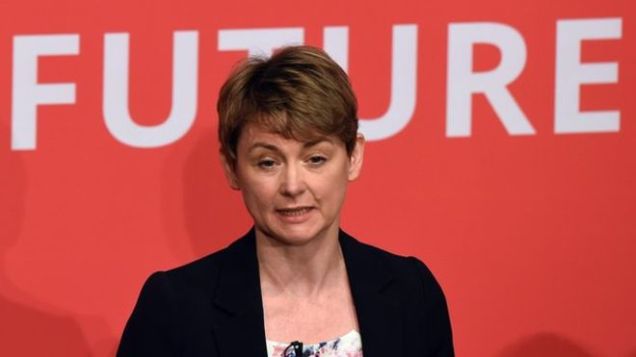
Yvette Cooper

No courage, no backbone, no vision of their own

Telegraph sketchwriter Michael Deacon reports on the rapturous reception given to Jeremy Corbyn by the Parliamentary Labour Party when he entered the Commons yesterday:

Labour MPs cheered Jeremy Corbyn.

Genuinely. They really did. And when I say Labour MPs, I don’t just mean John McDonnell, Diane Abbott and the other members of his little band of loyalists. I mean all of them. As Mr Corbyn entered the Commons for the first time since the election, his MPs rose as one and awarded their leader a delirious standing ovation. Yes, the same MPs – well, apart from the 47 new ones – who not so long ago sat in scowling silence while Mr Corbyn floundered at PMQs, and voted by four to one that he must stand down.

On and on they clapped and whooped. Beaming from ear to ear, like a Wimbledon champion greeting his adoring public, Mr Corbyn waved, shook hands, did the thumbs-up, and basked in the acclaim. On the opposite side of the House, Tory MPs – including Theresa May – stared glumly.

What a sight it was. If this is how Labour celebrate losing an election, imagine what they’d do if they actually won.

Well, well, well.

It’s almost as though I wrote something warning about the spineless Labour centrists and their yawning lack of principle a year ago, after Jeremy Corbyn saw off their pathetic, ineptly executed leadership challenge. Oh wait, I did. Twice.

And just as they did when Corbyn vanquished the hapless Owen Smith, now the Labour centrists are prostrating themselves at their leader’s feet because his big government manifesto managed to bribe sufficient voters to win Labour a handful of additional seats, if not the general election. They are jostling for position, eager to worm their way back into the the Shadow Cabinet – which many of them previously deserted or refused to join, in an effort to destabilise Corbyn – because they taste the tantalising prospect of toppling Theresa May’s government, forcing another election and creeping across the finish line as part of some “progressive alliance”.

Yvette Cooper, Chuka Umunna, Owen Smith – all of the usual suspects quickly dropped their plans to revolt against Jeremy Corbyn after what they anticipated to be an electoral wipeout, and instead took to the airwaves to praise their leader and lay the groundwork for what they clearly hope is a return to power and prominence.

Jeremy Corbyn’s hard left worldview will destroy the Labour Party, we were once told. But more than that, his policies are wrong! So said the sanctimonious Labour centrists, despite failing to clearly articulate their own centrist vision for Britain or clearly explain which parts of the Thatcherite revolution they want to keep, which ones they want to reject and which ones they simply want to pretend to oppose in order to project the right image to their base. And now they come crawling back, ready and eager to serve, all previous ideological and moral objections to Corbyn having been conveniently compartmentalised and forgotten.

The Labour centrists have no courage and no backbone. This is Jeremy Corbyn’s party now, not theirs. Labour’s 40% vote share was driven by Corbyn, not by any of the B-lister centrists who can barely inspire their own family members to the polls. If the centrists meant what they said when they wept at Jeremy Corbyn’s election as leader, resigned from his Shadow Cabinet in a huff or explicitly repudiated his leadership on the campaign doorstep, they would break away and found a new party of the centre-left. But they won’t. The prospect of power – even hard left power which not so long ago they found utterly objectionable – is simply too alluring.

This blog will make time to hear a multiplicity of political perspectives, but I have no time for people who cannot manage basic ideological consistency. And I have no time for oleaginous political swamp creatures who stab their leader in the back one day only to lay garlands of flowers at his feet the next.

Such degeneracy can be rivalled only by the rootless Conservative Party, who seem to have concluded – God help us – that the best way to bounce back from Theresa May’s disastrous election campaign is to race the Labour Party in a sprint to the political Left.


UPDATE – 14 June

Lobbyist and former Labour MP Tom Harris concurs with my assessment, and lays into the Labour centrists – particularly the so-called “big beasts”:

They were the epitome of principled opposition to a philosophy that, although alien to Labour Party traditions, was, for the time being, in control of it. They would not overtly oppose Corbyn (out of respect for his mandate, naturally), but neither would they be complicit.

Until now. Because it turns out – and who could possibly have predicted this? – that their “opposition” was not founded on principle at all. At least, not the principle we all thought.

Jeremy Corbyn stood in silence to honour IRA terrorists. He said that the homophobic, misogynist, anti-Semitic terrorists of Hamas, when they weren’t chucking trade unionists off the top of tall buildings in Gaza, were “dedicated towards… bringing about peace and social justice.”

He called for Nato to be disbanded. But it turns out that the “big beasts” had no problem with any of this, oh no – shame on you for thinking that!

Their only concern – and, to be fair, it was one that was shared by many of us – was that Corbyn just wouldn’t have an electoral appeal that would be great enough to warrant their participation on his front bench.

These are important people, after all, whose time is more precious than everyone else’s – they can’t be expected to spend their days asking parliamentary questions and leading opposition debates unless there’s the serious prospect of ministerial office at the end of it.

And now there is. After last week, there is the every chance that Jeremy Corbyn will be Prime Minister of this country, conceivably by the end of the year.

Before that earth-shattering exit poll was published at 10.00 pm last Thursday, at least a couple of those “big beasts” had already sought the support of their colleagues in anticipation of a return to the front bench, not as Shadow something or other, but as Leader of the Opposition. Labour’s 40 per cent of the vote changed all that.

Now, those of us with less political abilities and intellect than the “big beasts” might take a cautious step backwards at this point. In our naïveté we might fear that extremists who prove themselves popular are even more dangerous than extremists who are unpopular. But we would be wrong to think so.

With the sudden realisation that, contrary to expectation and logic, there are no votes to be lost in anti-Semitism or in friendship towards terrorists, the “big beasts” have made it clear that they are willing, after all, to get with the programme.

Some sore losers might harbour the hope that Corbyn will tell them to sod off and that he’s doing just fine without them, thank you very much.

But whether they return to their (as they see it) rightful place at the heart of Labour’s front bench, or whether they continue to sulk (with principle, of course) on the back benches, the term “big beast” will always be preceded by the descriptive “so called”, and will always be used with inverted commas, in order to indicate irony.

Principle has no place in British politics anymore, at least as far as the political/media elite are concerned. Pragmatism is king. And if your route back to power and influence means executing a deft 180-degree turn on supposedly inviolable principles, so be it. This is the rotten core of the Labour Party’s centrist wing.


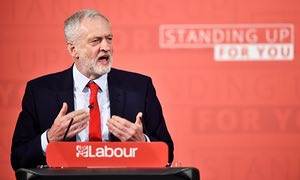
Jeremy Corbyn speech

Support Semi-Partisan Politics with a one-time or recurring donation:

Agree with this article? Violently disagree? Scroll down to leave a comment.

Follow Semi-Partisan Politics on TwitterFacebook and Medium.

Labour Manifesto: Voters Know Left Wing Policies Are Individually Alluring But Collectively Foolish

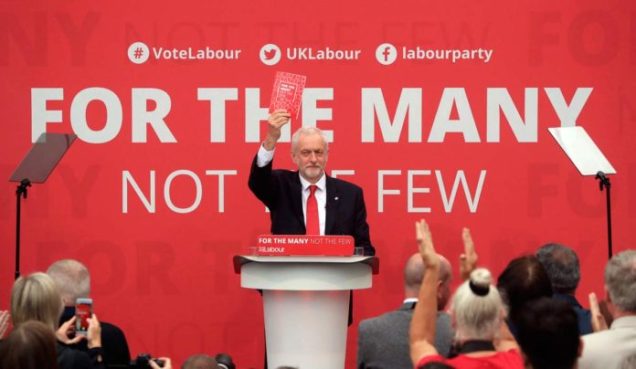
Labour Party General Election 2017 Manifesto - Jeremy Corbyn - For The Many Not The Few

Left-wing party manifestos fail to deliver electoral wins despite the popularity of their individual components because voters are smart enough to realise that promising the moon on a stick is not realistic

One self-deceiving mantra that we hear time and again from the Labour and the British Left is that people supposedly love individual left-wing policies but fail to vote Labour in the same numbers, and that if only they change X, Y or Z then the public will fall in love with the great package deal of free stuff + no responsibility and usher in a perpetual era of socialist government.

Currently, the excuse for failure is Jeremy Corbyn, and a number of leftist activists are busy consoling themselves that the Labour leader’s reputation is the only problem. Swap him out and keep the same policies, the self-deception goes, and everyone will suddenly start clamouring to vote Labour at all times.

How many times have we heard the likes of Polly Toynbee sanctimoniously declaring in a TV news debate that people “overwhelmingly” support left-wing policies like the renationalisation of the railways and the utilities sectors, hiking taxes on “the rich” or funnelling ever-increasing sums of money toward “Our NHS”? Too many to count.

And yes, certain individual policies can be very popular, particularly left-wing ones. If you prance around promising more stuff for less money – better public services, faster healthcare, higher welfare payments, all conveniently paid for by somebody else – you are bound to pick up a number of gullible admirers. But more importantly, when pollsters test the appeal of individual policies, people are likely to be very warm to left-wing, redistributive ideas when they are named individually.

It is only when you look at the systemic effect of implementing a basket of left-wing policies all at once that the appeal begins to wear off, as people engage more deeply with the question and the shine starts to come off the socialist Utopia. You might be able to convince voters that a punitive tax raid on the most productive people in society will cobble together enough money for one shiny new government programme, but when you start spending the revenues from that same tax hike multiple times and promising to do fifteen wonderful things with the same small pot of cash, that’s when voters’ natural scepticism kicks in.

Here’s the Guardian, falling into the same trap:

Renationalising the railways was backed by 52% of voters, with 22% opposed and 26% saying they did not know. Nationalising the energy market was supported by 49% with 24% against and 28% saying they did not know.

Labour’s most popular policy among those surveyed was banning zero-hours contracts, with 71% in favour and 16% against.

Despite the strong support for the party’s policies, only 30% agreed with the sentiment that Corbyn should be given a fair chance at leading the country, while 56% said he would be a “disaster” as prime minister.

And the Mirror, doubling down:

There is also widespread support for increasing income tax on those earning more than £80,000 a year.

This is backed by 65% of voters, with just 24% opposed.

A small majority (51%) of Tories also support the policy as do 80% of Labour voters, 72% of Lib Dems and 69% of UKIP voters.

Labour’s pledge to limit the state pension age to 66 is supported 74% of voters, with 15% against and 11% don’t know.

Again this policy goes down well with Tory voters, with 67% of them supporting it and just 22% against.

Here’s Manuel Cortes banging the drum at LabourList:

Make no mistake, Labour’s programme is transformative in a way not seen since 1945 or, Thatcher’s counter-revolution. We know our policies are overwhelmingly popular. Our challenge between now and June 8, is to turn the debate in our country away from Brexit onto the bread and butter issues which our policies tackle.

The polls tell us this will be a Herculean task but they are also saying that our manifesto commitments, on a raft of issues, have huge majorities in favour.

Meanwhile, Josiah Mortimer at Left Foot Forward at least recognises that voter preference is more complex than approval for a basket of individual policies, but still manages to miss the point:

It begs the question: if voters agree with most of Labour’s headline policies – what’s going wrong?

The latest poll of polls has Labour on around 30% – 16 percentage points behind the Conservatives. It’s a divide that makes sense only if you understand politics as being about much more than policies – but leadership, and above that: presentation of those policies and that leadership.

There are of course the usual misgivings over Jeremy Corbyn’s qualities as a statesman (56% say they think he would be ‘a disaster’ as Prime Minister while 30% think he should be given a ‘fair chance at leading the country’).

But beyond that, there is the issue of presentation. It’s been said time and again that Labour’s current policies aren’t significantly to the left of his predecessor (‘warmed up Millibandism’). From renationalising the railways and ending private involvement in the NHS, to prioritising council housing and clamping down on the energy companies: all this has been done and said before.

But it often feels that the left do ourselves few favours – in presenting policies as more radical than they really are – and voters do perceive Corbyn as much more left-wing than he is: with 0 being effectively a communist, and 10 being the most right-wing, voters put Corbyn at 2.2, and Labour at 3.

But the discrepancy between individual policy popularity and overall opinion poll performance is due to more than the “Corbyn effect”, and it is disingenuous of the Guardian and other left-wing media to pretend otherwise.

We see similar enthusiasm gaps between individual left-wing policies and overall voting intention throughout recent British political history – support for rail renationalisation has been high since the railways were privatised – and also in the United States, where Democrats love to crow that many voters actually support their high-taxing, pro-union, pro-redistribution policies only to be disappointed on election day when conservative Republicans keep being elected to various levels of public office.

But many leftists genuinely seem to struggle with this notion. To their minds, if one promises one wonderful free thing after another, the cumulative effect will be enormous and should result in nothing but a Labour landslide in the general election. They make no allowance for the diminishing returns of left-wing fiscal incontinence, or realise that each further promise makes the complete package less believable rather than more.

Owen Jones actually gets closer to the truth, admitting to Varsity:

However, Jones is quick to point out that popular policies aren’t enough saying “individual policies don’t win elections, you need a clear vision to inspire people in terms of what you’re going to do.”

And developing his point in the Guardian:

As has been noted, Labour’s recent policies are indeed electorally very popular. You don’t win elections, though, with policies that – taken individually – have high levels of support, as Ed Miliband discovered. There has to be a vision to bring them together. If you don’t define what you are for, you will be defined by your opponents, already the critical problem afflicting Labour’s leadership. You need a sunny, optimistic vision, not a miserable shaking of the stick at everything that’s wrong.

Jones is right and wrong here. A vision certainly helps. However, the Tories have just launched their 2017 general election manifesto which contains no discernible vision or philosophy of government at all, beyond a final repudiation of Thatcherism, a spiteful kick at libertarianism and a pledge to make random gestures to the Just About Managing (JAMs) by pinching from the Labour playbook.

This blog certainly wishes that it were otherwise; that Theresa May had decided to fight the 2017 general election on an unapologetically small-government, conservative platform – particularly since electoral victory is all but guaranteed, together with the opportunity to reshape the country if only the political will was there. But the Conservatives’ imminent victory is proof that one does not need a logical set of policies or a coherent philosophy of government in order to win support.

If anything, the problem is that many voters know the left-wing vision only too well, and simply want nothing to do with it. Jeremy Corbyn may be bad at communicating an appealing left-wing worldview, sometimes couching even relatively pedestrian policies in the off-putting language of revolutionary struggle, but his predecessor Ed Miliband was as bland as bland can be, and still nobody took the bait. Likewise, since leaving office the heavy fisted Gordon Brown has developed a talent for giving angry TED-style intervention speeches at crucial political junctures, but he too was unable to sell an attractive, convincing left-wing vision to voters tired of centre-left New Labour rule.

The problem is not that the left-wing vision does not exist, or lacks decent salespeople to pitch it. The problem is that people who know it tend to dislike it. Envy of the rich, a desire to tear the successful down rather than build the underprivileged up, a seething antipathy to business and entrepreneurship, the stubborn insistence on inviting the government deep into the private lives of every citizen, treating half the country as perpetually helpless and “vulnerable” people in need of constant nurturing by the state, endless moralising about being the sole keepers of compassion, and now the embrace of toxic and divisive identity politics – there is no confusion about what Labour stands for, only dislike ranging from mild indifference to complete revulsion.

Unfortunately, though, these beliefs and attitudes run deep through the political Left. Even when voters like a particular individual Labour policy they are too often unconvinced to give Labour their vote because they rightly perceive that the policy is borne from the wrong motives.

Labour could promise to cut income tax to zero for everybody earning below £50,000 and throw in a £10k rebate on top, funded by punitive taxes on millionaires and confiscatory wealth taxes on assets, which would be a hugely popular policy, but they will not persuade an election-winning coalition of voters to back them based on it because in the back of their minds, voters know that even if they are to personally benefit from one of Labour’s pie-in-the-sky ideas, everybody will suffer – themselves included – when they quickly succeed in driving the country into the ground.

Hard as it is for some on the Left to believe, voters sometimes actually appreciate it when political parties level with them rather than endlessly trying to flatter and bribe them with “free” stuff. It was a Democratic president, John F. Kennedy, who exhorted his fellow citizens to ask what they could do for their country rather than what their country could do for them. Somewhere along the way, on both sides of the Atlantic, the Left seems to have lost this spirit, and replaced it with the gnawing certainty that voters want a shopping list of bribes, a promise to be perpetually looked after by the state and alleviated of all responsibility for their lives.

Fortunately this is not the view of most voters, which is why the Labour Party and the British people look set to continue talking past one another, on June 8 and into the future.


Labour Party Manifesto 2017 - For the many not the few

Support Semi-Partisan Politics with a one-time or recurring donation:

Agree with this article? Violently disagree? Scroll down to leave a comment.

Follow Semi-Partisan Politics on TwitterFacebook and Medium.