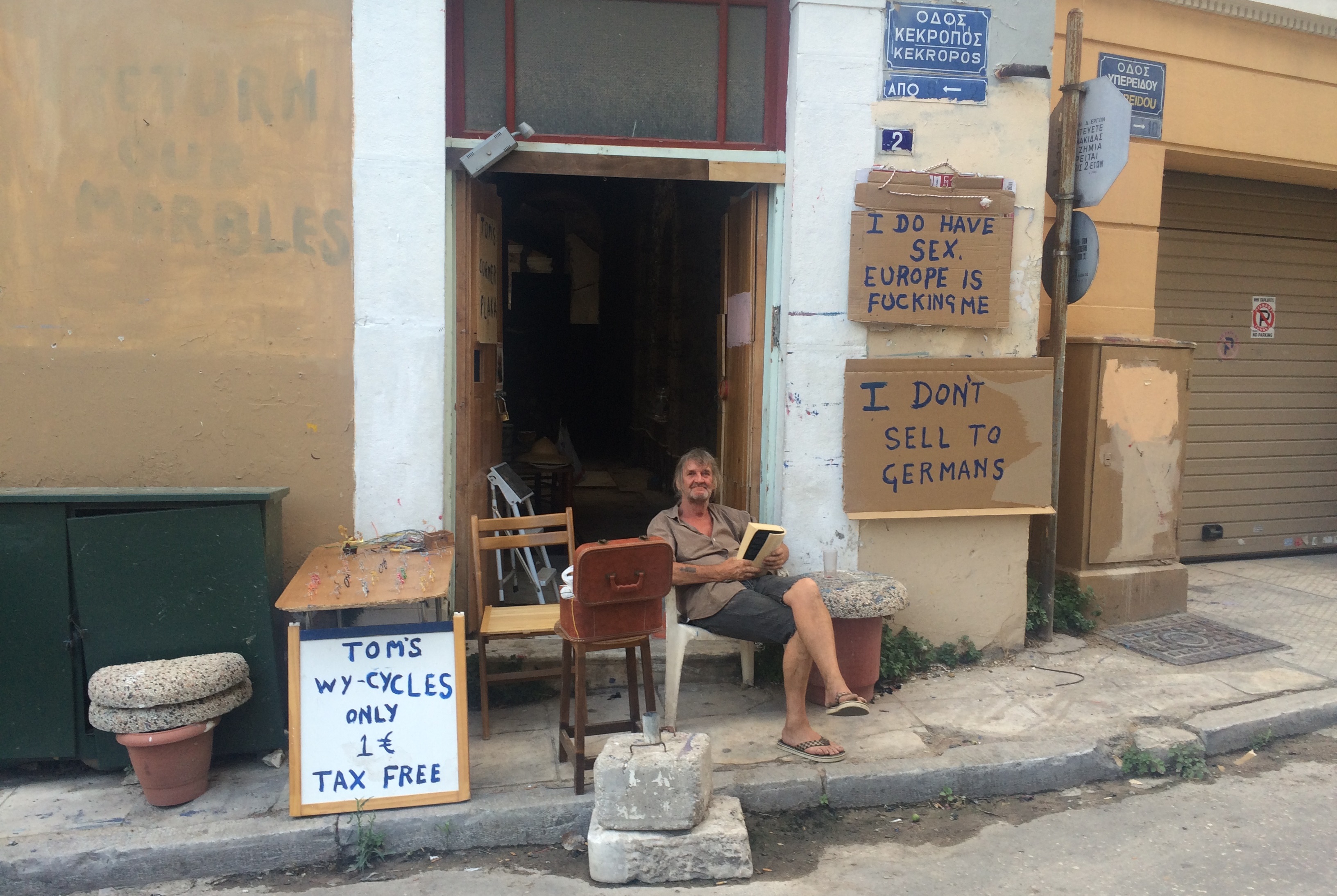
Following a week of vacation, I left Athens for London just hours after Greek Prime Minister Alexis Tsipras made his dramatic address to the nation, stating his intention to put the latest EU bailout offer to a referendum. While the popular islands and tourist areas of central Athens showed few outward signs of the unfolding drama, queues were already forming at ATMs in poorer and more residential areas. The following are my thoughts on the Greek crisis and the behaviour of the international institutions which increasingly supplant national democracy.
No wonder the power brokers of Europe are dazed, confused and spitting with rage. Cyprus meekly fell into line when their turn came. Ireland whimpered and did what it was told. But Greece is displaying a puzzling degree of stubbornness and outright disrespect by failing to behave like a weak supplicant nation with no negotiating power, infuriating the finance ministers and leaders of the other eurozone countries in the process. It’s almost as though, in their arrogance, the Greek government actually believes that its primary duty is to the people of Greece rather than the multinational institutions which now seek to go through the country’s budget and the government’s manifesto with a red veto pen.
Heaven knows that Greece is not without blame in this crisis. A Byzantine system of differing VAT rates, ludicrously early retirement ages, inefficient state-owned industries and unchecked cartels and corruption have all played their part in running up the Greek deficit and ensuring that the last few years of bailout assistance have failed to produce results or return the economy to growth.
But for as long as our world is built on the principle of the sovereign nation state, free people in a free country have the inviolable right to make their own bad choices and then take what measures they see fit to correct these errors through the democratic process. Unfortunately, when nation states are increasingly stripped of their power and influence – having vested them in political institutions like the European Union and monetary unions like the Euro – this is no longer possible. Suddenly, millions of people in far-flung places have a vested interest in decisions taken in one small country, and the democratic will of any one member state is only one consideration among many others competing for consideration.

 Semi-Partisan Politics