Peter Hitchens Demands A Real Conservative Alternative To Jeremy Corbyn

Margaret Thatcher hologram

The current cast of characters jockeying to replace Theresa May are almost as underwhelming as the prime minister herself. British conservatives of all shades need to have a full and open debate about how best to move the Conservative Party and the country forward, and then find a future leader with the charisma to take on Jeremy Corbyn in the battle for hearts and minds

Exactly two years ago, I wrote a rather despairing piece asking “Where is the Conservative Party’s Jeremy Corbyn?” Now Peter Hitchens is rightly asking the same question, having long ago despaired at the direction of the Conservative Party and its accommodation with Blairite, centrist managerialism.

Back in August 2015 I wrote:

I want a standard bearer for the Right who actually makes me feel excited, not resigned, when I enter the polling booth. I don’t necessarily expect that person to be elected by a landslide on the first attempt, and to immediately implement their entire agenda in full. But neither do I expect – as presently happens – all of the soul-sapping compromising and watering-down of core principle to take place before the candidate even gets their name on the ballot paper.

Jeremy Corbyn has not done all of his compromising upfront – he is proud of his beliefs, and does not seek to apologise for them. And he doesn’t talk and answer questions as though he is responding to the twitches of a focus group’s instant polling dial. That’s why he is surging in the polls. That’s why previously dejected Labour activists who support Corbyn are suddenly walking a little taller again. That, I think, is why Owen Jones is walking round with such an infuriatingly wide smile on his face at the moment.

It cannot remain this way if we are to be successful in advancing the cause of smaller government and greater individual freedom and autonomy. We cannot allow the Left to monopolise inspiration and ambition, however far-fetched, while we conservatives occupy and embody the dull, managerial, technocratic and remote politics of austerity.

And conservatives will never win a real mandate for change so long as we are content to be the party of last resort, the failsafe option voters pick when all of the other choices are too wacky or offensive to contemplate.

I concluded by asking:

If David Cameron’s Conservative Party was voted out of office today, what will future historians and political commentators say about this government fifty years from now? What will be the Cameron / Osborne legacy? What edifices of stone, statute and policy will remain standing as testament to their time in office? Try to picture it clearly.

Are you happy with what you see?

Substitute Theresa May’s name for David Cameron’s, and pose the same question to yourself. Is the answer any clearer or more satisfactory than it was two years ago?

Clearly not. And now Peter Hitchens has arrived at the same conclusion, writing in the Mail on Sunday:

If (like me) you have attended any of Mr Corbyn’s overflowing campaign meetings, you will have seen the hunger – among the under-30s and the over-50s especially – for principled, grown-up politics instead of public relations pap.

Mr Corbyn reminds mature people of the days when the big parties really differed. He impresses the young because he doesn’t patronise them, and obviously believes what he says. This desire for real politics isn’t just confined to the Left. Ken Livingstone is right to call Mr Corbyn Labour’s Nigel Farage. Ukip appeals to a similar impulse.

Millions are weary of being smarmed and lied to by people who actually are not that competent or impressive, and who have been picked because they look good on TV rather than because they have ideas or character.

Indeed, ideas or character are a disadvantage. Anything resembling a clear opinion is seized upon by the media’s inquisitors, and turned in to a ‘gaffe’ or an outrage.

Actually, I dislike many of Mr Corbyn’s opinions – his belief in egalitarianism and high taxation, his enthusiasm for comprehensive schools, his readiness to talk to terrorists and his support for the EU. Oddly enough, these are all policies he shares with the Tory Party.

But I like the honest way he states them, compared with the Tories’ slippery pretence of being what they’re not.

I have indeed attended one of Jeremy Corbyn’s massive rallies, in which the Labour leader (then fighting to cling on to leadership of the party in the face of a challenge from the hapless Owen Smith) managed to pack out the vast Kilburn State theatre in North London with excited and motivated activists of every age. It was quite a remarkable sight to behold, with energy levels more like those you would see in a hard-fought US presidential primary than a dour Labour Party leadership contest.

Contrast this with the pathetically phony photo opportunities orchestrated by Theresa May’s hapless 2017 general election campaign, with a small huddle of telegenic young activists, clearly bussed in from London, holding up professionally printed placards in front of the Tory campaign bus while the prime minister grated her way through that godawful “strong and stable” stump speech. There was no authentic grassroots enthusiasm for May or her policies, to the extent that CCHQ was terrified to allow the prime minister to get into any kind of unscripted interaction with the public, let alone a televised debate.

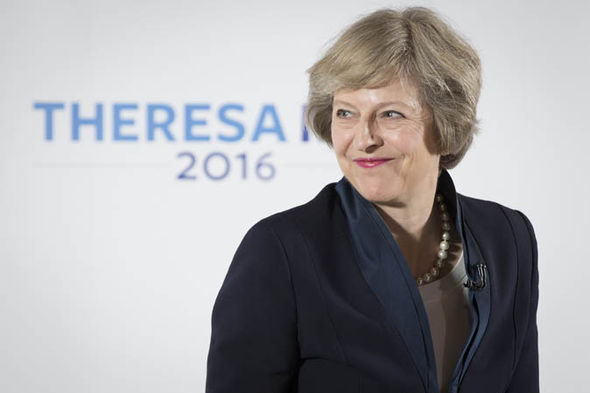
Theresa May - conservatives - campaign rally crowd


There may well be an appropriate time for dull managerialism and “steady as she goes” leadership, but Britain in 2017 is not it. Obviously Brexit must be handled with skill and sensitivity (not that the government has shown either of these attributes), but in every other respect Britain requires radical solutions to deep-seated problems rather than Theresa May’s brand of denial and incompetence. Whether it’s low productivity, education, the housing crisis, a failing nationalised healthcare system, dangerously pared-down national defence or a society fractured by toxic identity politics, this is a time for bold and unapologetically conservative solutions. But instead we have a weak prime minister at the head of an incoherent government, terrified of proclaiming conservative principles and desperate to move closer to the Labour Party on nearly every issue.

Hitchens goes on to describe what he sees as the ideal future Conservative leader:

My hope, most unlikely to be realised, is that a patriotic, conservative and Christian equivalent of Mr Corbyn will emerge to take him on, and will demonstrate, by his or her strength of conviction, that there is an even greater demand for that cause than there is for old-fashioned leftism. In any case, I think any thoughtful British person should be at least a little pleased to see the PR men and the special advisers and the backstairs-crawlers of British politics so wonderfully wrong-footed by a bearded old bicyclist.

Patriotic and conservative would be a good start, but I don’t think that this is specific enough. Theresa May, for example, ticks all three of Peter Hitchens’ boxes (one can make a valid argument that May represents a serious thread of conservative thought) yet is completely and utterly unequal to the role of prime minister, ideologically and temperamentally.

And as far as being Christian is concerned, Theresa May is a practicing Christian and famously the daughter of a vicar, and yet she has shown no real impulse to halt the suppression of legitimate religious expression where it comes into conflict with the free speech-averse forces of social justice and identity politics, for example. What, then, is the point of cheerleading for a Christian prime minister when they fail to defend religious freedom when in office? I would much rather have a prime minister who is secular-liberal when it comes to religion, eager to separate church (and faith) from state as far as possible while simultaneously protecting the right of British citizens to worship freely.

When it comes to choosing the ideal future Conservative prime minister, I maintain that the Tories could do far worse than select somebody who fits the profile I set out shortly before the disastrous general election back in June:

Ex armed forces (of either gender), mid to senior rank, with an illustrious overseas deployment history. Someone who exudes unapologetic patriotism yet never lapses into cheap jingoism, and whose commitment to defence, national security and veterans affairs is beyond question.

Followed up by a successful later career, possibly in the third sector or the arts but better still in the private sector, having founded a stonking great big corporation that also gives back to the community by employing ex-offenders or partnering with charities to do meaningful work in society.

A solid and consistent record (at least dating to the start of the EU referendum campaign) on Brexit, able to tell a compelling story about how Brexit – properly done – can be good for our democracy and at least neutral on the economic front.

A person who believes that until somebody comes up with a viable alternative to (or augmentation of) the democratic nation state, this institution remains the best method yet devised of ordering human affairs, and that consequently we should not needlessly undermine and vandalise it by vesting power in antidemocratic supranational organisations or pretending that we can sidle our way into a post-patriotic world by stealth rather than with the consent of the people.

Somebody who will not bargain away our civil liberties chasing the chimera of absolute security from terrorists and madmen – particularly while refusing to face down radical Islamism as an ideology to be confronted and defeated – but who will also stand up to expansionist, nonsensical definitions of human rights and an identity politics / political correctness agenda that values hurt feelings more than freedom of expression.

Somebody with the articulateness, gravitas, sincerity and quickness of thought capable of doing the near impossible in 2017: single-handedly turning the tide away from the vapid, broken politics of me, me, me. Somebody willing to ask – as John F. Kennedy once did – not what our country can do for us, but what we can do for our country. Somebody who dares to call us to a higher purpose than merely living in a country with “good public services”, deifying “Our NHS” and having the goddamn trains run on time.

Somebody who chooses for us to go to the moon (or rather its current day equivalent in terms of spectacular human achievement) “and do the other things, not because they are easy, but because they are hard, because that goal will serve to organize and measure the best of our energies and skills” (John F Kennedy).

Doubtless my idea of the ideal conservative prime minister and Peter Hitchens’ conception will differ somewhat – Hitchens is more socially conservative than I, while I see myself as more of a conservatarian with pragmatic, tempered libertarian instincts.

But these differences of opinion only make it all the more important that we have a full and open debate about the future of conservatism, and what kind of leader would be best placed to move the conservative movement and the country forward. And far better that this conversation first take place in the abstract, as a discussion of principles and ideology, so it does not immediately descend into personality-based infighting and jockeying for position among Theresa May’s likely successors.

And at the risk of sounding like a broken record, it is also vitally important that conservatives (I deliberately speak of small-C conservatives rather than the often toxic and inept Conservative Party) find a way to re-engage with a youth vote that the Tories have been shamefully quick to write off and cede to the parties of the Left. This abandonment of the youth vote is absolutely untenable going forward, and is yet another reason why the next Tory leader needs to have sufficient charisma and authenticity to cut through anti-conservative prejudices among young people that have often been baked into their consciences since they first became politically aware.

Until the Conservatives figure out who and what they actually want to be, both Peter Hitchens and I are likely to remain underwhelmed and disappointed. An urgent reckoning needs to take place in order to answer this question: Has seven years of Cameron/Osborne/May-style accommodation with centrist Blairism delivered any real tangible improvement to the trajectory of Britain, or are we largely treading water? And if the latter, is the solution to move even further to the left, as Theresa May and her political spirit animal Nick Timothy seem to want, or is it wiser and better to bring real conservative values to bear on 21st century problems?

As far as I am concerned, the choice is self-evidently clear. The Tories can stubbornly cling to their current philosophy and hope at best to remain in office but not in power for a few more years as they desperately scamper after the Labour Party in their march to the hard left, or they can renew themselves, stop apologising for their conservatism and start enacting it instead.

But in the meantime, let’s start the debate.
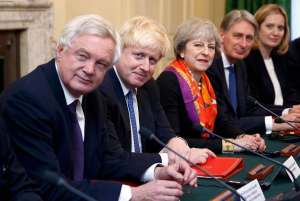
 

Theresa May cabinet - Tory conservative leadership

Top Image: NewsThump

Support Semi-Partisan Politics with a one-time or recurring donation:

Agree with this article? Violently disagree? Scroll down to leave a comment.

Follow Semi-Partisan Politics on TwitterFacebook and Medium.

Carnage

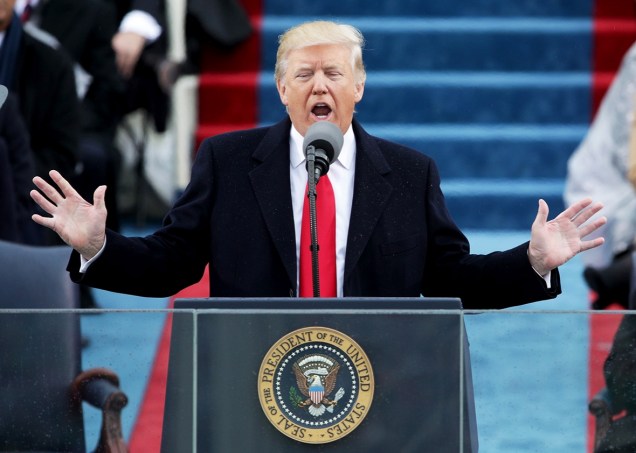
Donald Trump - American Carnage - first inaugural address

Abandon all hope?

Rudyard Kipling once wrote:

“If you can bear to hear the truth you’ve spoken
Twisted by knaves to make a trap for fools
Or watch the things you gave your life to, broken
And stoop and build ’em up with worn out tools…”

Well, I can’t quite say that I have given my life to the causes for which this blog stands – particularly as I only started blogging after the 2010 general election, and my views on some issues have matured and evolved over that time – but I have been doing this for over five years now, sometimes publishing multiple times a day, and I think that I hold my own when it comes to putting my time, money and effort into being an engaged citizen.

And so I think I certainly know what Kipling was driving at when he alluded to the disappointment of seeing a long-cherished and hard-sought goal turn to dust in one’s hand the moment it is finally reached. That feeling pervades politics right now, at least for pro-Brexit, pro-nation state conservatarians such as myself.

2016-2017 has been a period of one step forward, two steps back in many regards. The British people voted for Brexit and freedom from that decaying, antidemocratic political conglomerate known as the European Union, but they did so on the back of a tawdry and deceitful campaign led by proud ignoramuses who wore their lack of a Brexit plan as a badge of honour – and now the hubris of the Westminster Brexit aristocracy threatens to ruin the entire endeavour.

Meanwhile, the Coke Zero Conservative Party managed by a whisper to keep Jeremy Corbyn’s marauding socialists out of office, but only at the expense of turning themselves into a limp, centre-left version of the Labour Party themselves. And now conservatives face the dual indignities of being accused of being heartless haters of the poor and persecutors of the weak despite having ceded most of the intellectual arguments to the Left, and being completely unable to move the needle of British politics in a remotely satisfactorily right-wing direction.

If I’m going to be accused of callously taking a jackhammer to the welfare state I at least want to see a little bit of rubble as my reward. But there is no rubble, only the stench of craven capitulation to the leftist forces of perpetual dependency.

And things are little better across the Atlantic. Whatever pleasure one may have otherwise taken from the humbling of Hillary Clinton in her second presidential campaign – and there were many reasons to want to see a borderline corrupt establishment candidate in hoc to global elites punished at the ballot box – any such joy quickly turned to ashes when faced with the alternative of President Donald J. Trump, who vastly matches and exceeds Clinton’s flaws in every conceivable way.

The real tragedy of the Trump presidency – at least in my view, as I previously discussed on this blog – is that even those few policies and initiatives of the Trump administration which are positive and laudable are actively being rendered toxic and untenable by their association with a man so patently unfit to serve in the highest civilian office.

As with Brexit and the limping British conservative government, I fear that the Trump presidency will shift the Overton window of American politics further and further to the Left the longer it persists – either because Trump himself embraces many protectionist and left-wing ideas, because the Republican Party’s brand is being tarnished through their utter inability to transition from a party of strident protest to a party of responsible government, or because the American Left has been driven to such blind, seething fury at Trump’s personal flaws that any daft socialist or redistributive policy starts to seem appealing to people simply because it is a rebuke to the president.

Almost across the board, applying the normal metrics, this should be a time for celebration. But instead, each victory appears increasingly Pyrrhic. To defend Brexit now is to open oneself to ceaseless mockery and hatred by a cast of bien-pensant know-nothings who think that taking their opinions from the Guardian website makes them high-information voters when in fact they are some of the very, very lowest in the land.

And now even those of us who had nothing to do with the major Brexit campaigns – the increasingly ridiculous Leave.EU or the establishment Vote Leave – are accused of unleashing a tide of hatred and xenophobia, and of “dividing the country”. Of course, our accusers didn’t mind when the country was equally divided prior to the referendum, because the people who disagreed with them were not given a proper voice in power. Only when the machinery of state finally swung into action on behalf of the majority did these pant-wetting histrionics about “divisiveness” begin.

And that is to say nothing of the fact that our political class are mismanaging Brexit to such a jaw-droppingly colossal extent that many Remainers are effectively being proved correct, a fact which they do not hesitate to crow about on television, in the newspapers and in social media. Of course, this is why Brexit needed to happen in the first place – our ability to self-govern has atrophied over decades of relentless integration with a remote and unaccountable supranational government in Brussels.

Bringing power back closer to the people and undoing 40 years of political integration was always going to be an Hurculean, traumatic process (not a singular event), but even if the most dire Brexit predictions come true it is surely better to go through the painful correction rather than simply throw our hands up in the air, admit that we are not able to govern ourselves adequately as a people, and submit permanently to remote technocracy.

But it is increasingly clear that the promise of Brexit will not be realised, at least not by the current crop of politicians, or realistically within at least a couple of decades. Brexit was always going to be a process, not an event. And Brexit itself was never the thing that would deliver the beneficial payload in terms of bringing power and accountability closer to the British people. Brexit merely makes these things remotely possible, by extricating us from treaties and frameworks which give us no opt-out or right of reservation if a particular policy, regulation or initiative is against our national interest.

But our political class are so superficial and intellectually uncurious, and the quality of our political discourse so weak, that this richer conversation has played out only on the independent blogosphere, while prestige news outlets, journalists and politicians present Brexit as a zero-sum game in which – depending on their perspective – either buccaneering Britain defeats the evil continentals, or the Virtuous Europeans give us the “punishment beating” we were so richly warned about during the referendum.

Perhaps we should have seen it coming. Effectively overruling the establishment’s carefully laid out plan for our lives was always going to generate a huge backlash, from powerful and well-connected people with the ability to make traditional grassroots anti-establishment backlashes look like a cake sale at the Women’s Institute. Perhaps we forgot this fact because we Brexiteers and defenders of nation state democracy were so used to being part of a backlash ourselves – the backlash against the establishment – that we didn’t give enough credence to the fact that globalists, disinterested “citizens of the world” and other assorted types are equally as invested in their worldview as we are in ours, and in a far stronger position to defend it from attack.

And now that they have experienced repudiation at the ballot box, the establishment’s ability to turn howls of outrage into a full-on filibuster of democratically-made decisions is stronger than many of us planned for. We have Nigel Farage, Boris Johnson and the like jabbering away like idiots, totally unmoored from reality, tarnishing the dream of Brexit with every garbled statement. Meanwhile, they – the pro-EU establishment – still control the bulk of the machinery of state, dominate Parliament, the worlds of art, science and commerce. And they would rather see Britain fail so that they can scream an hysterical “I told you so!” at the 52% than muck in and help to amplify the voices of sane Brexiteers (they happy few) who understand what they are talking about.

Neither is the concept of the nation state faring much better in America, where Donald Trump’s presidency has caused American leftists to increasingly embrace a position in which no illegal immigrant should face deportation, or even the slightest hindrance as they attempt to subvert the law and settle in the United States without permission. Never mind that a nation which cannot control its own borders can hardly still count itself a nation – to even question the idea of mass amnesty, sanctuary cities and a fully open door is to be racist towards “undocumented” people, for whom our hearts should brim over with sympathy, while hardening against America’s native-born huddled masses.

But to support the nation state, or its greatest expression through Western Civilization, is becoming increasingly gauche and passe for many in the political elite. Donald Trump recently visited Warsaw and made what was actually a rather decent speech (obviously not of his own creation) about defending Western values from military, terrorism and cultural threats. But of course Donald Trump was the worst possible person to make such a speech, and so now even more hearts will be turned against the idea of taking pride in liberal Western values. The president of the United States actively sets back the causes which he (or the people in his administration who pull the strings) seek to promote, purely by virtue of his ignorance and inestimably deficient personality.

One Australian news anchor put it rather well, remarking that “there’s a tendency among some hopeful souls to confuse the speeches written for Trump with the thoughts of the man himself”. A dangerous tendency indeed. Even when Trump says something broadly positive – such as about supporting the nation state and defending Western values – one cannot rejoice, first because the man who delivers the words renders them toxic and consequently less likely to happen, but also because there will likely be no attempted follow-through anyway. These are just words put into his mouth by a speechwriter or an administration ideologue like Steve Bannon.

The Trump-Bannon or Trump-Miller partnerships are not remotely like that between John F. Kennedy and his brilliant speechwriter Ted Sorensen, where the wise counsellor Sorensen merely refined JFK’s own fairly sophisticated thoughts and words. No, the incumbent of the Oval Office is a shallow, egotistical and unlettered man who just wants to be seen to be winning, and who can be manipulated into doing pretty much anything so long as it makes for a good TV visual.

That’s why one can’t even rejoice when Trump says something vaguely encouraging in a speech – because at the best of times, Trump is effectively little more than a sock puppet for the cleverer, more manipulative people jostling for influence within his administration.

The future of conservatism also presently hangs in the balance, on both sides of the Atlantic. In America, the Republican Party – having sold their soul to Donald Trump – seems determined to prove that they cannot be trusted as a responsible party of government. If you want angry tri-cornered hatted protests about freedom and liberty, the GOP is probably still just about the party for you. But if you expect mature governance and the diligent application of conservative policies in government then look elsewhere.

Eight years of whining about the evils of ObamaCare and the Republicans have no realistic plan for repeal. All of their proposals get dreadful scores from the Congressional Budget Office because they are forecasted to simultaneously throw people back onto the uninsured scrapheap while simultaneously costing more money. “Repeal and replace” is rapidly becoming the Republican Party’s version of Vote Leave’s “£350 million for the NHS” pledge. And if the GOP cannot deliver some kind of conservative reform that meaningfully benefits people’s lives by the time of the 2018 midterms, they will be punished far worse than Theresa May’s limp Tories.

Speaking of which, British conservatism is in complete and utter crisis. As I have extensively written on this blog over several years now, failing to robustly defend small-government conservative values comes with a price attached. And now we know what that price is – Jeremy Corbyn on the verge of entering 10 Downing Street as prime minister, all because Theresa May’s cowardly and incompetent election campaign failed to make a bold and compelling case for conservative solutions.

But truthfully this is not all Theresa May’s fault. The rot goes deep, even back beyond the Cameron and Osborne years. If you do not defend conservative principles as an inherently good thing rather than a necessary virtue, eventually you will lose. And for years now the British public has been fed a poisonous diet of the idea that the only “good” conservatism is that sop to the Left known as “compassionate conservatism”, while any attempt to preach the virtues of self-reliance, individualism and civil society over the state is seen as somehow evil.

Then look at the remorseless advances made by the Cult of Social Justice and Identity Politics, who have broken free from the university campus and started to inflict their dogmatic regressive illiberalism across whole swathes of society. At one point I attempted to document daily occurrences of overreach and infringement on civil liberties by the social justice brigade – my “Tales from the Safe Space” series – but by about the sixtieth entry it started getting a little bit repetitive basically issuing the same dire warning week after week.

If the warning was heard, it certainly has not been heeded. Political leaders, corporations, media outlets, journalists, commentators and virtue-signalling private citizens have all been falling over themselves to jump on the social justice bandwagon.

Even once-venerable institutions like America’s Southern Poverty Law Centre would rather spend their time hounding brave reformist Muslims and ex-Muslims who speak out against extremism, accusing people like Maajid Nawaz and Ayaan Hirsi Ali of being Islamophobic extremists themselves, than stick to their core mission of shining a spotlight on genuine racism and discrimination, particularly in the Islamic world. The ACLU has additionally given itself over completely to punishing anybody who doesn’t buy into radical new gender theory, while the UK’s Liberty organisation has long favoured leftist agitation over the single-minded defence of true civil liberties.

In short, there is little to celebrate and even less to give cause for hope. Having snatched power, those few forces which could have potentially been an agent for change have instead been stymied by their own incompetence, while the forces of the globalist Left fortify themselves in temporary opposition.

I wish it were otherwise, but at present I do not see how. Compare these two extracts from the Obama second inaugural speech in 2013 and Trump’s first (and hopefully last) inaugural in 2017. First the Obama:

This generation of Americans has been tested by crises that steeled our resolve and proved our resilience. A decade of war is now ending. (Applause.) An economic recovery has begun. (Applause.) America’s possibilities are limitless, for we possess all the qualities that this world without boundaries demands: youth and drive; diversity and openness; an endless capacity for risk and a gift for reinvention. My fellow Americans, we are made for this moment, and we will seize it — so long as we seize it together. (Applause.)

For we, the people, understand that our country cannot succeed when a shrinking few do very well and a growing many barely make it. (Applause.) We believe that America’s prosperity must rest upon the broad shoulders of a rising middle class. We know that America thrives when every person can find independence and pride in their work; when the wages of honest labor liberate families from the brink of hardship. We are true to our creed when a little girl born into the bleakest poverty knows that she has the same chance to succeed as anybody else, because she is an American; she is free, and she is equal, not just in the eyes of God but also in our own. (Applause.)

We understand that outworn programs are inadequate to the needs of our time. So we must harness new ideas and technology to remake our government, revamp our tax code, reform our schools, and empower our citizens with the skills they need to work harder, learn more, reach higher. But while the means will change, our purpose endures: a nation that rewards the effort and determination of every single American. That is what this moment requires. That is what will give real meaning to our creed.

And then the Trump:

The forgotten men and women of our country will be forgotten no longer.

Everyone is listening to you now.

You came by the tens of millions to become part of a historic movement the likes of which the world has never seen before.

At the center of this movement is a crucial conviction: that a nation exists to serve its citizens.

Americans want great schools for their children, safe neighborhoods for their families, and good jobs for themselves.

These are the just and reasonable demands of a righteous public.

But for too many of our citizens, a different reality exists: Mothers and children trapped in poverty in our inner cities; rusted-out factories scattered like tombstones across the landscape of our nation; an education system, flush with cash, but which leaves our young and beautiful students deprived of knowledge; and the crime and gangs and drugs that have stolen too many lives and robbed our country of so much unrealized potential.

This American carnage stops right here and stops right now.

The two speeches are truly not that different, in basic message if not in style. Or at least, the difference lies in what is not said rather than in what is said.

Both make the same essential (and valid) point – that there is an “American Carnage” or Western Carnage in progress. But while former President Obama did little to arrest this trend and is now happy to go off yachting with Tom Hanks and Bruce Springsteen in his retirement, current President Trump would rather rage against his critics at 5AM on Twitter than do anything about it.

And waiting eagerly in the wings, like hungry jackals, are the same cast of incompetent, self-serving clowns who gave us Donald Trump and Theresa May in the first place.

For conservatives and supporters of the nation state as the greatest bulwark against threats to our liberty, optimism is vanishingly hard to find in politics right now. And there it is.


Apologies for the recent lack of blogging, due to health issues. Hopefully normal service will commence soon.


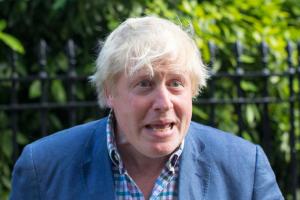
Boris Johnson - Brexit - conservatism

Support Semi-Partisan Politics with a one-time or recurring donation:

Agree with this article? Violently disagree? Scroll down to leave a comment.

Follow Semi-Partisan Politics on TwitterFacebook and Medium.

Embracing ‘Compassionate Conservatism’ Will Not Make The Rootless Tories More Popular

The Good Right - compassionate conservatism

Compassionate conservatism barely won David Cameron a majority government in 2015, even against the hapless Ed Miliband. Rebooting the flawed concept, especially against Jeremy Corbyn’s turbo-charged ultra-compassionate socialism, means fighting the Left on their own terms and is doomed to failure

Despite its complete and utter failure to deliver a solid electoral victory for the conservatives, or to meaningfully detoxify the Conservative Party’s “nasty party” image, the woolly, nebulous and thoroughly unhelpful concept of “compassionate conservatism” refuses to die.

Following Theresa May’s abject failure in the 2017 general election – losing the Conservative Party their majority by failing to counter the appeal of a marauding socialist who actually has principles, stands for them unapologetically and convinces more and more people of their value – all manner of ideologically limp Wet Tories are now coming out of the woodwork to proclaim that the only way for conservatism to survive is to meet Jeremy Corbyn half way.

These appeasers of the Left (I won’t call them pragmatists because that kinder term suggests a kind of nobility and wisdom for which there is very little evidence) seem to sincerely believe that staying in power means accepting vast swathes of the Left’s argument about the welfare state, wealth redistribution and fiscal restraint. They would have the rest of us believe that conservatives face inevitable defeat unless the Tories compete with Labour to be the loudest cheerleaders of the bloated public sector.

Charlie Elphicke, Tory MP for Dover, is only the latest to advance this defeatist theory, writing in Conservative Home:

Step one to victory is to conquer the idea that the Conservatives are on the side of the rich. Every Conservative I know is in politics because we care about the vulnerable and the least well off. At the election, we failed to explain to people how our values offer the best for people and their families.

Conservatism is at its best when we communicate a vision of Britain as a land of opportunity, aspiration and success. A place where anyone, whatever their background, can achieve and succeed. Where they can climb the ladder of life. A country where people can get jobs, a home to call their own and achieve their full potential. Where Government gives people a hand-up, not handouts – and hard work brings rewards.

Our caring conservative tradition is also central to all that we are. This is why we must showcase our values as the party of compassion. The conservatism that seeks to protect people from the worst excesses of the system.

Protecting people, and being the party of compassion, matters every bit as the land of opportunity. This means standing up against rogue landlords, overcharging utility companies, loan sharks, tax dodgers, and unscrupulous employers.

And yet rather than proposing that the Conservatives do what Margaret Thatcher did to the hard left in the 1980s – namely, steamrollering over their socialist squeals, failed dogmas and entrenched special interests to speak directly to the people and sell them an alternative vision of Britain’s future – Charlie Elphicke proposes instead that we prance around humming The Red Flag and hoping to convince enough wavering voters that we are little more than the Labour Party with a brain and a calculator.

Elphicke proposes capitulation to the false leftist narrative that it is in any way “compassionate” to redistribute wealth and income from those who earned it in order to better fund a welfare machine which encourages dependency and helplessness more than self-sufficiency. Elphicke – though he would never say so out loud – effectively accepts the idea that we should give a man a fish, and then another fish, and then another one until the barrel is empty, rather than teaching people to fish for themselves.

Elphicke continues:

I’ve spoken to colleagues from across the country who were asked by people on the doorstep what our manifesto offered for them. They struggled to find positive things to say.

Now I’ve heard people say we didn’t have a “retail offer.” But, you know, we’re not selling soap powder here. We are about caring for people and changing lives. We failed to explain how we would do that – and so people didn’t know.

It’s not difficult to think how we could have done so much more to support traditionally Conservative motorists, aspirant home owners, small business people, and the elderly. Or how we could have reached out to families and younger people with lifelong learning, greater help for carers, and more support to get on the housing ladder.

We should have showcased our record of action, too, because it is pretty incredible. We brought Britain back from the brink. We have delivered record employment, a strong economy, a powerful recovery from Labour’s crash, along with pumping vast amounts of cash into the NHS. Our failure to highlight our record cost us heavily.

Many of these observations are correct, but the conclusion which Elphicke draws from them are depressingly wide of the mark.

Yes, the Tories did an abysmal job of standing up for their record. At a time when the Labour Party manifesto offered an series of calculated bribes catering even to firmly middle class voters, the Tories went to battle with their mindless slogan of “strong and stable”, and a deafening silence when it came to defending their limited efforts at fiscal restraint since 2010.

But Charlie Elphicke’s vision of “caring conservatism” is not the solution. Rather than standing up to the politics of Me Me Me or turning away from the notion of bribing voters with cynical manifesto pledges, Elphicke merely proposes that the Tories start using the same playbook. Even the term “caring conservatism” should raise the hackles of any self-respecting conservative, suggesting as it does the idea of government as an omnipresent, watchful auxiliary parent, charged with wiping our noses and keeping us safe at the expense of our freedom and individuality.

Worse still, to even talk of “compassionate” or “caring” conservatism is to concede that ordinary, vanilla conservatism is somehow cruel or lacking in compassion. It suggests that there is something fundamentally wrong with our worldview and our politics, and that only by being born again and accepting the “compassionate” modifier do we become semi-respectable people with whom it is just about acceptable to associate in public.

This is incredibly counterproductive. Economically speaking, conservatism at its best means government getting out of the way so that people can succeed according to their merits, and providing a limited but dependable safety net for those in real need by not lavishing unnecessary benefits on over half of the population who are arbitrarily declared “vulnerable” and in dubious need of government assistance. The point that conservatives should be screaming from the rafters is that real conservatism would do more for the truly needy, by rolling back a benefits culture which sees as much as 50% of taxpayers becoming net dependants on the state and compensating for that rollback by lowering general taxation and restructuring the welfare state so as to provide something more than grim subsistence for those who need to use it.

You don’t see Labour MPs or activists describing themselves as “sane Labour” or “grown-up Labour”, effectively conceding that the more statist, big-government policies of their party base are somehow insane or childish (even though they are). They own their left-wingery and proclaim it proudly, not apologetically. Centrist Tories or “compassionate conservatives”, meanwhile, come across as ashamed of their own party and apologetic for their own beliefs, and seem determined to tack as closely to Corbyn’s party as possible before the cognitive dissonance becomes too unbearable.

This is a contest that conservatives can never win. In the race to be more paternalistic, more restrictive of behaviour and more redistributive of wealth, the Tories will lose to Labour every day of the week. And with Jeremy Corbyn in charge of the Labour Party it won’t even be close.

Look, I get the superficial appeal of Charlie Elphicke’s proposal. It offers a quick and easy route to staying in power, where rather than having to do the hard work of challenging voter assumptions and telling the electorate difficult but authentic truths, instead we can just act a bit more like the Labour Party and stay in government forever. But it won’t work.

If the 2017 general election taught us anything, it is that an entire generation of young voters have grown up experiencing all of the wealth, liberty and opportunity which Thatcherism helped secure for them before they were even born, but that these same people have been taught to despise the very things – capitalism, free markets, a less activist state – which made our material wealth possible in the first place.

Corbyn’s cohort of young admirers literally share memes on social media using smartphones and personal computers which were only put in reach of ordinary people thanks to the free market they are busy disparaging, and they do so without a shred of irony because throughout their young lives, nobody has dared to forcefully defend Margaret Thatcher’s legacy or to suggest that real “compassion” means more than blindly firehosing taxpayer money at every social problem and expecting positive results.

An entire generation has grown up (and older voters gone over two decades) without really hearing a stirring argument in favour of smaller-government, pro-market policies from any senior politician. Even most Conservative MPs have preferred to talk about mitigating the “damage” done by the market, or as Elphicke puts it, “protect[ing] people from the worst excesses of the system” rather than explaining how “the system” is a good thing, not to mention a hell of a lot better than socialism.

Neither has there been an adequate effort on the part of Conservatives to rebut the Left’s cynical and dishonest attempt to portray every failure of regulation, every act of crony corporatism as a failure of capitalism itself. Here, Charlie Elphicke’s idea of a “rapid rebuttal” unit actually has real merit. Too often we cower and equivocate whenever the Left trot out their Capitalist Bogeyman of the Day – be it Philip Green or “the bankers” – rather than pushing back and explaining that criminal acts or regulatory failure does not discredit the economic system which has delivered more wealth and prosperity to more people than any other in human history.

But all of this needs to be done under the overall aegis of a vision of conservatism as a force which liberates people and sets them free rather than one which coddles them.

Sure, the Conservative Party might eke out another few general election victories (or at least 2017-style non-defeats) by playing up the “caring conservatism” angle and chasing Jeremy Corbyn’s Labour Party ever further to the left. But any such battles won will come at the expense of losing the wider war. If the Conservative Party is to be nothing more than the Labour Party with a modicum more economic sense then really, what’s the point in even bothering? A succession of such Conservative prime ministers, having totally forsaken their own raison d’être, could be in office for years yet never really in power. Theresa May in perpetuity.

The Thatcherite revolution was made possible partly because years of stultifying, socialist post-war consensus led Britain to a crisis point, teetering on the brink of irreversible national decline. In 1979, the Conservative Party took advantage of that crisis to discredit the status quo and present their alternative offering as both beneficial, necessary and inevitable, shifting the Overton Window of British politics firmly to the right. And while there were negative side effects which should not be overlooked or minimised – particularly outside the southeast – the Thatcherite medicine worked.

We are at another such crisis point today, this time brought about through the confluence of Brexit, the unmitigated side-effects of globalisation, an economic recovery which has been intangible for too many people, an over-centralised Westminster government and a terminally unreformed public sector. Labour are already moving to take advantage of this crisis and shift the Overton Window back to the left. And they are succeeding – ideas which were fringe absurdities twenty years ago, like wage councils and the renationalisation of industry, are now stunningly back on the agenda, while the man who promotes them is a few false moves by Theresa May away from 10 Downing Street.

Conservatives cannot afford to squander this opportunity, to allow the current political crisis (or state of flux) to be used by Labour to drag Britain further to the left without even putting up a fight for the small-government, conservative values which once saved this country. And breathing life back into the corpse of compassionate conservatism will only aid the Left in their endeavour. It will be a huge signal to our ideological foes that we accept the premise of their argument (compassion = a bigger state and more redistribution) and only encourage them to expand their demands move further and further to the left themselves.

It is ludicrous that we even find ourselves in this position. Jeremy Corbyn was twenty points down in the opinion polls until Theresa May launched her disastrous and thoroughly un-conservative general election campaign, and now he is within striking distance of 10 Downing Street. Red Conservatism or Blue Labour, a la Nick Timothy and his disciples, doesn’t work. If people want swivel-eyed socialism they’ll pick the real deal over the off-brand equivalent, every single time.

Corbynites believe that conservatives are evil, heartless, amoral “Tory Scum”. We will not suddenly win their friendship, or their respect, by deferring to them on a few specific issues or taking the sharp edge off our message of economic freedom, individual liberty and a smaller, more efficient state. No appeasement is possible or desirable. The only thing to be done is to get out and win the argument in public, to have a million difficult conversations with people who are currently quite sympathetic to the Corbyn worldview because of our shameful failure to adequately preach our own values.

The alternative – if we insist on reanimating the corpse of compassionate conservatism – is to doom ourselves to more centrist malaise at best, and a truly frightening Jeremy Corbyn socialist government at worst.


conservatism definition

Top Image: The Spectator

Support Semi-Partisan Politics with a one-time or recurring donation:

Agree with this article? Violently disagree? Scroll down to leave a comment.

Follow Semi-Partisan Politics on TwitterFacebook and Medium.

Are We Finally Witnessing The End Of Bland, Centrist Politics?

Jeremy Corbyn - Glastonbury crowds

Donald Trump, Jeremy Corbyn, Brexit… People want meaning in their lives and a purpose in their politics that dry, centrist managerialism cannot hope to provide

This, by Ted Yarbrough, is very perceptive:

Man does not live by bread alone. Though a religious statement by Jesus from the Gospel of Matthew I think that statement has never been more true- especially seen in geopolitics.

We humans have never been materially wealthier.  Yes, some people still live in abject poverty and many people don’t like that others have more money than them, but by historical standards we should be thanking our lucky stars each day for our blessings. We live longer than ever before and can communicate with people throughout the world at an instant. Yet, as especially seen in politics, many people are angry. Populists are rising on both right and left. Those in positions of power ie “establishment” people in the media, government etc are extremely perplexed. How could, for example, the people not want to send that nasty man Trump a message with some bright young man who checks all the boxes like Jon Ossoff? [referring to the Democrats’ failed attempt to take Georgia’s sixth congressional district in the recent special election]

I think the people shocked by the return of ideology miss one big point about humans. We are not animals, we don’t just like to be fed and wag our tail. We believe in justice, we dream dreams, we are not content because, yes often we are spoiled, but we want to believe in something. We want to be something bigger than ourselves- it’s why humans suffer enormously to go to Mt. Everest and the south pole and the moon- we want to do things because they are great. It is why people are constantly searching for the meaning of life and worshipping God (or gods). We want to change the world because we recognize the imperfections in it. We will not be content.

In politics, that means people are growing sick of “centrists” ie technocrats who don’t inspire the people but expect to govern because they are supposedly the best qualified for the job. Centrists are shocked to see the rise of nationalists and free-marketers and socialists and Islamists, but really they shouldn’t be. Those ideologies offer people something to believe in, a better world to dream of and fight for, rather than a shallow world of pop music, materials possessions and politics made occasionally spicy with some virtue signalling identity politics thrown in. People now, like our ancestors of old, want to battle over ideas. To work towards finding truth.

This blog has been screaming for years now that centrist politics is leading us nowhere good, entrenching privileges for those set up to gain from the current system while doing nothing to help those – particularly those at the sharp end of globalisation – who do not benefit from the post-patriotic, post nation state world that the elites are building without meaningful democratic consent.

But even I did not predict the degree to which the establishment’s insistence on clinging on to their bland, centrist model of governance would lead to disruptions to the political order on the level of Donald Trump, Brexit or Jeremy Corbyn’s takeover of the Labour Party (and nearly the country).

Some of these disruptions are welcome – Brexit is a great achievement, even if many of the benefits end up being lost through abysmal execution by the political class, while Jeremy Corbyn’s Jeckyll and Hyde leadership of the Labour Party reminds us both how ideology can reinvigorate a political movement but also just how far the party has drifted from the interests of working people. And others of these disruptions – cough, Donald Trump – are unwelcome and have almost zero upside.

But more such populist disruptions are almost inevitable until the political class realises that people want more from their politics than a ruling class of bland, superficial technocrats who promise nothing more than the smooth administration of the status quo. Jeremy Corbyn, for all of his faults, at least promises a radical reordering of society – one made all the more appealing by the fact that the Conservatives long ago ceased to make a bold, unapologetic case for free markets, individual freedom and a less suffocating state.

Nearly two years ago, this blog asked where is the Conservative Party’s own Jeremy Corbyn? Where is the small-C conservative version of the politician who dares to proclaim an unrepentantly neo-Thatcherite worldview, instead of pretending (a la Cameron, Osborne, Hammond and May) that “austerity” and fiscal restraint are a sad necessity brought about by recession rather than an innately good thing in and of themselves?

Theresa May led the Conservative Party to near-defeat in the general election this month because she never even attempted to take on Jeremy Corbyn in the battle of ideologies. And while conservatives were never likely to walk away with the lion’s share of the youth vote, shamefully allowing Jeremy Corbyn to be the only one to present the emerging generation of new voters with anything like a positive inspirational message made damn certain that the majority of them voted Labour.

Yarbrough’s conclusion is stark:

With that being said, if the centrist parties do not start treating people as humans who dream dreams, and offer a compelling hope for people, the people of the world will continue to be more polarized and radicalized. And if there is no hope more and more false prophets will emerge to fill the vacuum.

One of my favourite television shows is the twelve-part HBO series “From The Earth To The Moon”, executive produced by Tom Hanks, recounting the complete history of NASA’s Apollo Program which culminated in six manned missions to the surface of the moon. I like it because it represents, to me, a time when humanity stood for more than “reducing inequality”, deifying public services and promising to make the trains run on time. A time when our desire for achievement, like our plans for human spaceflight, aspired to something more than low-earth orbit.

The theme music at the start of each episode begins with JFK’s speech at Rice University in which Kennedy says “We choose to go to the moon in this decade and do the other things, not because they are easy, but because they are hard, because that goal will serve to organize and measure the best of our energies and skills, because that challenge is one that we are willing to accept, one we are unwilling to postpone, and one which we intend to win.”

Of course the 1960s and 70s were tumultuous decades with many of their own very real challenges – the very real threat posed by Soviet Communism, for one, and the ongoing struggle for civil rights. But how much worse would this era have been if there were no unifying objectives around which people could come together?

In our increasingly secular age, religion is no longer a unifying force within nations. Art stepped up briefly as a replacement, but our art and culture has become increasingly debased too. And so people, being spiritual beings, increasingly vest their faith in their political worldview, which has had two principle effects – toxifying our political discourse and making people more susceptible to the “false prophets” of which Yarbrough warns.

Professor David Hillel Gelernter once said in an interview:

The readiest replacement nowadays for lost traditional religion is political ideology. But a citizen with faith in a political position, instead of rational belief, is a potential disaster for democracy. A religious believer can rarely be argued out of his faith in any ordinary conversational give-and-take. His personality is more likely to be wrapped up with his religion than with any mere political program. When a person’s religion is attacked, he’s more likely to take it personally and dislike (or even hate) the attacker than he is in the case of mere political attacks or arguments. Thus, the collapse of traditional religion within important parts of the population is one cause of our increasingly poisoned politics.

We see this all the time in our political discourse. This is the Cult of Social Justice and Identity Politics writ large. This is the result of our ridiculous, overwrought obsession with inequality, even as living standards for nearly everybody continue to improve and we all benefit from technologies and inventions which were unthinkable half a century ago.

And if failed centrism really is leading to “radicalisation” by unscrupulous false prophets (and I don’t much like the use of that word outside of its applicability to terrorism, particularly because the Left is now eagerly using it to smear conservatives on any pretext, suggesting that newspapers like the Sun and Daily Mail are somehow “radicalising” the ignorant white working classes) then it becomes all the more important for our main political parties offer visions of their own which amount to more than technocracy and navel-gazing obsession with public services.

For a long time I thought that people actually liked the politics of Me Me Me, and that our craven politicians were simply responding to public demand with their endless manifesto bribes. But perhaps I was wrong. Though Jeremy Corbyn certainly offered a record-breaking basket of electoral bribes in the Labour Party manifesto, people also seem to have responded to him because of what he represents. In other words, Corbyn’s increasing viability amounts to more than the sum of the various bribes in the 2017 manifesto, even the student loans pledge.

The Conservatives, therefore, cannot afford to leave the ideological field open for Jeremy Corbyn to occupy on his own. The Tories need to do much better than mount their usual snivelling defence of fiscal restraint, couched in the craven acceptance of leftist frames of reference, and actually come up with an alternative vision of Britain worth voting for.

Theresa May isn’t going to do that, and neither are any of the dismal individuals tipped by the Westminster media as being most likely to replace her. So, who will come and save the Conservative Party from themselves, and save the country from Corbynism in the process?


Jeremy Corbyn - Glastonbury stage

Support Semi-Partisan Politics with a one-time or recurring donation:

Agree with this article? Violently disagree? Scroll down to leave a comment.

Follow Semi-Partisan Politics on TwitterFacebook and Medium.

Why Theresa May Needs To Go Now

Theresa May - Tory Leadership -resignation

Every day that Theresa May remains in office is another day that the Conservative Party is idling in neutral, failing to retool and re-energise itself to take on Jeremy Corbyn’s marauding socialists

Tim Montgomerie, writing in the Evening Standard, explains quite comprehensively why there is only downside and no upside to keeping Theresa May in 10 Downing Street a moment longer than it will take the Conservatives to organise a leadership contest to replace her.

Montgomerie writes:

Tory MPs, returning in a shell-shocked daze to Westminster for this week’s low-fat, low-content Queen’s Speech, must quickly recognise that Theresa May is as finished as Mrs Clinton. Every day she remains in charge is a wasted day. Every day the country inches closer to an election for which Jeremy Corbyn will have added more activists to his impressive turnout machine. Equally, the Conservatives will have one less day to rebuild their own offering and operation.

Mrs May’s flat-footed response to the Grenfell Tower tragedy was not just further proof she’s not that good at politics. It was another moment of not rising to the occasion as a leader with vision would do. The horrific burning alive of largely poor and marginalised people was — like 2008’s crash — another reminder of unjustifiable vulnerabilities at the bottom of society and inadequate responsibility from those at the top.

Yes. This blog has noted the number of commentators who leapt to the prime minister’s defence in terms of her out-of-step public response to the horrific Grenfell Tower fire last week. A significant minority seem to have convinced themselves that the prime minister’s excessive reserve terror at the thought of interaction with the public is somehow an admirable thing, the epitome of British stoicism, rather than further dismal evidence of Theresa May’s inability to lead.

These claims dismiss critics of Theresa May as reactionaries who just want to see the prime minister emote for the cameras and hug a few of the survivors, but this dismissive attitude completely misses the point. I don’t think anybody in Britain had any great desire to see the prime minister weeping with the Grenfell Tower victims on the evening news bulletins. They did, however, expect her to show up, even if it was politically awkward, just as American political leaders show solidarity with disaster victims in the United States and French political leaders in the aftermath of terror atrocities in France. This is not an unreasonable, irrational demand. It is Leadership 101, and Theresa May has been failing the test in manifold ways since well before the general election.

Montgomerie continues:

The most fitting memorial to those who perished [in the Grenfell Tower fire] is not to comfort the bereaved as all half-decent societies would. The best way of honouring the dead would be to deliver the scale of house-building that Conservative PMs such as Churchill and Macmillan championed but which an ideologically rigid Thatcherite dogma has since discouraged. For good measure, a government building more homes in the South would also significantly expand infrastructure in the North. The everyday so-called current government spending still needs trimming but leaving the next generation with inadequate roads, railways and broadband is just as irresponsible as leaving them up to their necks in debt.

I’d put believing that Elvis Presley is still alive on equal par with the claim that Mrs May could launch this agenda or something similar. Despite the words she uttered in Downing Street after first becoming PM she has done nothing of consequence for communities suffering most from the multigeddon of globalisation, open borders, automation and the collapse of the working-class family.

Rather than overhauling a threadbare party machine that helped lose a 20 per cent opinion poll lead, she has reappointed her Tory chairman. Those thinking the days of treating her Cabinet with disdain are over should look at her careless loss of two of the Brexit department’s four key ministers last weekend, a week before today’s starting gun for talks.

Also true. While this blog has focused on the need for conservatives to start transmitting a positive, optimistic message and defence of their worldview if they want to stand a chance of competing with the parties of the Left for the youth vote, good messaging alone is not enough. And while acts of pandering and voter bribery – such as matching Labour’s pledge for free university tuition – are rightfully unacceptable to conservatives, it should not be impossible for the Tories to recognise that their current housing policy (or lack thereof) is a punch in the gut to any young person not fortunate enough to inherit from their parents or be helped onto the housing ladder by them. Planning laws need to be urgently reviewed and liberalised. The Left wants to build council houses for all, so that everybody is dependent on the state for one more thing. Conservatives should counter with a bold proposal to expand the supply of private housing for rent and purchase.

Montgomerie is also right to criticise the party machine. CCHQ has presided over the near-total gutting of the party in recent years, from the winding up of the terminally dysfunctional Conservative Future youth movement to the neutering of the constituency associations and the megalomaniacal insistence of central control over candidate selection so as to ensure the continuance of the current system of patronage and nepotism which gave us such wonderful “rising stars” as Ben Gummer. Theresa May is not responsible for the party machine that she inherited when she became prime minister last year, but neither has she shown the slightest interest in revamping the party and opening it up to outside talent. The necessary change will not come so long as she remains leader.

Montgomerie’s conclusion is also strong:

A new PM and a contest necessary to establish who it should be will not be good for the nation’s immediate peace of mind or for business sentiment, but there are no easy options from where we are. What Britain does have is a two- to three-month window before September’s German elections. After that, Brexit negotiations will be fast and furious.

The Tories need a contest thorough enough to identify a team as much as a leader, and an agenda for social renewal as much as for Brexit. With both established, there is a real chance of stopping the momentum building behind Jeremy Corbyn — and it must be stopped. His views on tax, state power and defence would enfeeble this country.

We must not underestimate Corbyn. Voters who yearn for change may well roll the dice if forced to choose between Corbyn and “the same old Tories”. If, after all, people can convince themselves that the moon landings were staged, they may even believe Corbyn is equipped for Britain’s highest office.

There is never a good time to instigate a divisive, ugly leadership election campaign between general elections, but far better that Conservatives bite the bullet now than wait until a year into Brexit negotiations before swapping out the leader of the country. It’s bad enough to have to consider changing horses at the water’s edge of Brexit negotiations; changing horses mid-stream would only undermine the British negotiating position further.

And as Tim Montgomerie rightly says, a leadership contest is needed to identify not just a leader but also a team and a set of values – not just relating to Brexit – around which the party can coalesce and campaign. The 2017 general election campaign was a miserable affair in which Tories – led from the top by Theresa May – refused to make a bold, positive affirmation of free markets or other traditional conservative standards, instead portraying “austerity” and limits on the state as a necessary evil rather than as a potentially good thing in and of themselves.

The Tories were tricked into fighting on Labour’s turf (arguing about inequality) when they should instead have proudly made the case that conservative policies expand the pie for all while Jeremy Corbyn’s focus on equality of outcome promises only more equal slices of a rapidly diminishing national pie. Conservatives essentially went to fight in this general election only to discover that their leader had broken their best ideological weapon in advance of the battle. No wonder they lost ground against Jeremy Corbyn’s uplifting (if loopy and fiscally nonsensical) vision for Britain.

And then there is the elusive, undefinable sense of momentum. Whatever momentum Theresa May had when she took over from David Cameron, she has now squandered it all. Jeremy Corbyn, meanwhile, is on the march. Through her inept leadership and hopelessly prosecuted general election campaign, Theresa May literally gave 1970s style socialism a foothold back in our national politics, and raised the real risk that Corbyn could enter 10 Downing Street as prime minister if her shaky minority government were to fall. Prior to the election her aura of strength and stability was severely knocked by the multiple terror attacks on British soil, some of which exposed failings for which she was directly accountable as Home Secretary.

And now the Grenfell Tower disaster response has revealed the prime minister to be a shrunken, fearful and traumatised figure, clinging on day by day while colleagues openly worry about her mental state of mind. Jeremy Corbyn and Sadiq Khan between them have assumed the role of national Consoler-in-Chief, while Theresa May skulks in Downing Street and only meets with the survivors and bereaved relatives under duress. This might be partly excusable if she had organised a first-class disaster response plan a la Gordon Brown, but she didn’t. Instead there were days of chaos and confusion before Whitehall finally took over the response from Kensington & Chelsea council.

Rightly or wrongly – and the vast majority of criticism directed at Theresa may has been fully justified – the impression is of a prime minister in over her head, unable to regain her political footing and behaving in an entirely reactive way rather than giving the country the proactive leadership that it needs. There is no coming back from such a self-inflicted calamity. There is no PR job that can be done to repair the damage. And if Theresa May is hanging on in some desperate bid to burnish her legacy with a smattering of minor accomplishments before her inevitable removal then she is not only deluding herself but also putting herself before the Conservative Party, and party before the country.

So let’s bring on the contest. Let 48 Tory MPs submit their letters to the 1922 Committee and formally trigger a leadership challenge, forcing the prime minister’s resignation. There is no reason for us to continue to “bear those ills we have / Than fly to others that we know not of”. The undiscover’d country could hardly be any worse.


Theresa May - Downing Street

Support Semi-Partisan Politics with a one-time or recurring donation:

Agree with this article? Violently disagree? Scroll down to leave a comment.

Follow Semi-Partisan Politics on TwitterFacebook and Medium.