When Is The Islamic State Not The Islamic State?

Islamic State - ISIS - Islam - Daesh

Rather than tackle an intractable issue and mortal enemy, our superficial politicians are quibbling over the language we use in describing it

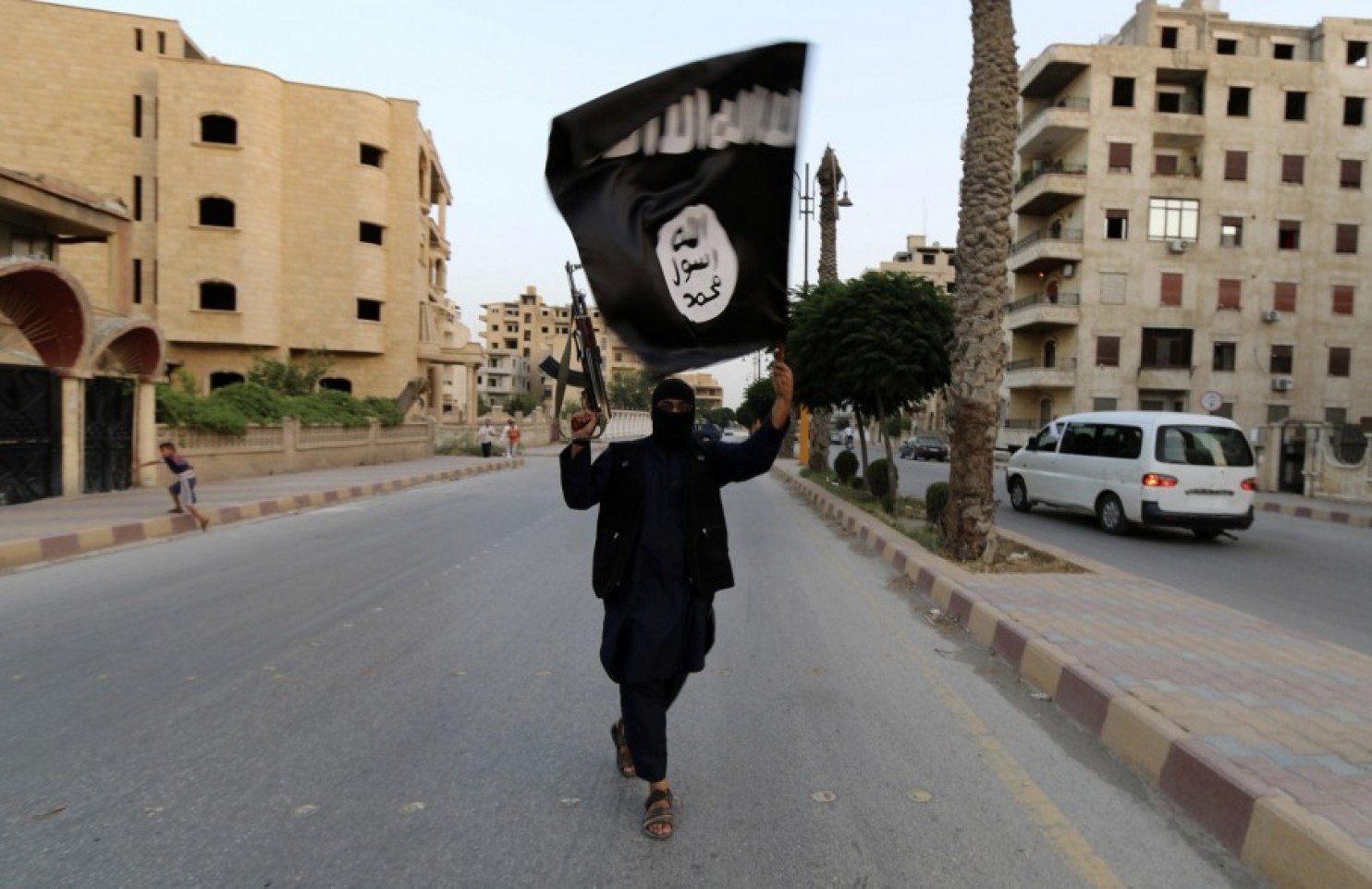
When is the Islamic State in Syria – ISIS – not the Islamic State in Syria?

Apparently the answer to this question is: since a couple of days ago, when the hive mind of lazy politician groupthink decided that we must bend and warp journalistic practice – and the English language itself – in order to make it clearer that the majority of us do not condone the activities of that brutal, backward-looking group of primitive fundamentalists.

My attention has been elsewhere lately – freshly returned from a relaxing and eventful trip to Greece but otherwise more focused on domestic than foreign affairs. So it was surprising to find my attention drawn back by the furious row between the government and the BBC over exactly how the public service broadcaster should refer to the nascent medieval kingdom seeking to establish itself in the middle east.

The Spectator is – quite rightly – having none of it:

‘Isis’ is an acronym of Islamic State in Syria. ‘Isil’ – an acronym of Islamic State in the Levant. Isil is the better translation of the group’s Arabic name al-Dawla al-Islamiya fil-Iraq wa al-Sham – where ‘Sham’ represents greater Syria or ‘the Levant’ as we would say in English.

As for ‘Daesh’, it has the small propaganda advantage of reminding Arabic speakers of Daes (‘one who crushes something underfoot’) and Dahes (‘one who sows discord’). But beyond that childish word association it is no help at all, for ‘Daesh’ is just the Arabic abbreviation of al-Dawla al-Islamiya fil-Iraq wa al-Sham – or the Islamic State in Iraq and the Levant.

All the euphemisms politicians demand we must use to avoid calling Islamic State ‘Islamic State’ therefore call Islamic State ‘Islamic State’. How can they not, for that is its name? And it is no more up to outsiders to change a group’s name than it is up to you to change the names of your acquaintances. Assuming the politicians know what they are doing, they must believe that many voters will not know what ‘Isil’ and ‘Isis’ stand for, or only Arabic speakers will understand the meaning of ‘Daesh’. In other words, they are relying on ignorance and hoping to foster ignorance too.

Never mind the obvious undesirability of government telling the state-owned broadcaster what to report and how to report it – thus proving the central argument against government ownership of the media. Of far more concern is the fact that politicians – specifically our current generation of uncharismatic, uninspiring, superficial leaders – seem to believe that expending time and energy arguing about what to call the Islamic State is more important than doing anything about ISIS in the real world.

Continue reading

With Military Cutbacks, Even Britain’s Shows Of Strength Reveal Weakness

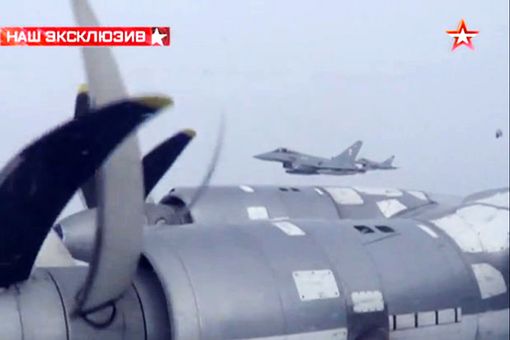
RAF Russian Bomber Operation Rising Panther


The Express reports today that the Royal Air Force has recently conducted its largest air defence exercise in over thirty years, in response to the increasing frequency of Russian incursions into British air space and spheres of influence:

Operation Rising Panther, the first of six proposed air defence operations due to take place every year, will “show Vladimir Putin in no uncertain terms” that Britain is ready, willing and able counter increasing Russian aggression should the need arise, say military sources.

More than 30 aircraft, including 20 Typhoons and Tornado fighter jets as well as a range of ED-3, AWACS, Sentinal and Shadow surveillance aircraft took part in the mock attack-and-defence wargames over the North east of England, as well as ground-based command teams.

At first glance, this sounds like a positive development – like maybe the British government has finally woken up to the fact that history did in fact not end at the fall of the Berlin Wall, and that future threats to our national interest and national security will remain, and be unpredictable, for many years to come. Given the circumstances, a show of force by the British military might be no bad thing.

And so it is, until you read the small print:

The Ministry of Defence played down Rising Panther’s significance, maintaining that it was merely the first opportunity since the end of hostilities in Afghanistan to hold an air exercise of this scale.

“Due to our continuing commitment to operations overseas, this is the first time we have had the full spectrum of our capability operating together at the same time in a realistic, opposed, environment,” said Wing Commander Andy Coe in the Ministry of Defence-run RAF News.

He added that this was the first time that the RAF had used AWACS and Sentinel together because they have been “in such high demand” in theatres abroad.

It is the facts that are implied, rather than those which are stated, which are most significant here.

Continue reading

Beware The Short-Termism Of Those Who Fail To Prioritise Defence Spending

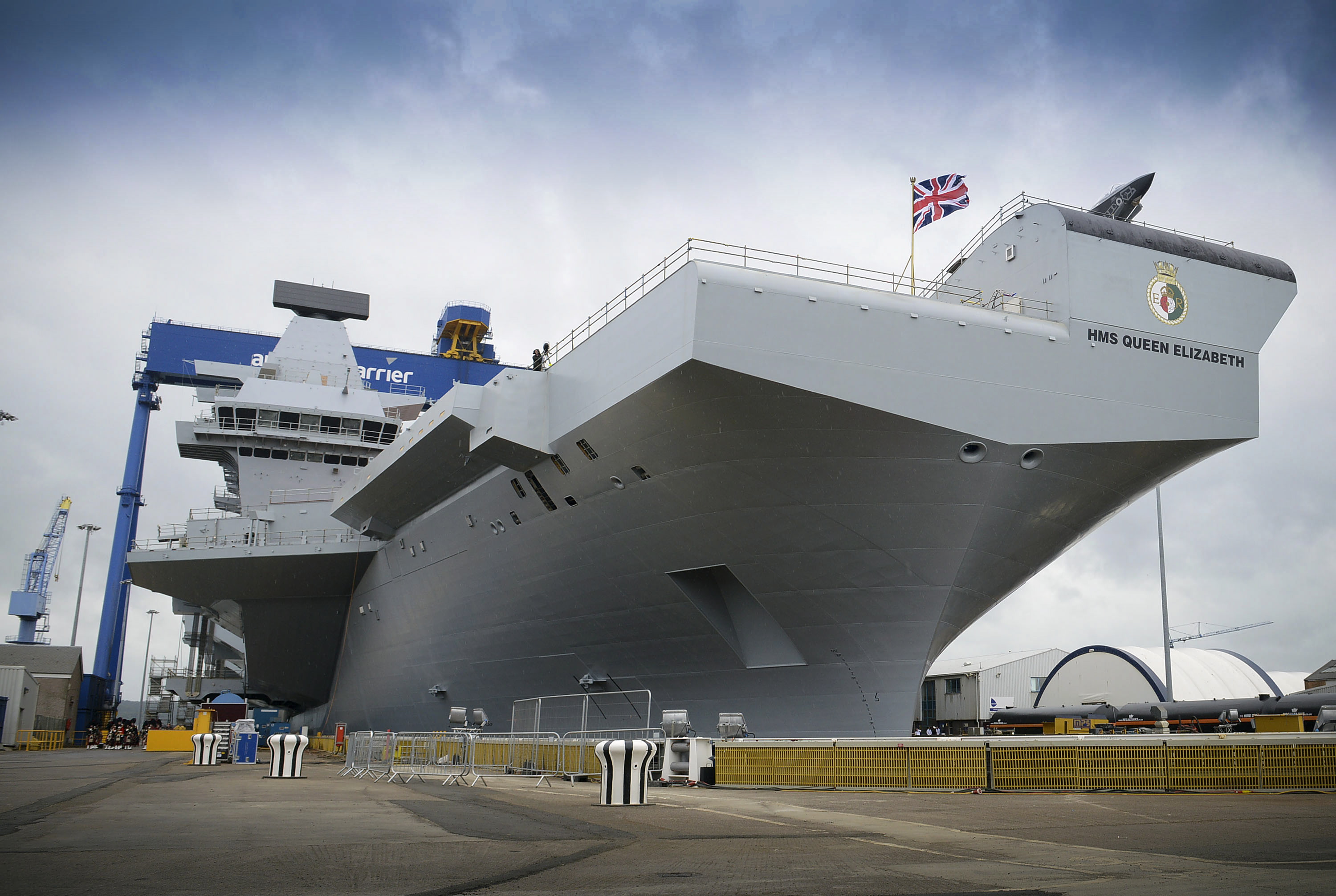
HMS Queen Elizabeth


As Britain heads toward an incredibly hard-to-predict general election, nearly everything about our country seems up for discussion – everything except Britain’s declining level of military spending, our long-term national defence strategy and our commitment to the armed forces we are quick to call heroes but grudgingly slow to fund.

James Forsyth, writing in The Spectator, talks about the bear in the room:

You wouldn’t know from this election campaign, but Europe is in crisis. On its eastern border, the threat from Russia is as great as at any point since the end of the Cold War. Crimea has been annexed and large parts of eastern Ukraine are under control of Russian-backed forces. Russian aircraft have even been taunting the RAF in the English Channel. The Baltic states are increasingly fearful that they will be next to suffer from Vladimir Putin’s attempt to reassert Russian dominance on its doorstep.

On Europe’s southern border, Islamic State continues to cause death and destruction — the recent decapitations in Libya were filmed along the shore to make the point that the jihadis have reached the Mediterranean. More worrying, perhaps, is the number of Europeans fighting for it. Last weekend, Manuel Valls, the French Prime Minister, warned that the number of Europeans who will have taken up arms with Isis may treble to 10,000 by the end of this year. As these radicalised youths return home, the terrorist threat in Europe will rise exponentially.

But neither of these subjects features with any prominence in the election campaign. Isis and the Russian threat are deeply inconvenient truths that don’t fit into the party leaders’ scripts. The Tories’ six-point long-term economic plan doesn’t have room for foreign entanglements. Labour wants to talk about the National Health Service, not international security.

These are sobering words. There has been a worrying tendency of late in the Tory-friendly press to excuse David Cameron’s various failings and oversights – be it refusing to champion the conservative case in the televised leaders’ debates, or failing to ringfence defence spending during a period of global turmoil – in order to help push the Conservatives across the finish line on 7 May. It is good to see The Spectator taking a firmer stance on the issue of defence, at least.

Continue reading

The EU Still Wants To Control Foreign Policy And Create Its Own Army

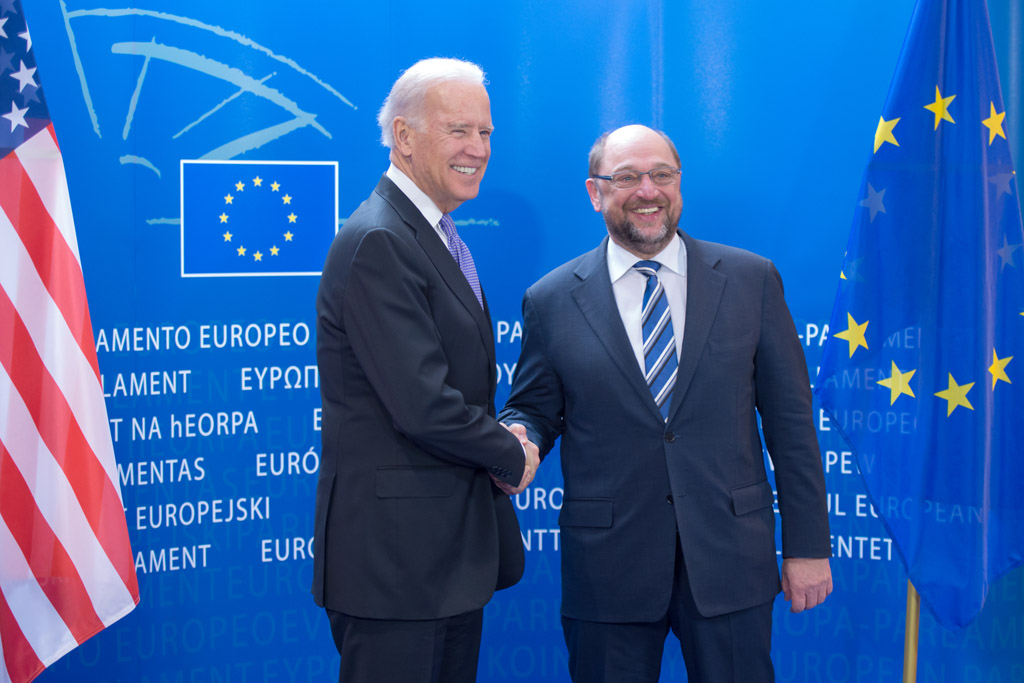
Martin Schulz Joe Biden European Union Common Foreign Policy EU Army


“I appreciate that it is not easy to explain to people back home why we need to cooperate more closely at European level in such a sensitive field as defence and security policy. Protecting its citizens has traditionally been a key task of the nation State and therefore also one of the foundations of its legitimacy. But we cannot close our eyes to reality: the world has changed and we are existentially connected to that world. Nowadays we can only defend our citizens jointly” – Martin Schulz, 2013


Here’s a good rule of thumb: the more powerful and undemocratic the institution, the better it becomes at using weaponised public relations tools in order to present a softer, friendlier, less threatening – and entirely false – picture of themselves.

Thus the President of the European Parliament, Martin Schulz, spent Monday morning hosting a laid back online live-chat on Facebook, in which he fielded carefully-screened softball questions from members of the public. And sneaking back onto the radar during that live-chat today was the prospect of a common European foreign policy, and a European army to enforce it.

From the EU’s own press release today:

To questions concerning the recent proposal on a common European army, Schulz replied “we need a common foreign and security policy”, explaining that combined military capacities would be a way of reducing military spending in a time when “money is certainly needed elsewhere”.

Meanwhile, others in the European Parliament are making rumblings about moving toward “permanent structural co-operation” – meaning there will be no way back once the EU starts taking major steps as an independent actor on the world stage:

Continue reading