The Daily Smackdown: David Cameron’s Transparent EU Posturing

David Cameron - Angela Merkel - Francois Hollande - EU Renegotiation - Brexit

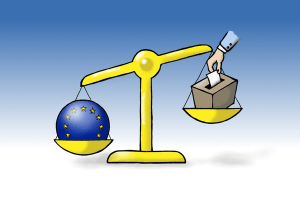
David Cameron has no respect for our intelligence if he thinks we will be fooled by claims that he is seriously considering campaigning for Brexit

Like this blog, the Times instantly saw through the prime minister’s latest desperate, amateurish attempt at brinksmanship and the dissemination of information by an often credulous media.

When David Cameron’s allies leaked that the prime minister was seriously considering recommending a Leave vote in the referendum if his renegotiation continues to be “theatrically spurned” by his EU partners, the story seemed too transparently false to be true. And it is.

The Times commented:

“It is patently clear that [David Cameron] cannot and will not become the man who tossed aside Britain’s EU membership. The hints from his allies that he might do so were a desperate negotiating tactic that has rightly backfired. This sort of melodrama is more likely to make negotiating partners giggle than give way.”

Absolutely. Every one of Cameron’s actions since he reluctantly promised the referendum as a too-little-too-late anti-UKIP defence has reeked of his desperate desire to keep Britain in the European Union at all costs.

As this blog pointed out yesterday:

Anybody with even one foot rooted in reality should be able to tell that this latest court gossip is nothing but spin. Having (unsurprisingly) gotten nowhere with his renegotiation efforts thus far, David Cameron needs to appear tough and resolute for the home audience. After all, it is pretty embarrassing that the leader of a global power and the world’s fifth largest economy has achieved precisely nothing, despite having embarked on a well-publicised begging tour of Europe. When begging and pleading with the Czechs for permission to change UK welfare rules yields no fruit, some kind of strong public stance is essential to preserve any kind of dignity.

The prime minister has never been able to force the words “Brexit” or any other specific phrase about Britain leaving the EU from his lips, and only on rare occasions has he even alluded to the fact that “nothing is off the table” if he judges the results of his renegotiation to be unsatisfactory.

Of course, since Cameron went into the British renegotiation carrying no demands at all – a point worth emphasising, and well made by Richard North at eureferendum.com – he is hardly likely to find his own efforts wanting. Who, given the chance to mark their own homework, would give themselves an F?

And when it comes to nothing being off the table in the event of failure, it remains easier to imagine the prime minister succumbing to a tearful, foot-stamping tantrum on live television than it is to picture David Cameron addressing the nation and declaring that Britain’s national interest would be better served by being outside the European Union.

EU Democracy - Brexit

Agree with this article? Violently disagree? Scroll down to leave a comment.

Follow Semi-Partisan Politics on TwitterFacebook and Medium.

Yoga Banned: Cultural Appropriation Zealots Are Creating A New Apartheid

Cultural Appropriation - Can I Wear A Bindi

Today’s virtue-signalling, totalitarian student activists will stop at nothing to let everyone know just how enlightened and considerate they think they are, and how backward and oppressive they consider the rest of us to be

If you haven’t heard the term “cultural appropriation” before, you can expect to hear it a lot over the next few years. And if you have the misfortune of living anywhere near a university campus, you may even hear it shouted in your face by a raucous student protester, high on their own self-importance.

In fact, even if you’re not committing the modern day sin of cultural appropriation right now, you are almost certainly guilty of doing it at some point over the past twenty-four hours. Go and do your penance now. I’ll wait.

Cultural appropriation is the latest verbal weapon used by virtue-signalling lefty student activists – snivelling Millennial egotists who arrived at university only to find the worst oppression and discrimination already vanquished by previous generations, and who are now desperately casting around for a new cause to justify their Chinese-manufactured Che Guevara t-shirts.

Let’s put it like this: are you a white person who likes rap music, or who (heaven forfend) listens to music by white rappers from Eminem to Iggy Azelea? Then you’re a white supremacist cultural appropriator. By appreciating or assimilating something from outside of your own ethnic community, you have plundered the culture of your downtrodden minority friends and neighbours, making light of their most sacred and noble traditions for your own carefree amusement. Didn’t realise that’s what you were doing? Doesn’t matter, you’re still guilty.

Or maybe you really fell in love with Thai cuisine when you were on that round-the-world trip, and now you love to cook Thai-inspired meals at home, with your non-Thai hands, in your non-Thai kitchen, for your non-Thai friends. That’s cultural appropriation too. Shame on you. If you are a white American you should subsist entirely on cheeseburgers, barbecue and other culturally appropriate fare. God help you if you’re a Cockney but not mad for jellied eels.

Stay away from that lasagne if you’re from Idaho or Utah – can’t you see how eating pasta belittles and marginalises Italian Americans? And as for ordering Kung Pao chicken from your favourite Chinese takeout, why don’t you just start reading aloud from Mein Kampf in the town square, you nasty little fascist? Clearly you have no feeling for the mental safety of Asian Americans, who might feel mocked and excluded by your thoughtless foodcrime.

You get the idea. Before doing anything, first get out your Hierarchy of Privilege and remind yourself exactly where you fit on the Spectrum of Oppression. White and male? Tough luck, you can sample only from those other white, male cultural pursuits. Black, disabled and of undefined gender and sexuality? Then the world is your oyster – at least in the surreal world of academia.

Cultural Appropriation - Fourth Wave Feminism.jpg


And now the Stepford Students are coming to take away your Yoga classes, because chances are you aren’t from India – and therefore you are guilty of the cultural appropriation of Indian culture.

From Brendan O’Neill’s weary report in The Spectator:

Just when you thought uptight, fun-dodging, thought-policing millennials couldn’t get any worse, they go and brand yoga as racist. Apparently, when white people bend themselves bonkers while humming or thinking happy-clappy thoughts, they’re not only being self-punishing saps: they are also ‘culturally appropriating’ a practice that has ‘roots in Indian culture’.

That’s according to student leaders at the University of Ottawa, who put pressure on a yoga teacher at the uni’s Centre for Students with Disabilities to call off her yoga classes. She was told ‘there are cultural issues of implication involved in the practice’. In these people’s minds, in which the Offence-Seeking Antenna is forever turned to High, a white person doing yoga is not that different to a white person donning blackface and singing ‘Mammy’.

O’Neill goes on to point out:

The PC rage against cultural appropriation is ultimately a demand for cultural segregation, for black people, white people, Latinos, gay people, women and every other racial, gender or sexual group to stick with their own culture and people and not allow themselves to be diluted by outsiders.

Gay men have been condemned by the National Union of Students for ‘appropriating black female culture’. Barmy NUS officials think it’s the height of racism for a gay guy to talk about having an ‘inner black woman’. The irony being that it’s hard to think of anything more racist, or at least racially divisive, than the ideology of cultural appropriation: its obsession with cultural purity echoes some of the darkest political movements of the twentieth century.

It’s easy to dismiss these incidents as merely a case of a few activists getting a bit too carried away, or going a bit too far. But incidents such as these are happening more  and more often, on both sides of the Atlantic.

Whether it is British students shutting down a debate about abortion and trying to get Germaine Greer banned from campus, or pampered Yale students insisting that the point of university is not to learn but rather to feel warm and snuggly, these stories are becoming more extreme, more frequent and ever more ludicrous to the uninitiated.

This is in large part because the authorities – university chancellors, society presidents and anyone else called upon to be an auxiliary parent to these toddlers-with-diplomas – too often reward this hysterical behaviour by apologising for offending the Stepford Students and giving in to every one of their tyrannical demands. Which then encourages the next crop of baby-faced tyrants to make even more outrageous demands in the name of creating a “safe space”.

With their accusations of “cultural appropriation” and unquestioning embrace of the politics of identity, these student activists are starting to create a New Apartheid – on their university campuses and in their hermetically sealed social circles of likeminded social justice warriors. Their overriding concern with protecting the “purity” of various minority cultures resembles nothing so much as the anti-miscegenation laws of the last century. And all of this they do without a hint of irony.

These students are nothing so much as High Priests of the Politics of Identity. Like other clergy before them, they derive their power from claiming the exclusive ability to speak on behalf of their secular god and telling the rest of us what we must believe and say. But in place of stoning or crucifixion being the penalty for blasphemy we now have new, modern shamings carried out on social media.

In a famous scene from Aaron Sorkin’s show The Newsroom, the lead character described the American Tea Party – with their intolerance of dissent and insistence on ideological purity – as being like an American Taliban. But I wonder if the real progressive Taliban can’t actually be found on our university campuses, in our student union bars and in the front row of your nearest anti-austerity rally, shouting “Tory Scum!” at terrified old ladies.

If we let these fragile young tyrants win, we will eventually all be ghettoised, forced to keep strictly to our own “communities” (community being defined strictly by racial or religious criteria) and only allowed to engage with other people in the controlled environment of “safe spaces“, where our speech and behaviour is micromanaged to ensure that we do not “trigger” anybody else with the problematic “microaggression” of our mere presence.

Yes, there is a dangerous radicalisation process taking place on our university campuses today. But deluded young radicals are not only rallying to the black flag of ISIS – we should also mark those who drink so deep from the well of Social Justice that they would make us all slaves to their cause.


Yoga - Cultural Appropriation

Top Image: Northmont Surge

Middle Image: 4th Wave Feminism

Agree with this article? Violently disagree? Scroll down to leave a comment.

Follow Semi-Partisan Politics on TwitterFacebook and Medium.

The Daily Smackdown: Jeremy Corbyn’s Anti-Americanism

https://www.youtube.com/watch?v=joeC31QDkBE

Instead of calling for a more “independent” foreign policy, Jeremy Corbyn should simply admit that he hates America and wants Britain to sever links with our closest ally

Jeremy Corbyn took to Facebook over the weekend to demand that Britain chart a new, more “independent” foreign policy.

This came off the back of a speech that Corbyn had wanted to deliver last week blasting Britain’s close alliance with America, but was forced to postpone because of the Paris terror attacks.

Corbyn finally gave the speech he was itching to give at the Labour Party’s South West Region conference in Bristol, where he said:

The third pillar of our vision for Britain is a different kind of foreign policy – based on a new and more independent relationship with the rest of the world. A relationship where war is a last resort.

For the past 14 years, Britain has been at the centre of a succession of disastrous wars that have brought devastation to large parts of the wider Middle East. They have increased, not diminished, the threats to our own national security.

Few would now seriously argue that Western interventions in Iraq and Libya did anything other than deplete our resources and further inflame the region. But Corbyn’s professed desire for a “more independent relationship with the rest of the world” is pure nonsense.

Jeremy Corbyn does not want Britain to pursue a more “independent” foreign policy. He is simply unhappy with our existing foreign policy and allegiances – where Britain recognises the many shared mutual interests we have with the Anglosphere and other Western powers, and seeks to build on those natural alliances which inevitably form where there is such a close fit of culture, history and legal systems.

If Jeremy Corbyn really wanted Britain to pursue a truly independent foreign policy, his first act as Labour leader would not have been to cravenly roll over and submit to the rabid europhiles within his party, who insisted that he follow their lead and slavishly promise to campaign for Britain to stay in the European Union come what may.

This decision is all the more surprising given Corbyn’s subsequent willingness to enrage his own backbenchers – and even his shadow cabinet – on almost every other question, from air strikes on Syria to hiring controversial and divisive staff and flip-flopping on George Osborne’s fiscal charter. Clearly Jeremy Corbyn is happy walk his own path on nearly every policy other than the pressing question of Britain’s future sovereignty.

How can Corbyn claim to want Britain to pursue an “independent” foreign policy when he has committed Britain to remaining in the EU and being part of the Common Foreign and Security Policy? How can Britain claim to be an independent diplomatic force when the EU’s High Representative for Foreign Affairs, Federica Mogherini, is more active and visible on the world stage than our own Foreign Secretary?

You can argue the rights and wrongs of whether Britain should pool so much of our diplomatic clout into a single European voice – over which we exert only 1/28th of the influence. But the one thing you absolutely cannot do with a straight face is to call the resulting foreign policy an independent one.

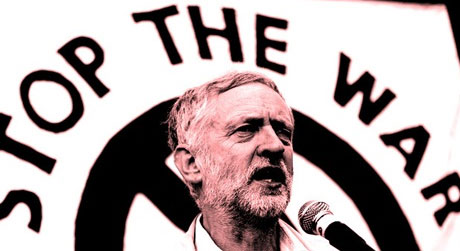
But of course Corbyn does not really want Britain to pursue a truly independent foreign policy. What he really means by this dog-whistle to Stop the War types and extremism sympathisers is that he wants Britain to specifically forsake the United States of America, and cease our friendship and co-operation with our closest ally in the world.

Jeremy Corbyn doesn’t look at the special relationship between Britain and America and see an unparalleled alliance which spilled blood and treasure in defence of democracy twice in the last century, and whose embrace of the free market has pointed the way for other nations around the world to achieve prosperity.

No, Jeremy Corbyn looks at the special relationship and sees Britain yoked against her will to the Great Satan – an awful, dystopian, capitalist war machine, economically and militarily subjugating the countries which Corbyn would much rather call his friends. He sees no good in the United States because his “friends” in Hamas, Stop the War and the far Left in general spend every waking hour ranting about just how evil and immoral America is.

Yet on Europe, Corbyn is firm: Britain should remain a member of this relentlessly tightening political union come what may – regardless of David Cameron’s cosmetic renegotiation, and regardless of the direction the EU is heading in the future. The Labour leader succumbs to the same negative, pessimistic view of Britain’s capabilities and international stature as the other europhiles, believing that Britain is too pathetic and ineffectual to do what Australia and Canada manage to do every day – engage with the world as an independent nation.

Jeremy Corbyn’s foreign policy simultaneously views Britain as being so weak and pathetic that our only pathway to influence on the world stage is to have the same sliver of influence over a common European Union foreign policy as tiny Malta or Slovenia, but also so potentially dangerous to the world that we must terminate the one alliance which has been the bedrock of our foreign policy since the second world war.

It is a risible, childlike worldview – one which would be funny if only a Corbyn premiership would not see Britain giving moral and tangible succour to some of the most odious regimes in the world.

Corbyn is right to point out our own moral failures in foreign policy, such as our close partnership with the brutal Saudi regime, working closely with that dictatorship in exchange for scraps of intelligence about the various terror plots that they are themselves funding and encouraging. But he undermines his own point by letting his actions and statements imply that there is any moral equivalence between regimes like Saudi Arabia and the United States.

Or as Nick Cohen put it in this week’s Spectator:

Corbyn, along with too much of ‘progressive opinion’, has a mistrust bordering on hatred for western powers. They do not just condemn the West for its crimes, which are frequent enough. They are ‘Occidentalists’, to use the jargon: people who see the West as the ‘root cause’ of all evil.

Their ideology is in turn genuinely rootless. They have no feeling for the best traditions of their country, and their commitments to the victims of foreign oppression are shallow and insincere. They rightly condemn western support for Saudi Arabia. But if the Saudis were to become the West’s enemy tomorrow, their opposition would vanish like dew in the morning sun.

Before concluding:

Jeremy Corbyn and the left he comes from cannot campaign for office by saying what they really think or they would horrify the bulk of the population. They say enough to keep their ‘base’ happy, and then dodge and twist when they speak to the rest of us. Far from being authentic, Jeremy Corbyn is one of the most dishonest politicians you will see in your lifetime.

If Jeremy Corbyn wants to be taken seriously as a straight-talking, honest politician he should admit that he has absolutely no desire for Britain to pursue an independent foreign policy – or an independent anything else, for that matter – and that all of this posturing is just his way of signalling to a certain audience that he disapproves of one country in particular.

Jeremy Corbyn: Anti-Austerity, Anti-America.

That’s a campaign slogan people might actually believe.

Jeremy Corbyn - Stop the War - Anti American

Further reading:

The anti man

The threat of Jeremy Corbyn’s radically anti-American agenda

Jeremy Corbyn isn’t anti-war. He’s just anti-West

Agree with this article? Violently disagree? Scroll down to leave a comment.

Follow Semi-Partisan Politics on TwitterFacebook and Medium.

The Daily Smackdown: Jeremy Corbyn’s Non-Clarification On ‘Shoot To Kill’

Jeremy Corbyn - Paris Attacks - Terrorism - Appeasement

Why is it so hard for Jeremy Corbyn to say that the police should kill terrorists in the process of committing a massacre?

Sensing the storm that was about to break over the Labour Party following his catastrophically weak  response to a simple question on the merits of shooting terrorists in the act of attacking innocent civilians, Jeremy Corbyn reluctantly scrambled to contain the damage.

Yesterday, on Corbyn’s Facebook page, the Labour leader took the opportunity to scold everyone for supposedly misinterpreting his remarks:

I am therefore disappointed that comments I made yesterday in regard to a “shoot to kill” policy have been taken out of context [..]

Nonetheless, I would like to clarify my position. As we have seen in the recent past, there are clear dangers to us all in any kind of shoot to kill policy. And we must ensure that terrorist attacks are not used to undermine the very freedoms and legal protections we are determined to defend.

But of course I support the use of whatever proportionate and strictly necessary force is required to save life in response to attacks of the kind we saw in Paris.

Here, Corbyn is trying to pull off a classic bait-and-switch. Yes, of course we must ensure that terrorist attacks are not exploited as an excuse to clamp down further on already-threatened civil liberties – this blog has consistently said the same thing, and did so again following the Paris attacks.

But that’s a side issue. People were not angry with Corbyn because he was taking a plucky stance in defence of civil liberties, they were simply incredulous that the Leader of the Opposition – when presented with a golden plated opportunity to come out on the side of human decency and rebut some of the criticism that he is soft on terror – point blank refused to countenance the shooting of armed terrorist gunmen actively engaged in committing a massacre.

Even in his so-called clarification, Jeremy Corbyn remains unable to force the words “kill” and “terrorist” from his lips in the same sentence, giving only the bland statement that he supports “proportionate and strictly necessary force”. This might be sufficient coming from another politician, but the trouble is that in Corbyn’s case, the public strongly suspects that his idea of a “proportionate and necessary” response to a terrorist massacre might mean sitting down with a cup of tea and talking about our feelings rather than eliminating a clear and present threat to the British public.

Look: nobody expects Jeremy Corbyn to be the man in the SWAT flak jacket kicking down doors, throwing flash-bang grenades and pulling the trigger in these situations. If Corbyn wants to follow his absolutist pacifism in his own private life, that’s fine. But it is not okay for the Leader of the Opposition, the holder of an important official constitutional position in our national life, to take such a fundamentalist stance when the security of our country and our citizens is at stake.

When the man seeking to become Britain’s next prime minister can’t even bring himself to utter the words “kill” and “terrorist” in the same sentence, it naturally raises questions as to what possible group of people – which vitally important constituent base – he is desperate to avoid offending by giving a more full-throated response. And as this blog noted yesterday, sadly there is only one plausible answer: the people Corbyn is unwilling to offend, is even willing to take a political hit in order to avoid offending, are those people who think that maybe Paris and the West had it coming on Friday the thirteenth.

But even putting this distasteful fact aside, Corbyn needs to learn that not every crisis or event needs to be a teaching moment for the British people in the ways of pacifism and non-violence. When Laura Kuenssberg asked Jeremy Corbyn yesterday if he would be happy for the police to take down an active terrorist, the answer should have been a simple “yes, of course”. Case closed.

But instead, the Labour leader – and the army of online Corbyn fanboys and fangirls blindly backing him up – decided instead to quibble sanctimoniously about whether “happy” was the right choice of word, bring up misleading comparisons like the mistaken shooting of Jean Charles de Menezes when no terrorist attack was underway, and generally refute the premise of the question.

That’s the kind of behaviour that would just about be tolerable from a smarmy sixth-former. It’s the kind of behaviour that has become eye-rollingly predictable from a far-left backbencher. But it is most definitely not the kind of behaviour acceptable from somebody who plans to stand before the British people and ask them to make him prime minister.

Jeremy Corbyn - Paris Attacks - Terrorism - BBC Interview

Agree with this article? Violently disagree? Scroll down to leave a comment.

Follow Semi-Partisan Politics on TwitterFacebook and Medium.

Paris Terror Attacks: More Government Surveillance Is Not The Answer

The surveillance state did not prevent Madrid, the 7/7 London bombings, Ottawa, Charlie Hebdo or the 13 November Paris attacks. Ramping it up yet further will not guarantee our safety either – but giving the intelligence services and their media apologists everything that they want will undoubtedly erode our freedom and change our way of life for the worse

In the early hours of 14 November, in the immediate aftermath of the appalling  and barbaric terrorist attacks in Paris, this blog wearily pointed out the well-worn sequence of events which would inevitably follow:

Day 0: Expressions of shock, sorrow, anger and solidarity

Day +1: Insistence that now is a time for mourning, not asking difficult questions about how or why the atrocities were committed

Day +1, later: The first difficult questions are asked, particularly of the government and security services

Day +2: The intelligence services dust off their wishlist of draconian new powers, and strongly hint that if only they already had these powers, the attack could have been avoided

Day +3: The official narrative is established – “we will defeat this terror by giving our intelligence services the tools they need, and making radical or hateful speech illegal”

So far, things are running like clockwork. We are certainly very good at the sorrow and solidarity phase of our response. Facebook timelines have been a sea of people updating their profile pictures to display the French tricolour (and, to a lesser extent, the inevitable virtue-signalling pedants inexplicably criticising them for doing so). Day +1 followed the normal pattern.

Day +2 is when we usually hear the first whispers of criticism about the intelligence services, when the identities of some of the attackers are revealed and it turns out that in many cases, they were operating under our noses undetected for some time. This is just starting to happen now – though it is being drowned out somewhat by criticism of Europe’s muddled borders and asylum policy, as it was reported that one of the attackers had a Syrian passport and entered Europe in Greece as a refugee.

And while it is slightly too early for the intelligence services themselves to come out and start agitating for new powers, this has not stopped some of their media cheerleaders from getting the ball rolling. We are officially still in that interregnum period after an attack when it is considered unseemly or inappropriate to have a real discussion about why the attacks happened, but there is an exception to this rule when it comes to demanding more surveillance powers for the state.

And climbing through this loophole today is Dan Hodges, writing before he thinks and letting his fear cloud any judgement or sense of proportion:

If we are serious in our expression of sympathy and solidarity, if we are serious about confronting those men who lined up the disabled patrons of the Bataclan and then gunned them down, then we must act. We must expand the same collective energy we utilise proclaiming “Je suis Paris” demanding concrete action. Or at least, not demanding inaction.

In the coming weeks the government’s surveillance bill will be passing through the Commons. If we truly believe in standing in solidarity with Paris, we must let it pass. We must demand it passes.

I’m surprised – I didn’t think we would see these calls for more unchecked government surveillance until the start of the new week. But hats off to Dan Hodges – by publicly freaking out in his newspaper column and calling for the Investigatory Powers Bill to be passed, he has opened the door for Theresa May, David Cameron and a parade of GCHQ ex-chiefs to hit the TV studios and make the same demands.

Of course, what Dan fails to do is explain how new government surveillance powers a) would have prevented the Paris attacks of 13 November, or b) might realistically prevent any such attack in future. And if you pushed him, I doubt that he could explain the scope of current surveillance laws in any detail, or describe the ways that the British security services currently do or do not make use of those powers.

Dan is (understandably) frightened following the Paris attacks. And when people are scared it is natural to demand more security, to insist that the authorities wrap us all in cotton wool, kill the Bad People, do anything to alleviate the gut-wrenching fear that next time it might be the concert hall that we attend, or our local neighbourhood restaurant in the line of fire. And that’s quite understandable from the perspective of a private individual, only concerned for their own immediate safety.

But coming from one of the most prominent, respected political commentators in the country, it is downright irresponsible. Everyone is entitled to have their own private freakout behind closed doors when civilisation is shaken – as Paris was – by Islamist barbarism. But what is unacceptable is taking to your keyboard whilst you are in that fearful state, and using your national profile to give the government carte blanche to do whatever it likes in the name of national security.
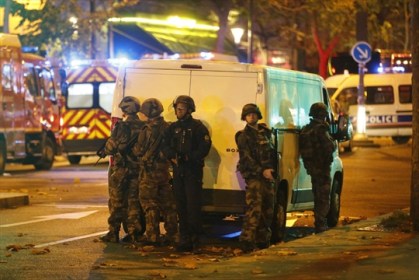
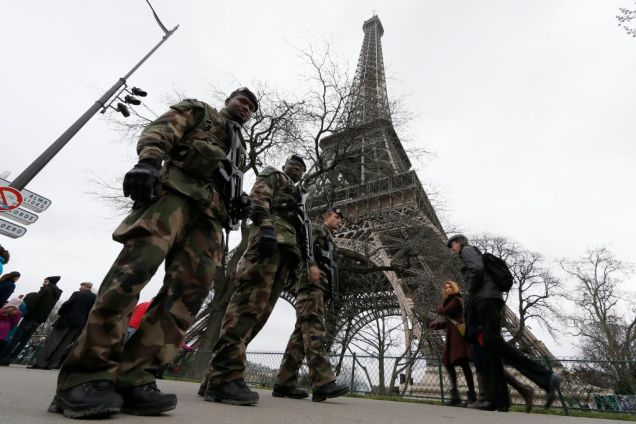
Paris Attacks - Military

Clamouring for the government to pass the snooper’s charter (the Investigatory Powers Bill) is not a wise and considered response to the Paris attacks, and neither is it a moral one – particularly when you cannot point to a single measure in the bill which would have prevented the horrific carnage we witnessed on Friday.

Spiked magazine sums up the illiberal measures contained in the bill:

The draft of the bill, published last Wednesday, sets out new and draconian powers allowing the security services to monitor, access and store our online communications data: IT and comms companies would be required to store information on the websites we visit for up to 12 months, and release them to the state when required; intelligence agencies would be given legal authority to hack into communications and bulk-harvest metadata; and the ability of companies like Apple and Google to encrypt individuals’ messages – putting their content beyond the reach of themselves and the spooks – will be severely curtailed.

Home secretary Theresa May has been quick to talk down the measures. She insists that the data retrieved from your web history is no more than a ‘shopping list’ of the sites you visit, rather than individual pages – a fine and utterly meaningless distinction. And while there has been much talk of the ‘safeguards’ guaranteed by the IPB, with judicial commissioners required to approve requests for interception warrants and wire taps, these are little more than formalities. Judges will only be able to reject Home Office requests on the principles of judicial review; as backbench Tory MP David Davis pointed out, ‘This is not the judge checking the evidence, it is the judge checking that the correct procedure has been followed’.

If Dan Hodges had ‘smoking gun’ evidence that the eight Paris attackers and their network of accomplices made extensive use of unbreakable encryption to plan their crime, or that the intelligence services always suspected the attackers but were constrained by law from keeping them under closer surveillance, then he would have the beginnings of an argument.

But Hodges has no such evidence. Instead, he wants to use the deaths of scores of innocent people to empower the government to keep us all under surveillance, all the time. He makes no proposal as to how the security services might pick out the terrorist needles in this new haystack of intelligence were they to gain access to it, and no idea of the trade-offs between combing through the communications of the entire citizenry rather than focusing on known threats.

Worse still, he is so unconcerned with the potential consequences for privacy and freedom that he doesn’t even bother to address them in his article. And still Dan Hodges feels qualified to tell civil liberties defenders that they are wrong, and to clamour for more government intrusion in our lives.

Clamouring for Parliament to pass the snooper’s charter two days after a horrific terrorist attack in Paris isn’t brave or level-headed – it is a response borne of fear. When we are afraid, our time horizon shrinks to zero and we are concerned only with avoiding immediate danger. If we believe we are in imminent danger of being shot or blown up, we would likely hand over a great deal of our future freedom to avoid that fate. But this instinct – which may be essential for an animal in the wild – is entirely inappropriate for citizens living in a modern democracy.
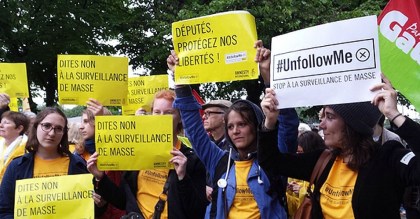
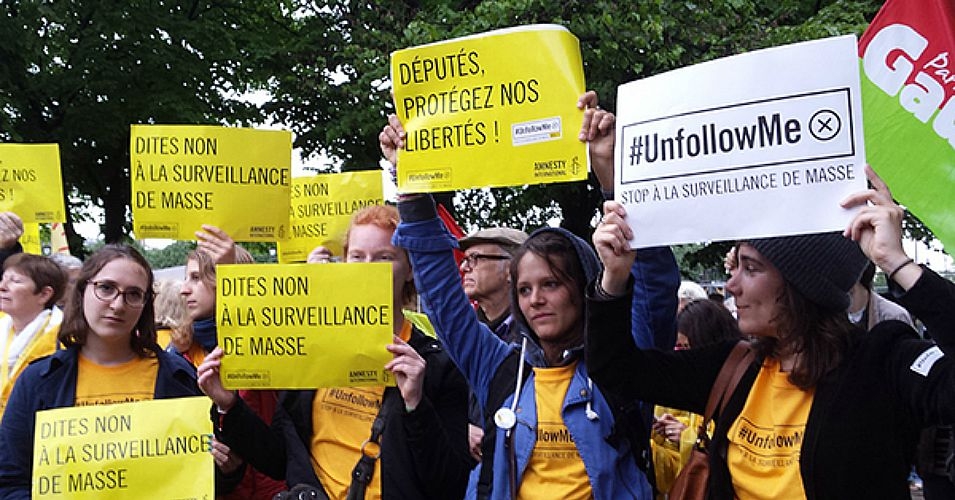
France - Mass Surveillance - Protest

When making laws and empowering the machinery of state, we need to consider not just the threats of today and the people who will wield those powers today, but also what threats may exist tomorrow and who will wield those powers when David Cameron, Theresa May and Jeremy Corbyn are no more than names in a history book. We have a duty to our children and descendants to think about the type of country and world we want them to inhabit when we shape the laws of today.

Unfortunately, ramping up the surveillance state at the expense of the right to privacy and civil liberties fails both tests – it does not provide a convincing response to the threats of tomorrow, and it takes no account of who might try to wield those powers for their own ends in the future.

Terrorists are smart – when attacking the secure West, rarely do they try the same strategy twice. Thus, since 11 September 2001 we have gone from airplane hijackers armed with not much more than boxcutters to shoe bombs, liquid bombs and surface-to-air missiles. Our own intelligence services, to whom Dan Hodges wants to grant sweeping new powers, are usually one step behind. Thus, although the guardians of our safety were never smart enough to think of these risks before they were tried by terrorists, we are still constrained in the liquids we can take on airplanes, and have our shoes checked for explosives before we fly. In fact, modern airport security theatre as a whole reads like a “lessons learned” list of all the cock-ups and clangers of forty years of intelligence failures, with almost no discernible foresight or forward thinking.

So it will be with any new surveillance measures. Technology changes so rapidly that any law passed today will almost certainly be obsolete in a decade, while terrorists will immediately adapt and stop using monitored channels. Human ingenuity will always defeat the clunking fist of government, because it always does. So granting the government the power to monitor who we talk to, go through our emails and hack our smartphones will only infringe on the freedoms of the law-abiding; the terrorists will simply find new technologies or revert to tried-and-tested analogue techniques.

As for the leaders of tomorrow, the thought of a future Prime Minister Theresa May is frightening enough. But what is to say that in a couple of decades, if we do not properly grapple with the scourge of terrorism or in the wake of a future economic crisis, a far more extreme politician may come to power? And if they do, how glad they will be that our present government – cheered on by people like Dan Hodges – passed laws like the Investigatory Powers Bill, granting the state the tools and the legal cover to do as they please.

Again: having these fears and wanting government to provide safety is a perfectly understandable instinctive reaction to terrorist horror, coming from a private citizen. But government will happily assume new powers forever if they are freely offered up by the people, and so newspaper columnists should know better than to provide intellectual and emotional cover in the wake of an atrocity.

I admire Dan Hodges enormously as a writer and commentator on left-wing politics, but these latest irresponsible comments – invoking the image of massacred disabled concertgoers at a Paris theatre to cheerlead for the expansion of the surveillance state – cannot go unchallenged.
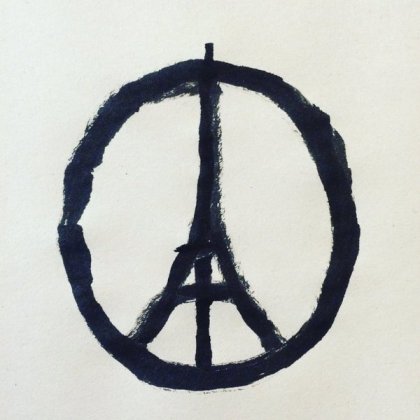
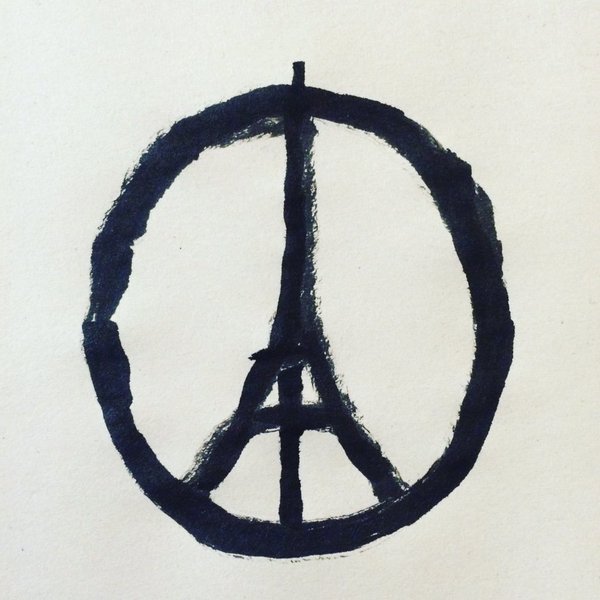
Jean Jullien - Peace for Paris - Paris Attacks

Bottom Image: Peace for Paris, by Jean Jullien

Agree with this article? Violently disagree? Scroll down to leave a comment.

Follow Semi-Partisan Politics on TwitterFacebook and Medium.