Best Thing Of The Day

If you have not already discovered TED Talks, the online channel featuring short, insightful lectures by prominent people from all fields and walks of life about topics that interest them, I highly encourage you to take a visit, either to their YouTube channel or their homepage.

For those who don’t know: With the slogan “Ideas Worth Spreading”, TED began as a conference for people from the worlds of technology, entertainment and design (hence the acronym), but has since expanded to cover just about every conceivable topic. One of the principle outputs from the TED conferences, which take place in cities all over the globe, are the TED Talks, in which an expert in their given field must give an informative, entertaining talk in eighteen minutes or less.

Which brings me to this excellent example from Japanese architect Shigeru Ban, whose work is notable for using sustainable building materials such as cardboard tubes and paper. As well as their obvious usefulness in terms of providing temporary shelter and accommodation during humanitarian disasters, these principles can also be applied to longer term constructions, as Ban’s talk demonstrates:


I had no idea that it was conceivably possible to construct multi-story structures out of such materials, and much as I love watching the rise of the new steel and glass skyscrapers in my home city of London, it is wonderful to appreciate these radically different, more natural structures too.

Pushing the boundaries of possibility even further in another TED Talk, architect Michael Green proposes building safe, multi-purpose structures such as skyscrapers out of wood:


As Green says (and I am in no position to refute despite my love of the steel frame skyscraper):

“Every time I go into my buildings that are wood, I notice that [people] react completely differently. I’ve never seen anybody walk into one of my buildings and hug a steel or a concrete column, but I’ve actually seen that in a wood building, I’ve seen how people touch the wood. And I think there’s a reason for it. Just like snowflakes, no two pieces of wood can ever be the same, anywhere on Earth. That’s a wonderful thing.”

Definitely my best discovery of the day.

An Icon Turns 10

disneyconcerthall


The wonderfully designed Walt Disney Concert Hall in Los Angeles, California, turns 10 years old this year. With its sweeping, idiosyncratic curves. metallic finish and public spaces, it is doing a lot (at least in LA terms) to revitalise the downtown area.

The interior is also beautifully designed, with seating in the round (limited audience seating behind the choir) and a very dramatic organ placement. The warm finish of the interior contrasts strikingly with the bright, metallic exterior.

disneyconcerthall2

Gramophone Magazine reports:

The Los Angeles Philharmonic is celebrating the 10th anniversary of its Walt Disney Concert Hall with ‘insideOUT’, a number of special events taking place during September, October and November featuring music director Gustavo Dudamel, Esa-Pekka Salonen, Yo-Yo Ma, Leif Ove Andsnes, Yefim Bronfman and Julie Andrews.

There will also be public forums with Frank Gehry, designer of the concert hall (Oct 2, 15), who writes of his building: ‘One of the primary considerations when conceiving the design for Walt Disney Concert Hall was to preserve the iconic importance of the LA Phil, but break down the often imposing scale of a traditional concert hall. Walt Disney Concert Hall is not just a building for music, but a building for the people. From the inside out, the building was designed to respond to its surrounding, and serve as a gathering place.’

Semi-Partisan Sam hopes to make his own visit to the Disney Concert Hall in the coming few years.

When Buildings Attack

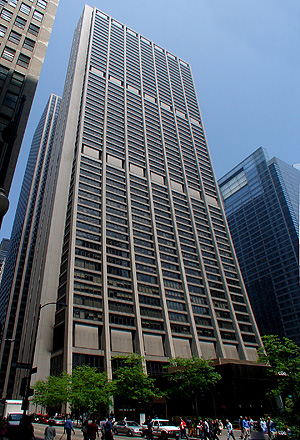
Apparently the glass panes of the new curved skyscraper under construction at 20 Fenchurch Street – nicknamed the “Walkie Talkie” – are reflecting and concentrating light in a rather unfortunate way so as to superheat and melt objects on the street.

20 Fenchurch Street. Image by AFP/Getty.

The Telegraph reports that a temporary scaffold and sun screen has been erected over the affected portion of the street, after rays reflected by the building were reported to have melted plastic components of a Jaguar car parked in a nearby parking bay, and enabled a man to fry an egg on the pavement:

Business owners in Eastcheap say the £200 million project has blistered paintwork, caused tiles to smash and singed fabric. A motorist has also said the intense heat melted part of his Jaguar.

Developers Land Securities and Canary Wharf said the screen was designed to prevent the “phenomenon”, caused by the current elevation of the sun in the sky, from taking place.

Of course, The Daily Mash have their own amusing take on the story:

Baker Tom Logan said: “I’ve long suspected that London was trying to kill me, with the cumulative effects of pollution, stress and a generally harrowing atmosphere.

“Oh well. I suppose psychotic buildings firing lethal beams of pure energy is another thing we’ll have to get used to, like the congestion charge and parking permits.”

Speaking via a mouth-like orifice in the Gherkin, London said: “I shall also be using flying manhole covers to decapitate you. And look out for London Bridge turning into a giant metal snake with sewage-dripping fangs.”

It can certainly feel that way sometimes.

And finally, The Guardian reports that there are many other buildings around the world that cause similar problems:

Some of the burnished stainless steel panels of Frank Gehry’s Walt Disney Concert Hall in downtown Los Angeles, which opened in 2003, had to be sanded down to prevent drivers being blinded by the glare, and pedestrians fried by pavement hotspots that reached 60C. Residents across the street also threatened legal action over their sky-high air-conditioning costs.

The impact of buildings is by no means confined to heat and light. Skyscrapers with curved walls (notably in Chicago) have been known to accumulate large quantities of snow and ice on their surfaces before dumping them without warning on unsuspecting pedestrians below.

Beware when walking beneath the Chase Tower, Chicago in winter.

The only sensible conclusion to draw from all of this – you are not safe on your morning commute. Beware!

Royal Academy of IKEA

The blog Standing Ovation, Seated takes a look at the “innovative” new work of architect Richard Rogers, who is going round pimping out what he calls the “shellhouse idea” – basically cheap, prefabricated, garish, plasticy-looking constructions, modular in form and “stackable”. I suppose in his mind this is revolutionary and never-before-attempted. In my mind (and I am at pains not to sound too much like Prince Charles here – I love the new skyscrapers and commercial buildings transforming the London skyline), this looks like just about every new residential building popping up in towns and cities across the UK. Cheap, bland, thoroughly forgettable and almost certain to age badly, just as the brutalist concrete architecture of the 1960s and 70s is doing. Still, a fascinating blog post well worth a read.

artmoscow's avatarStanding Ovation, Seated

Richard Rogers RA is an innovative architect who is behind the shellhouse idea. In short, this is IKEA concept extended to building houses. Pre-fab, cheap, fast, waterproof. And it can be stacked up to have more floors.

This weekend, the courtyard of the Royal Academy of Arts was turned into a construction site for a sample shellhouse.

The house is meant to be completed by tomorrow, the 13th, when it would become a colourful pendant to Joshua Reynolds’ somber monument, and RA visitors would be able to appreciate its beauty from the inside as well.

The building must be easy-to-assemble, for I’d not seen much of constructing going on in those few hours I spent there popping in and out of the RA for alfresco coffees (though “al cemento” would be a better term).

During all that time, Joshua Reynolds was sadly trying to reach the semi-erected house with his brush…

View original post 351 more words

On Lego Architecture

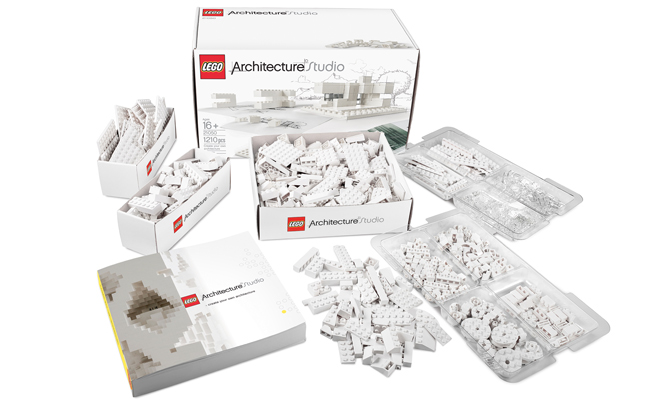
Although it is not brand new, the award for Best Thing Of The Day has to go to a discovery that I only just made – the Lego Architecture Studio set.

Best Thing Ever - Lego Architecture Set
Best Thing Ever – Lego Architecture Set

Apparently it retails for around $150 USD and looks to be worth every darn penny.

Wired.com reports that the set comes with no instructions for constructing any one specific building, but rather with a hefty user manual that walks you through different architectural styles and practices, enabling the lucky owner to experiment with their own interpretations:

Architecture Studio, a new set from Lego, comes with 1,210 white and translucent bricks. More notable is what it lacks: namely, instructions for any single thing you’re supposed to build with it. Instead, the kit is accompanied by a thick, 277-page guidebook filled with architectural concepts and building techniques alongside real world insights from prominent architecture studios from around the globe. In other words, this box o’ bricks is a little different. Where past Lego products might have had the happy ancillary effect of nurturing youngsters’ interest in architecture, here, that’s the entire point.

Seventy-three different kinds of bricks are included in the set. But bricks are easy to find. It’s the guidebook that’s truly new. Its pages offer accessible overviews of basic architectural concepts, along with illustrated exercises for exploring them in Lego form. Pages on negative space and interior sections, for example, encourage budding builders to think not only about how their miniature creations look from the outside but also in terms of what sorts of spaces they contain within them.

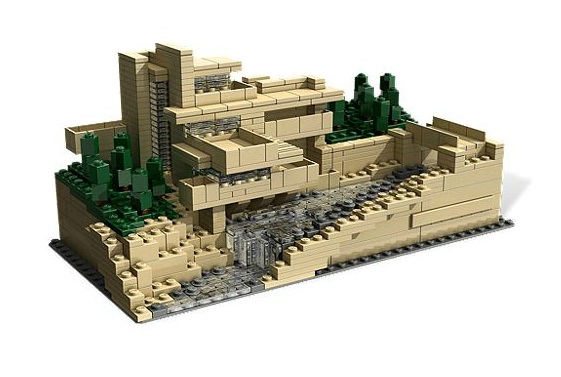
What a brilliant idea. I was already impressed with the initial sets in the Lego Architecture series, such as Frank Lloyd Wright’s “Fallingwater” house, pictured below:

I would love to live there, but would settle for the Lego model

But even here the user is only following the preordained instructions transcribed from the original architect’s design. With the Lego Architecture Studio set, one is given all manner of different blocks, a thoroughly detailed and useful guide to help get into the architect frame of mind, and a blank slate on which to play. Brilliant.

Definitely one for the Christmas list.