Taxes, The Answer To Everything

HMRC taxes


When your default position holds that Government should always be bigger and seek to do more, and play an ever larger role in the life of the citizenry, it generally follows that you will also be obsessed with tax policy, and ingenious ways to come up with new revenues. After all, the all-seeing, all-knowing behemoth has to be funded somehow.

Polly Toynbee, in her latest Guardian column, lambasts the Conservative-led government for “giving up” on trying to find new revenues, and imagines a world where tax avoidance (perfectly legal) and tax evasion (not so much) can be eliminated at the click of her fingers. She writes:

Cutting the 50% top rate suggests no great enthusiasm for rigorous taxing. Last week’s ONS figures revealed gigantic avoidance of the 50% top rate. It could have been collected but George Osborne needed to prove it didn’t work. The Treasury estimated raising the rate to 50% should bring in £6.2bn, but the actual return was a puny £100m.

In year one, before its official start date, high earners gamed the tax by rushing to take dividends and bonuses early. They paid more into pensions, gaining undeserved higher tax relief. Or they used trusts, or took income as capital gains. (That can be stopped, by fixing capital gains, as Nigel Lawson did, at the same rate as income tax, as the Institute for Fiscal Studies advocates.) Once Osborne announced the top rate would fall to 45%, high earners gamed it again. Incomes Data Services reports a massive delay in bonuses until after 6 April, when they leapt up by 107% in the finance sector to catch the new 45% rate. That could have been forestalled.

In Polly Toynbee world, a 50% top rate of tax is absolutely worthy and to be encouraged, and she sees nothing wrong with this, but we already know that. What is more striking, however, is the glib way in which she assumes that the population, outraged by such high taxes, can simply be stopped from taking perfectly legal measures to limit their tax bill. Phrases such as “that can be stopped” or “that could have been forestalled” are boldly laid down, but are not followed up with the how to do it when it comes to implementation.

When she does offer specific prescriptions for raising more tax revenues, she picks and chooses from the worst and most counter-productive tax policies from around the world, including this gem:

Britain can do plenty alone: we could adopt US tax laws that make every UK passport holder, wherever they are in the world, pay UK tax.

Ah yes, double taxation. The United States is the only major western country to enforce this policy of taxing their citizens on money earned overseas, and the policy is universally despised and acts as a significant disincentive for many Americans to work abroad for any length of time. But by all means Polly, let’s adopt that hated policy.

This is not to say that there is not a very real problem of tax avoidance, but it is far more on the business side than the individual side. People are rightly outraged when companies such as Starbucks use crafty mechanisms (“oh, we have to pay all the money we make in our UK stores as a royalty to our European headquarters in Amsterdam, so we don’t have any UK profits to be taxed this year, sorry”) to avoid paying tax on profits earned in Britain. And somehow it seems even worse when those same corporations, under the harsh glare of the media spotlight, deign to cut the government a cheque, to throw the exchequer a small bone to help solve their PR crisis.

Of course, the whole quagmire could be cleaned up very easily if only there was a political party (hi, UKIP) willing to take a scythe to the existing British tax code and rebuild it from the ground up, based on the tenets of real fairness, which of course means a flat tax. A flat rate of tax on income, corporate profits, capital gains and (if we must keep it) on value added, i.e. sales. Wherever possible, double taxation should be avoided – if you have paid tax on income or a purchase already, HMRC should not be allowed to come back for a second bite of that asset later on. And if we have learned nothing else from our friends across the sea in the United States, deductions should be avoided at all costs, as should Gordon Brown’s labyrinthine system of tax credits that you can claim for everything under the sun. Eliminate deductions and tax credits so that you can lower rates for everyone.

Toynbee concludes:

Tax cheating should be Labour’s chance to tell honest political truths: you get what you pay for, you can’t have Swedish services on US tax ideology. Tax is the price we pay for civilisation. At elections, all parties promise the impossible, more with less and cuts in “bureaucracy” to pay for everything. Treating the public like children on tax does nothing for trust in politics. The door has opened for that conversation.

In her mind, big government is synonymous with “civilisation”. The more responsibilities that the government takes on, and the more that citizens are subservient to the government, the more “civilised” that society becomes. Polly Toynbee probably knows more history than me, but I can think of at least a couple of great civilisations from the past that survived and prospered just fine without 50% top rates of income tax, married couples allowances, earned income tax credits or personal allowances.

And if Polly Toynbee really thinks that the door has opened for a conversation about the government going back to talking half of every pound that you earn above a certain threshold, and preventing citizens from making private financial decisions and transactions at a time of their own choosing so as to limit their tax liability, I am reasonably confident that she will find that door slammed very hard in her face by the British people.

Profit Maximisation vs Public Space

Will Hutton is quite possibly the only person left in Britain who thinks that it would have been a good idea if we had joined the Euro at the currency’s inception (disclaimer: I thought so too at the time, but in my defence I was a naive sixteen-year-old and I didn’t know anything back then). So at this point in time we should probably take most of his public pronouncements with a very large pinch of salt.

However, when the bestselling author and economist writes about matters other than economics, he can sometimes make a lot of sense. Writing in The Guardian today, Hutton makes a very cogent point relating to architecture and town planning, and the way in which too much development in Britain today is focused solely on commercial and retail space, with little or no thought given to public areas or civic spaces that are often the heart of a neighbourhood.

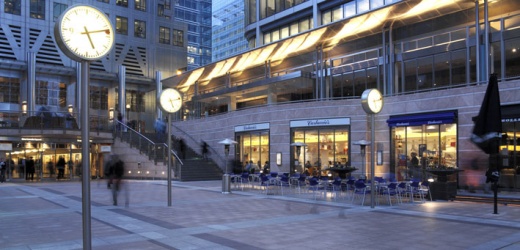
Canary Wharf - Hundreds of restaurants and shops, no public spaces
Canary Wharf – Hundreds of restaurants and shops, no public spaces

With regard to London’s Canary Wharf district (where I have experience of working), a large financial centre increasingly luring business away from the City of London, he writes:

Commercial developers behind the likes of Canary Wharf – the pioneer of vast, privately controlled spaces since emulated in the shopping centres of Liverpool One and Bristol’s Cabot Circus – want to reduce public space as much as they can. They want to be free to configure where we walk, what we visit and who has access because thus they can maximise sales per square foot of shopping and rents.

Public space costs money twice over: it has to be paid for by taxes (and we know many corporations do their utmost to avoid tax) and public space represents lost revenue. In a world in which everything has to be consecrated to “wealth generation”, providing a critical mass of public space that can be used for multiple public and social uses has been a burden too far in almost all recent large-scale urban regeneration projects throughout the country.

This is certainly true. While I love the architecture and the tall, glass and steel buildings that dominate the skyline in that part of the city (a little bit of lower Manhattan in London), it is also true that at times it can feel almost crushingly soulless. And the reason is precisely as Hutton states – almost every square foot of land is designed either to generate revenue, or to ease the passage of pedestrians so that they can move from making one transaction to the next, and then back to their office, with the utmost efficiency.

The most damning proof can be seen after the last Friday-night office revelers leave the bars and steak houses by the waterfront late on Friday night – until Monday morning, when the first bankers sleepily ascend from the tube station, the place is a ghost town for the duration of the weekend. Why go to Canary Wharf if you are not working there? And it is a terrible shame, because but for the addition of a small park, an area of grassland for people to picnic on, and a few other minor alterations, the area could be pleasant to visit at any time of the week.

Hutton continues:

One of the delights of Brighton’s Lanes or Oxford’s covered market is the possibility of escaping the tyranny of the shopping chains. You can go there just to hang out, shop, eat, browse or go for a stroll – and in this environment there is a chance to encounter the new shop, pub or restaurant. The insurgent is on level terms with the incumbent. Minton quotes many European architects who despair at our impoverished, weak municipal authorities unable to deliver such a social and public ethos compared with those in Europe: the Swiss, hardly tribunes of the left, have a strong civic tradition and fabulous livable cities. Why can’t we?

And he concludes:

Britain can do better than be a land fit for the owners of Westfield and Canary Wharf. It can be a place we want to live in; where we go to the city because we want to go to the city – not just to shop. The Victorians built great parks and civic spaces with great pride, openly revolting against the depredations of free market capitalism.

Of course, as with most Will Hutton articles, his central point is served alongside a healthy scoop of scepticism about capitalism and the free market, but in this case his well-worn views on that subject are worth enduring in order to appreciate the central message.

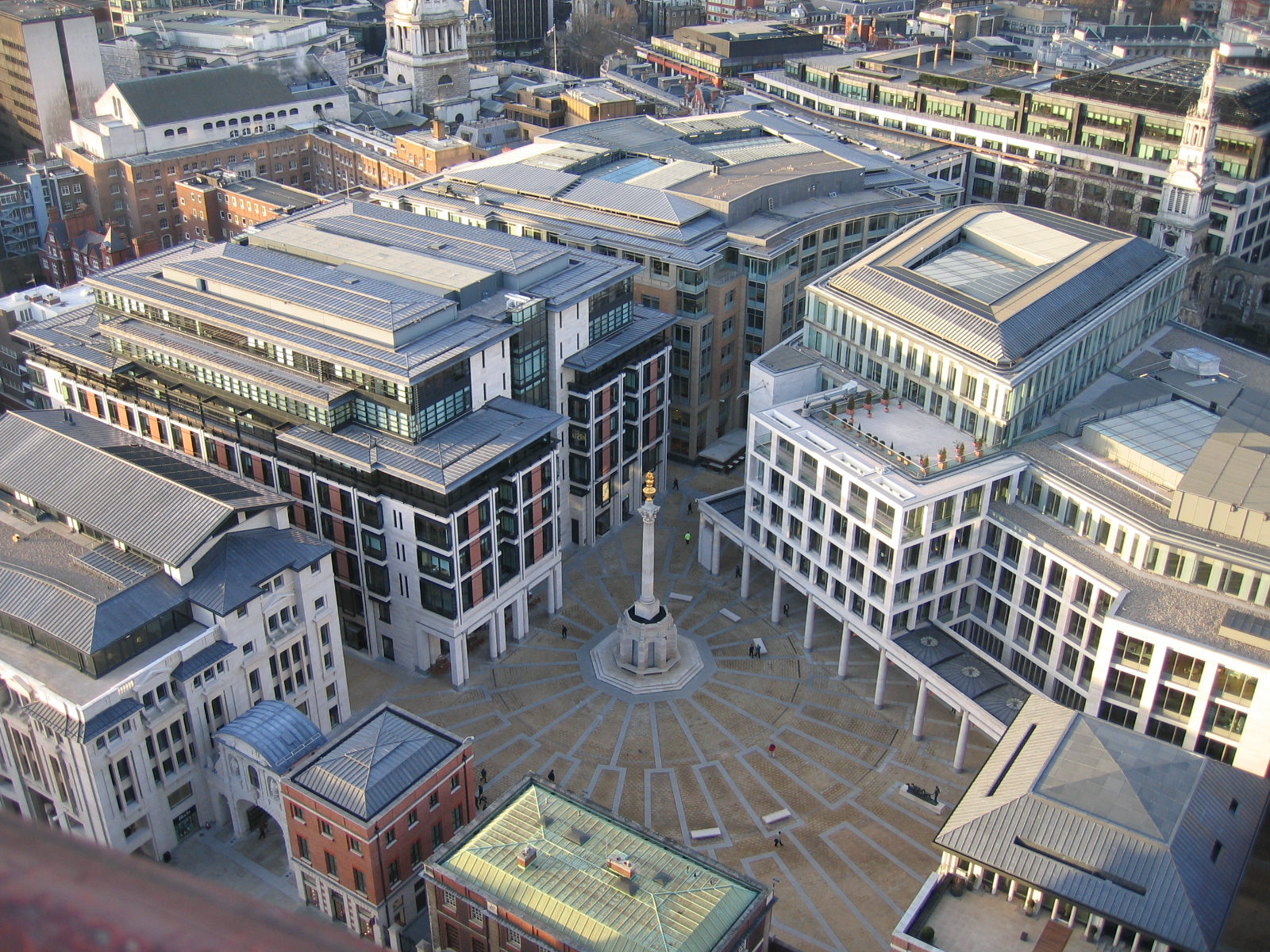
Many times, wandering around Canary Wharf or other similar developments (such as Paternoster Square near St Pauls) I feel almost resentful that in the midst of many areas in this wonderful city, there is nothing to do but eat and shop. Very few benches, almost no green space but a multitude of signs reminding me that this is privately owned land and that I must at all costs obey the directions of the ubiquitous security guards who patrol the courtyards and wield their authority.

Paternoster Square - a cathedral to consumerism next to St Paul's Cathedral
Paternoster Square – a cathedral to consumerism next to St Paul’s Cathedral

To reiterate, I am not against any of these new developments – no Price Charles, I. I love the new architecture that is changing the face of London, and many of these new precincts have helped to revive struggling areas – the new Westfield shopping centres in Shepherds Bush and Stratford, for example.

But an insufficient balance has been struck in recent years, and given the current anti-establishment and (to some degree) anti-capitalist feeling currently roiling the country, it does not speak well that many of London’s newest, shiniest developments – with rare exceptions – serve as pure consumerist temples, with no civic heart.

On Bilderberg Withdrawal Syndrome

It’s all over.

The last armoured limousines have swept back out of the Watford Grove Hotel’s gates, and the helicopters have departed.

The steel fence is being disassembled, and Alex Jones has flown back to his “central command center” in Austin, Texas.

I’m not ashamed to admit that I have a rather acute case of Bilderberg Withdrawal Syndrome.

For a few precious days, at least a segment of the population who don’t normally pay attention sat up and looked at the protesters, covered on television at length for the first time, and listened to what they had to say. They heard about the concentration of power in the hands of a global elite, about our failed financial system, the lack of accountability in the political and corporate worlds, the pervasive nature of the surveillance state, and the efforts underway to undermine the importance of local power and the nation state.

And so for the first time in a very long time we were able to have something of a national conversation about causes rather than effects. About the disease rather than the symptoms (which are covered in one form another by the newspaper headlines most days – crime, immigration, unemployment, income inequality, education).

And it was amazing how widely and enthusiastically the message was received. I was particularly heartened to learn how many of the police officers guarding the meeting venue and the Bilderberg Fringe protest site had listened to the message from the protesters and taken an active interest, some even undertaking to go home and do their own research:


Ellen Grace Jones, writing at The Huffington Post, agrees with my assessment:

A triumph in securing – for the first time ever – wall-to-wall mainstream media attendance, subjecting the meeting to serious enquiry and inspection. And a triumph in hosting a peaceful, joyful Fringe event within the Grove grounds which united thousands of concerned citizens, activists and inquisitive Watford locals. This year felt like a sea change in dragging the shadowy cabal’s club kicking and screaming into the daylight.

She continues:

On Sunday, with the Fringe winding down and a hundred or so lining the gates as the delegates left, I questioned a police liaison officer if he’d felt awakened by the event he’d witnessed this weekend. “I’ve heard a lot of interesting ideas that I’m going to go away and research. I’ve got a reading list, Agenda 21, Endgame which I’m going to follow up. The one person who really made me sit up and go ‘oh my god’ was one of the audience, a former stockbroker. He was discussing things I’ve thought about like who’s controlling the energy companies, oil company cartels and the Libor bank scandal and he made me think, yeah actually, as someone who’s suffered from the housing crash somebody else should be paying for this but it’s the public sector that’s being screwed to pay for their mistakes – especially the police, we’re being cut.”

Of course, it wasn’t all good. The Bilderberg protests brought out the absolute worst in much of the British mainstream news media, who refused to take the issue seriously at all, treated the protesters as imbeciles and simpletons to a man, and covered the event only as the lighthearted end segment, where you would normally expect to be entertained by a squirrel on water-skis.

The foremost example was the truly dreadful segment from the BBC’s The Sunday Politics show, in which the lead-in to the segment focused only on the lunatic fringe of the protest and wholly ignored the serious concerns of the protesters, and the substance (if it can be called that) of the interview itself, with US journalist Alex Jones, whereupon host Andrew Neil decided to mock his guest from start to finish, fail to ask serious questions and ultimately provoke Jones into one of his famous rages:


There were also reports of Bilderberg-covering journalists being held or turned away at the border, and of harrasment of various kinds.

But on the whole, those wonderful days where we actually got to talk in public and on mainstream media about freedom and liberty without getting bogged down in the minutiae and drudgery of day-to-day political distraction were intellectually refreshing, and invaluable for the movement.

Roll on Bilderberg 2014 – if they dare assemble in public sight again.

Law? What Law?

I have so much to say about the shocking NSA unconstitutional spying scandal blown wide  open by whistleblower Edward Snowden and journalist Glenn Greenwald that I barely know where to begin.

So I shall begin with a tangent – the repercussions of the case over in Britain, where scandal has erupted because it turns out that Britain’s intelligence-gathering departments have had access to the US PRISM system for a number of years, and have made use of it on occasions to eavesdrop on the conversations of British citizens.

This should be causing people to light flaming torches and take to the streets, but as it stands today in docile modern day Britain, Prime Minister David Cameron is just being made to squirm a bit. The Huffington Post reports:

The foreign secretary, who is due to make a statement on the allegations in the Commons later, has said the law-abiding British public had “nothing to fear” from the work of GCHQ.

However MPs are likely to press Hague on whether the intelligence service has always abided by the legal framework.

Sir Malcolm Rifkind, the chairman of the ISC, told BBC Radio 4’s Today programme that GCHQ would have needed to ask ministers before requesting information on British citizens’ internet activity from the United States.

How comforting. But worst of all were the comments from David Cameron himself, who thought that these flimsy, meaningless words would serve somehow to placate us:

David Cameron has said British intelligence agencies operate “within a legal framework”, as MPs prepare to grill William Hague on GCHQ’s involvement with the American Prism internet surveillance system.

“I think it is right that we have well-organised, well-funded intelligence services to help keep us safe,” the prime minister said on Monday morning.

“But let me be absolutely clear. They are intelligence services that operate within the law, within a law that we have laid down, and they are also subject to proper scrutiny by the intelligence and security committee (ISC) in the House of Commons.”

What the hell does this garbage even mean?

British intelligence agencies are operating within a legal framework. Okay, what legal framework?

He thinks that it’s right to have an intelligence service? Who on earth was saying that it wasn’t?

But the final line is the worst, where he says that the intelligence services are operating within “a law that we have laid down”. Oh, well that’s fine then, let’s all go home.

Does David Cameron at any point mention the particular law under which the intelligence services are operating? Or when this law that “we” laid down was written, voted on and approved? Of course he doesn’t! And I, for one, would rather like to know.

Do you see the difference between having a written constitution and not having one? Do you?

Even if (as in the United States), the President and his administration choose to brazenly flout it, the written constitution at least gives a frame of reference when it comes to determining whether an action is acceptable or unacceptable. Contrast this with Britain, where the most basic laws of the land can (and often are) changed on a whim by the elected dictatorship of a majority government. In Britain, if we are told that a government action that we disagree with is “lawful”, there is no end of Acts and Amendments and revisions and EU law and whatever else to sort through in order to work out whether or not it is so.

The result, of course, is that the British don’t even try. We might kick up a bit of a fuss if someone catches David Cameron devouring live puppies in the alley behind Downing Street one warm summer night, but once his spokesman assures us that he was acting “within the law, within a law that we have laid down”, we would all meekly nod, and let him get back to his puppy-butchering.

This is unacceptable. William Hague and David Cameron need to make crystal clear not only the laws currently on the statute books which allow for spying on the communications of a British citizen (with or without a warrant), but also the specific criteria that the intelligence services use, or at least the threshold of evidence that must be met, when selecting an individual for such a breach of their privacy.

Not that it much matters. David Cameron has lost my vote today.

Analysing The Bilderberg Agenda

Now that the elitist gala known as the 2013 Bilderberg Group Meeting is wrapping up in Watford, England, I thought it would be worth spending some time analysing the agenda that our powerful masters were discussing – at least the topics that they reveal on their official website.

Of course, we will never know the outcome of these discussions, or even if the agenda items published by the Bilderberg Group are accurate, because they hold no press conferences and issue no minutes following the meeting. Not even the democratically elected representatives who attend feel the need to explain to their voters what they were doing inside the luxurious Grove Hotel in the Hertfordshire countryside.

And it should be further obvious that any of the really nefarious decision-making would have taken place in smaller “break-out” sessions and quiet huddles, away from the larger plenary sessions, and will continue to be made now that the Great and the Good have had a chance to network with each other over canapes.

But even assuming the published agenda is fairly representative of what our Betters talked about, safe behind their steel curtain, it is difficult to understand how the group of people huddled inside – published here on the Bilderberg Group website – could have discussed these issues in any other manner than considering how to manipulate each area to their own advantage.

Why? Let’s break it down and take a closer look at the agenda.

1. Can the US and Europe grow faster and create jobs?

See any small business owners on the list of attendees? See any people who have known and experienced unemployment personally? Of course not. We see the likes of Eric Schmidt, Jeff Bezos, Ian Davis and Simon Henry from the worlds of mega-big business, and then a host of top banking CEOs who were responsible for causing the global financial meltdown in the first place. Their profits are returning to record highs during jobless recoveries or double-dip recessions in most western countries. Where are the representatives of the struggling high-street retailers, of all those restauranteurs and small business owners who are shutting down across the world?

There could be no better proof that what we have currently is not capitalism in it’s true and fair form, but rather a corrupt and self-serving corporatism. France, for example has it’s “national champion” firms, whose interests the French government protects and promotes around the world. If you want to start a new energy company in France, good luck trying to ever grow to compete with EDF, France’s “preferred” energy giant.

The people sitting in the meeting rooms in Watford are the rich fat-cats who have kept our national economies chugging along at between 0-2% growth for the last six long years, all the while massively enriching themselves. And we’re supposed to believe that they want faster growth?

2. Jobs, entitlement and debt

Debt, of course, didn’t matter before the financial crisis, when Tony Blair, Gordon Brown and George W. Bush were running up huge deficits and massively expanding the size and scope of the state in both the US and the UK. And yet now, of course, we apparently must have Austerity.

So what the Bilderberg participants have basically done is make a vast number of additional people dependent on the state for some or all of their income, housing, healthcare or nutritional needs over the past decades. Then they wrecked the financial system, became “concerned” about debt (because the liabilities of the failed banks were shifted over to the public sector, i.e. us), and decided that we had to massively roll back government spending in the wake of the “sovereign debt crisis”. But because so many more people are now dependent on the government to partially sustain themselves, just small cuts to spending can cause massive suffering to large swathes of the population. Not the slice of the population chugging champagne at the Grove Hotel though, of course. I’m struggling to think of a word for what these people have done, other than Evil.

3. How big data is changing almost everything

How indeed. In a week where we have seen revelations of the US government collecting almost infinite records in terms of metadata showing the communications of people all around the world, and collecting the telephone records of US wireless telephone customers, it is very appropriate to be discussing the closeness between our biggest telecommunications, internet and technology companies and the government, during everyday interactions and at meetings such as Bilderberg. Given the fact that the Bush Administration gave retroactive immunity to all those US telecoms companies who had participated in the illegal warrantless wiretapping of American citizens, it would seem that all parties will continue to protect each other and flout the law as they please.

4. Nationalism and populism

Both elements are very much on the rise in many western countries, and the Bilderbergers apparently sat down to rub their chins and ponder the reasons why. Those such as US radio presenter and journalist Alex Jones see in the Bilderberg Group a sinister conspiracy to ultimately eliminate national borders and identities entirely, in order to establish one world government, divided into regional areas. They see the formation of super-national institutions such as the European Union and North American Union as nascent steps toward this goal.

While this is somewhat hyperbolic, it is undoubtedly true that many organisations that promote international co-operation and integration have come about, many of which make important regulatory decisions while being unaccountable to the citizens over which they wield power. So this section of the agenda could really be seen as “How do we stop the rise of political parties such as UKIP, which seek to return power to national and local levels?”

5. US foreign policy

Where to start? Given the list of Bilderberg attendees, seriously, where? Why hold this session, when virtually everyone supports the destructive status quo?

6. Africa’s challenges

At a time when South Africa’s former president and civil rights hero, Nelson Mandela, lies in a hospital bed close to death, I really do think it takes a very special level of gall to discuss the challenges facing the African continent and not invite anyone from Africa. One really must wonder whether the Bilderberg attendees are there to discuss the challenges Africa faces in building strong democracies, institutions and economies – or the problems that they face in finding new ways to undermine and exploit the African people for their own gain. Even those participants who do so much philanthropic good to help the people of Africa must marvel at the underrepresentation of African concerns and interests on the panel.

7. Cyber warfare and the proliferation of asymmetric threats

This topic was being simultaneously discussed by President Barack Obama and Chinese President Xi Jinping at an informal, sun-drenched ranch in Palm Springs. The Guardian reported that the summit ended in accord “on all but cyber-espionage”.

This topic – with so much of the electronic espionage being military in nature – would seem to continue to be handled between countries on a bilateral basis rather than on an international level. Indeed, one of the ironies is that the very international networks and organisations that so many of the Bilderberg Group attendees have advocated and helped to establish are also facilitating – through standardised communications protocols, technologies and so forth – the very cyber warfare that political leaders are scrambling to stop.

8. Politics of the European Union

This is a very cryptic agenda item indeed. What could it possibly mean? The internal political workings of the European Union institutions, perhaps? Probably not, because the internal mechanics of the European Commission or Agricultural Committee can hardly be of interest to the people who work in them, let alone the Great and the Good of the world’s economic elite.

No, this section of the agenda probably refers to the politics of how the European Union is portrayed and perceived by the citizens of the member countries. This would certainly be of interest to those in the Bilderberg group because they are heavily invested in the super-national entity not falling apart under the wave of unprecedented disillusionment with – and hostility to – the burdensome, undemocratic structure.

Again, the Bilderberg membership is currently composed of about two thirds European (though not all EU member state citizens) and one third American membership – if the pronouncements on their website are to be believed. Is it really appropriate that the American members are discussing in secret how to devise strategies to make us embrace closer European integration? Indeed, is it appropriate for unelected European members, not accountable to an electorate to do so either?

The good news on this front at least is that the Bilderbergers are firmly on the back foot. Libertarian-leaning parties such as UKIP are rising around Europe, as people are increasingly saying no to the “ever closer union” of European states boldly proclaimed – with no democratic mandate – in the Treaty of Rome.

9. Developments in the Middle East

See point 6 above.

It does not help the west’s image in the Middle East when a group of people as powerful as the Bilderberg attendees – including representation from the oil and energy sector – assemble to discuss “developments in the Middle East” without inviting middle eastern interests to give their input. A cynical person might even come to the conclusion that given the unmitigated failure of the ten year long jaunt in Iraq, Bilderberg members (or at least neo-conservative) people should be expressly prohibited from coming up with new ideas about what to do next in the middle east.

You can look at all of these agenda points for the Bilderberg 2013 meeting more or less charitably, depending on your view of whether the activities of the people inside are truly malevolent (toward the Alex Jones end of the spectrum), or simply highly selfish, chronically misguided, and born of an arrogant assumption of the right to rule over the rest of us (where I currently sit).

One interesting angle on the way in which the Bilderberg Group operates and the terrific way that they seem to keep on making disastrous decisions that lead us further and further away from liberty and prosperity as the years pass is the idea of survivorship bias. In an excellent article by David McRaney, he discusses the way in which only looking at the successful outcomes and people can lead to bad decisions and proscriptions for how to enable others to succeed as well. A key paragraph is here:

You must remind yourself that when you start to pick apart winners and losers, successes and failures, the living and dead, that by paying attention to one side of that equation you are always neglecting the other. If you are thinking about opening a restaurant because there are so many successful restaurants in your hometown, you are ignoring the fact the only successful restaurants survive to become examples. Maybe on average 90 percent of restaurants in your city fail in the first year. You can’t see all those failures because when they fail they also disappear from view.

As Nassim Taleb writes in his book The Black Swan, “The cemetery of failed restaurants is very silent.” Of course the few that don’t fail in that deadly of an environment are wildly successful because only the very best and the very lucky can survive. All you are left with are super successes, and looking at them day after day you might think it’s a great business to get into when you are actually seeing evidence that you should avoid it.

Taking the non-malevolent view of the Bilderberg Group in its current form (or even to account for some of the failures of New World Order Bilderberg), one could posit that the reason that so many of the actions taken by the membership over the years have been so harmful to most is because the membership is comprised entirely of the successful. None of the protesters standing outside were allowed to remonstrate with the Great Ones within. No refugees from the middle east Arab Spring. No malnourished people from Africa. No failed small business owners from the town of Watford itself, which has struggled in the recession.

If every year you and your chums reassemble at the next Bilderberg meeting and find yourselves even more spectacularly successful and wealthy than the last time you met, “more of the same” could start to seem like a pretty good prescription. Of course, this would also take mental blinders of the most immense kind, to remain unaware of the suffering of the majority. But to some extent we all block out the sufferings of the people worse off than us. How much more magnified must this be if you sit at the very pinnacle of society?

An unlikely theory to be sure, but one to chew on as the helicopters and chauffer-driven cars depart from the Grove Hotel in Watford, and the steel fence is deconstructed.

So where do we go from here?

There are few courses of action open to us other than to continue to shine the bright light of scrutiny on the activities of these arrogant people, who presume to come to my country, establish themselves in luxury accommodations behind a steel wall, and make in secret the decisions which will influence the course of our lives.