Highly worth reading and watching, reporting about Edward Snowden’s recent interview for German television, courtesy of Jonathan Turley’s blog. This interview has received little coverage in the UK or US media.
Last Sunday, former NSA contractor and whistleblower Edward Snowden was interviewed for the German television network ARD. The interview was big news in Germany and much of the world in both print and broadcast media. However, the interview appears to have been blocked intentionally by US government authorities. In fact, the media in the US appears to have gone to ‘radio silence’ about it. It has been posted on YouTube several times, but is taken down almost immediately. The video site Vimeo has it embedded, but as I write this, Vimeo is under a DDoS attack. LiveLeak also has it, and that video is embedded in this report by Jay Syrmopoulos for Ben Swann’s news page.
Mr. Snowden spoke candidly in a thirty-minute English language interview with the reporter from ARD.
10.22 pm. The metaphor of the soldier slowly, relentlessly, grindingly putting his life back together was a powerful one for America – and Obama pulled off that analogy with what seemed to me like real passion. One aspect of his personality and his presidency is sometimes overlooked – and that is persistence. He’s been hailed as a hero and dismissed as irrelevant many times. But when you take a step back and assess what he has done – from ending wars to rescuing the economy to cementing a civil rights revolution to shifting the entire landscape on healthcare – you can see why he believes in persistence. Because it works. It may not win every news cycle; but it keeps coming back.
If he persists on healthcare and persists on Iran and persists on grappling, as best we can, with the forces creating such large disparities in wealth, he will…
Senator Rand Paul of Kentucky has been fighting some rearguard defensive action in an attempt to counter claims from the Democratic Party that the GOP is waging a “war on women” in their legislative efforts.
Dredging up the memory of Bill Clinton’s affair with Monica Lewinsky, Paul took to NBC’s “Meet The Press” to make the slightly odd argument that the Democrats have no right to call out the GOP for their retrograde attitude towards women’s equality and freedom because a former Democratic president abused his position of power and treated certain specific women disrespectfully.
Sen. Rand Paul said Sunday that Democrats and those in the media criticizing Republicans for a so-called “War on Women” give a free pass to former-President Bill Clinton’s “predatory behavior” against Monica Lewinsky.
“The Democrats — one of their big issues is they’ve concocted this, ‘Republicans are committing a war on women,'” Kentucky Republican said on NBC’s “Meet The Press.” “One of the work place laws and rules that I think are good is that bosses shouldn’t prey on young interns in their office. I think really the media seems to have given President Clinton a pass on this. He took advantage of a girl that was 20-years-old and an intern in his office. There is no excuse for that and that is predatory behavior.”
“It should be something we shouldn’t want to associate with people who would take advantage of a young girl. This isn’t having an affair — this isn’t me saying, ‘Oh, he’s had an affair. We shouldn’t talk to him.’ Someone who takes advantage of a young girl in their office — I mean really, and then they have the gall to stand up and say that Republicans are having a war on women? So yes, I think it’s a factor. Now it’s not Hillary’s fault. But it is a factor in judging Bill Clinton in history.”
Senator Paul is absolutely right to call out Bill Clinton’s behaviour for what it was – an abuse of his presidential power and symptomatic of a predatory attitude toward women. What makes this different from what the Republican Party has been doing, however, is the fact that the Lewinsky affair was a private indiscretion, and the harm done to women took place in the course of interpersonal relationships between those people directly involved. The Republican Party, on the other hand, has sought to push for legislative outcomes – around contraception, abortion and equal pay to name a few – that would impact all women in the United States. Private action vs. public legislative action. False equivalence.
He waged war on specific women, not all of them as a group. Image from AP.
When it comes to Republicans and standards of personal behaviour, it is all too often a case of “do as we say, not as we do”. Rand Paul now seems to be trying to change this motto into “don’t do as the Democrats say, because of what Bill Clinton did”. It is a flimsy argument, because the uncomfortable truth is that large swathes of the Republican Party have not been marching under the banner of gender equality, even in 2014. And I suspect that it will take more than rushing Rand Paul out on stage to remind us of Bill Clinton’s wandering hands to divert attention from the Repubican Party’s manifold shortcomings in this area.
I find a lot to admire in Rand Paul, who I find infinitely preferable to the GOP’s other main rising star in the US Senate, Ted Cruz. Where Cruz is abrasive and haughty, Rand Paul seems somewhat more collegiate, able to press even his more strident causes (such as his lengthy filibuster against the US policy of drone strikes and targeted assassination of US citizens without trial) without ruffling too many feathers or unduly making enemies. However, by making this false equivalence between the actions of a politician in his private life and the legislative goals of a whole political party, Paul is doing himself, and us a disservice.
Democrats have what Sen. Paul calls “the gall” to accuse Republicans of waging a war on women because unfortunately, a lot of them are. For every tirade by Rush Limbaugh accusing women of being sluts for daring to want birth control to be covered by their health insurance, there is an elected Republican legislator or governor diligently working to actively chip away at women’s rights in slightly more palatable, legislative language.
And so for as long as the Republican Party remains in thrall to the likes of Rush Limbaugh and his unenlightened attitude toward gender equality, they will likely continue to be perceived as “warriors against women”. If Rand Paul is unhappy with this reality it is within his power to do something about it. He has a bully pulpit, and his words command attention. But it is some of his own colleagues that he will need to publicly disown; not Bill Clinton.
Two very interesting pieces from the New York Times on the expectations we place on our young people, on those who educate and nurture them, and on our governments. The statistics and minutiae relate to the United States, but the underlying themes and sentiments are, I think, equally relevant to the United Kingdom.
The first is by Thomas Friedman, who lays bare two oft-neglected reasons why educational outcomes in the United States are falling behind those of other countries – the fact that American children are much less willing than they were even in recent decades to put in the work to achieve at high levels, and the fact that their parents demand too little (or demand the wrong things) of the schools to which they are sent. Friedman quotes Education Secretary Arne Duncan’s recent speech to the National Assessment Governing Board’s Education Summit for Parent Leaders:
In 2009, President Obama met with President Lee of South Korea and asked him about his biggest challenge in education. President Lee answered without hesitation: parents in South Korea were ‘too demanding.’ Even his poorest parents demanded a world-class education for their children, and he was having to spend millions of dollars each year to teach English to students in first grade, because his parents won’t let him wait until second grade. … I [wish] our biggest challenge here in the U.S. was too many parents demanding excellent schools.
Imagine that. It would be wonderful to face a problem such as that faced by South Korea here in Britain. A nation full of parents – of all socioeconomic groups – so anxious for their children to succeed, to learn foreign languages, to get ahead from day one, that not only do they actively help their children to succeed academically, but also punish politicians who are perceived to stand in the way of that progress. In Britain, it seems that almost the opposite has taken place – government has rushed with great eagerness to throw money at the education system, with spending doubling in a relatively short period of time, while parents sit back and expect the entire job to be done for them. And those parents who do take a particularly active interest are looked down on by the rest and labelled “pushy parents”, while supposedly serious think tanks propose charging the richer and more astute parents to send their children to the same state schools that other children attend for free.
Friedman asks the following question, one which he hopes President Obama will take up in his upcoming State of the Union address:
Are we falling behind as a country in education not just because we fail to recruit the smartest college students to become teachers or reform-resistant teachers’ unions, but because of our culture today: too many parents and too many kids just don’t take education seriously enough and don’t want to put in the work needed today to really excel?
Ultimately, it is not all about government. It isn’t all about paying our taxes and sitting back and expecting the rest to fall into place automatically. It is difficult in Britain, because the tax burden is so heavy and the state so large that it is almost right to expect miraculous things from the government in all areas. But as a nation I believe we urgently need to dis-enthrall ourselves from the idea that government spending and government policy are the only lever available to improve educational outcomes.
He may have many powers, but he can’t make your kids smarter.
A revolution in personal responsibility and self-motivation would go such a long way. But who will have the courage to lead such a revolution, when the Conservative-led government, supposedly the champions of individual liberty and personal responsibility, is more inclined to protect parents from the potential consequences of their lazy parenting by erecting a pornography filter on the internet than to risk offending them by suggesting that they are derelict in allowing television and the internet to raise their children unsupervised?
————————————-
The second article is depressing in quite another way, and concerns parents who suspect that their child might be gifted. Seth Stephens-Davidowitz writes that an analysis of Google searches reveals that parents in the United States are much more likely to suspect their sons of being intellectually gifted than their daughters, and are more likely to worry about the weight of their daughters than their sons. In other words, even if children were to be magically shielded from the weight of expectations and stereotypes in society at large, some of the most pervasive and damaging ones – that girls should be pretty and slim, and boys intelligent – originate from much closer to home.
To wit:
Start with intelligence. It’s hardly surprising that parents of young children are often excited at the thought that their child may be gifted. In fact, of all Google searches starting “Is my 2-year-old,” the most common next word is “gifted.” But this question is not asked equally about young boys and young girls. Parents are two and a half times more likely to ask “Is my son gifted?” than “Is my daughter gifted?” Parents show a similar bias when using other phrases related to intelligence that they may shy away from saying aloud, like, “Is my son a genius?”
And this:
What concerns do parents disproportionately have for their daughters? Primarily, anything related to appearance. Consider questions about a child’s weight. Parents Google “Is my daughter overweight?” roughly twice as frequently as they Google “Is my son overweight?” Just as with giftedness, this gender bias is not grounded in reality. About 30 percent of girls are overweight, while 33 percent of boys are. Even though scales measure more overweight boys than girls, parents see — or worry about — overweight girls much more often than overweight boys.
Parents are about twice as likely to ask how to get their daughters to lose weight as they are to ask how to get their sons to do the same. Google search data also tell us that mothers and fathers are more likely to wonder whether their daughter is “beautiful” or “ugly.”
If she’s gifted then that’s a bonus, but the real question is whether or not she is overweight.
Apparently these biases transcend socioeconomic group and political affiliation, and so the results cannot be neatly explained away along these lines.
While I probably should not be surprised at these findings, they still make for fairly sobering reading. Stephens-Davidowitz wonders whether there might be a measurable change in the statistics once a woman is elected president and that the eyes of the holdouts might then finally be opened to the intellectual equality of women, but I fear that just as the Obama presidency failed to usher in the post-racial American era, so the first woman president will struggle to overcome the inertia of this weight of expectation.
Two pieces on expectations. The expectations we hold for ourselves, our children and our government. Some food for thought as the weekend draws to a close.
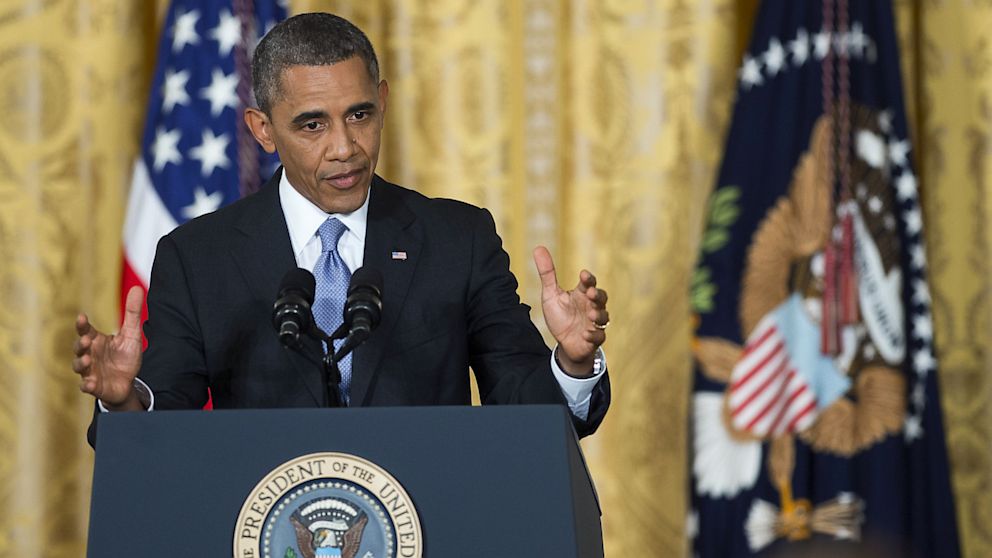
Evidently given prior notice of the dissatisfaction that was certain to fall on his head should he fail to announce any substantive changes to the bulk telephony data collection programme that flourished under his administration, President Obama triangulated and managed to set out a plan that included the illusion of substantive changes. It may prove enough to fool the trusting and the credulous, but there are precious few of those sorts of people left to be fobbed off.
President Obama, declaring that advances in technology had made it harder “to both defend our nation and uphold our civil liberties,” announced carefully calculated changes to surveillance policies on Friday, saying he would restrict the ability of intelligence agencies to gain access to telephone data, and would ultimately move that data out of the hands of the government.
But Mr. Obama left in place significant elements of the broad surveillance net assembled by the National Security Agency, and left the implementation of many of his changes up to Congress and the intelligence agencies themselves.
The one announcement not earlier anticipated by the New York Times was the fact that the president may be slightly more amenable to the idea of telecommunications companies or as-yet unspecified third parties holding the unconstitutionally-gotten telephony metadata, rather than the NSA itself. The Times reports:
On the question of which entity will hold the storehouse of phone metadata, the president said Mr. Holder would make recommendations in 60 days. Privacy advocates have called for telecommunications providers to keep the data, though many of the companies are resisting it.
And resist they should. Due to the sensitive and highly politically charged nature of the data being held, why would a private firm wish to open itself to potential liability from lawsuits by hosting the data? Furthermore, unsavoury and unconstitutional though it may be for the government to be collating this data, it is probably more secure in the hands of the paranoid and capable people at the NSA than it would be in some corporate data centre.
But all of this is beside the point – it is not the question of where the data is hosted that upsets civil libertarians. If someone robbed banks for a living, the main concern of the public would not be where the robber is hiding the stolen cash before laundering it, it would be the fact that he is robbing banks in the first place. Similarly, the point of contention here is not whether the US government or private telecommunications companies holds vast troves of data about the telephone calls made by US and foreign citizens – it is the fact that the government seeks to monitor and check this information without a warrant to do so in the first place.
It is hard to listen to anything that Obama says on the issue of national security and privacy without remembering that he wouldn’t be saying anything at all had his clandestine spying apparatus not been revealed to the world by Edward Snowden, and that the debate that he now seeks to claim credit for starting would, if he had his way, be held only between competing interests in government, well out of the view or input of the public.
The crux of this tactic is that US political leaders pretend to validate and even channel public anger by acknowledging that there are “serious questions that have been raised”. They vow changes to fix the system and ensure these problems never happen again. And they then set out, with their actions, to do exactly the opposite: to make the system prettier and more politically palatable with empty, cosmetic “reforms” so as to placate public anger while leaving the system fundamentally unchanged, even more immune than before to serious challenge.
And how cosmetic these proposed “reforms” really are. Caught in the act of carrying out unconstitutional searches and intrusions into the private communications of US citizens, the president’s response is not to admit any fault, but to utter meaningless platitudes about the importance of “America’s values” while changing nothing of any substance at all:
And now we have the spectacle of President Obama reciting paeans to the values of individual privacy and the pressing need for NSA safeguards. “Individual freedom is the wellspring of human progress,” he gushed with an impressively straight face. “One thing I’m certain of, this debate will make us stronger,” he pronounced, while still seeking to imprison for decades the whistleblower who enabled that debate. The bottom line, he said, is this: “I believe we need a new approach.”
I have just finished reading the excellent essay by George Orwell, “Politics and the English Language”. As well as helping me to realise just how pretentious and cumbersome my own writing can sometimes be on this blog (for which I can only apologise and pledge to try harder), it furnished me with this gem, this eternal truth:
If you simplify your English, you are freed from the worst follies of orthodoxy. You cannot speak any of the necessary dialects, and when you make a stupid remark its stupidity will be obvious, even to yourself. Political language – and with variations this is true of all political parties, from Conservatives to Anarchists – is designed to make lies sound truthful and murder respectable, and to give an appearance of solidity to pure wind.
And this one:
In our time, political speech and writing are largely the defence of the indefensible … Thus political language has to consist largely of euphamism, question-begging and sheer cloudy vagueness. Defenceless villages are bombarded from the air, the inhabitants driven out into the countryside, the cattle machine-gunned, the huts set on fire with incendiary bullets: this is called pacification. Millions of peasants are robbed of their farms and sent trudging along the roads with no more than they can carry: this is called transfer of population or rectification of frontiers … Such phraseology is needed if one wants to name things without calling up mental pictures of them.
President Obama, justifying the intrustive actions of the NSA and seeking to cast his proposed cosmetic reforms in a favourable light, and himself as a champion of individual liberty, said this:
“In an extraordinarily difficult job — one in which actions are second-guessed, success is unreported, and failure can be catastrophic — the men and women of the intelligence community, including the NSA, consistently follow protocols designed to protect the privacy of ordinary people,” he declared. “What sustains those who work at NSA and our other intelligence agencies through all these pressures is the knowledge that their professionalism and dedication play a central role in the defense of our nation.”
And yet, in our rush to respond to very real and novel threats, the risks of government overreach – the possibility that we lose some of our core liberties in pursuit of security – became more pronounced. We saw, in the immediate aftermath of 9/11, our government engaged in enhanced interrogation techniques that contradicted our values. As a Senator, I was critical of several practices, such as warrantless wiretaps. And all too often new authorities were instituted without adequate public debate.
Through a combination of action by the courts, increased congressional oversight, and adjustments by the previous Administration, some of the worst excesses that emerged after 9/11 were curbed by the time I took office. But a variety of factors have continued to complicate America’s efforts to both defend our nation and uphold our civil liberties.
The “worst excesses” to which Obama refers? Torture. Extraordinary rendition. Illegal search and invasion of privacy. But “techniques that contradicted our values” sounds so much better, so much more clinical and so much less descriptive of what happened.

 Last Sunday, former NSA contractor and whistleblower Edward Snowden was interviewed for the German television network ARD. The interview was big news in Germany and much of the world in both print and broadcast media. However, the interview appears to have been blocked intentionally by US government authorities. In fact, the media in the US appears to have gone to ‘radio silence’ about it. It has been posted on YouTube several times, but is taken down almost immediately. The video site Vimeo has it embedded, but as I write this, Vimeo is under a DDoS attack. LiveLeak also has it, and that video is embedded in this report by Jay Syrmopoulos for Ben Swann’s news page.



 Semi-Partisan Politics