Embracing ‘Compassionate Conservatism’ Will Not Make The Rootless Tories More Popular

The Good Right - compassionate conservatism

Compassionate conservatism barely won David Cameron a majority government in 2015, even against the hapless Ed Miliband. Rebooting the flawed concept, especially against Jeremy Corbyn’s turbo-charged ultra-compassionate socialism, means fighting the Left on their own terms and is doomed to failure

Despite its complete and utter failure to deliver a solid electoral victory for the conservatives, or to meaningfully detoxify the Conservative Party’s “nasty party” image, the woolly, nebulous and thoroughly unhelpful concept of “compassionate conservatism” refuses to die.

Following Theresa May’s abject failure in the 2017 general election – losing the Conservative Party their majority by failing to counter the appeal of a marauding socialist who actually has principles, stands for them unapologetically and convinces more and more people of their value – all manner of ideologically limp Wet Tories are now coming out of the woodwork to proclaim that the only way for conservatism to survive is to meet Jeremy Corbyn half way.

These appeasers of the Left (I won’t call them pragmatists because that kinder term suggests a kind of nobility and wisdom for which there is very little evidence) seem to sincerely believe that staying in power means accepting vast swathes of the Left’s argument about the welfare state, wealth redistribution and fiscal restraint. They would have the rest of us believe that conservatives face inevitable defeat unless the Tories compete with Labour to be the loudest cheerleaders of the bloated public sector.

Charlie Elphicke, Tory MP for Dover, is only the latest to advance this defeatist theory, writing in Conservative Home:

Step one to victory is to conquer the idea that the Conservatives are on the side of the rich. Every Conservative I know is in politics because we care about the vulnerable and the least well off. At the election, we failed to explain to people how our values offer the best for people and their families.

Conservatism is at its best when we communicate a vision of Britain as a land of opportunity, aspiration and success. A place where anyone, whatever their background, can achieve and succeed. Where they can climb the ladder of life. A country where people can get jobs, a home to call their own and achieve their full potential. Where Government gives people a hand-up, not handouts – and hard work brings rewards.

Our caring conservative tradition is also central to all that we are. This is why we must showcase our values as the party of compassion. The conservatism that seeks to protect people from the worst excesses of the system.

Protecting people, and being the party of compassion, matters every bit as the land of opportunity. This means standing up against rogue landlords, overcharging utility companies, loan sharks, tax dodgers, and unscrupulous employers.

And yet rather than proposing that the Conservatives do what Margaret Thatcher did to the hard left in the 1980s – namely, steamrollering over their socialist squeals, failed dogmas and entrenched special interests to speak directly to the people and sell them an alternative vision of Britain’s future – Charlie Elphicke proposes instead that we prance around humming The Red Flag and hoping to convince enough wavering voters that we are little more than the Labour Party with a brain and a calculator.

Elphicke proposes capitulation to the false leftist narrative that it is in any way “compassionate” to redistribute wealth and income from those who earned it in order to better fund a welfare machine which encourages dependency and helplessness more than self-sufficiency. Elphicke – though he would never say so out loud – effectively accepts the idea that we should give a man a fish, and then another fish, and then another one until the barrel is empty, rather than teaching people to fish for themselves.

Elphicke continues:

I’ve spoken to colleagues from across the country who were asked by people on the doorstep what our manifesto offered for them. They struggled to find positive things to say.

Now I’ve heard people say we didn’t have a “retail offer.” But, you know, we’re not selling soap powder here. We are about caring for people and changing lives. We failed to explain how we would do that – and so people didn’t know.

It’s not difficult to think how we could have done so much more to support traditionally Conservative motorists, aspirant home owners, small business people, and the elderly. Or how we could have reached out to families and younger people with lifelong learning, greater help for carers, and more support to get on the housing ladder.

We should have showcased our record of action, too, because it is pretty incredible. We brought Britain back from the brink. We have delivered record employment, a strong economy, a powerful recovery from Labour’s crash, along with pumping vast amounts of cash into the NHS. Our failure to highlight our record cost us heavily.

Many of these observations are correct, but the conclusion which Elphicke draws from them are depressingly wide of the mark.

Yes, the Tories did an abysmal job of standing up for their record. At a time when the Labour Party manifesto offered an series of calculated bribes catering even to firmly middle class voters, the Tories went to battle with their mindless slogan of “strong and stable”, and a deafening silence when it came to defending their limited efforts at fiscal restraint since 2010.

But Charlie Elphicke’s vision of “caring conservatism” is not the solution. Rather than standing up to the politics of Me Me Me or turning away from the notion of bribing voters with cynical manifesto pledges, Elphicke merely proposes that the Tories start using the same playbook. Even the term “caring conservatism” should raise the hackles of any self-respecting conservative, suggesting as it does the idea of government as an omnipresent, watchful auxiliary parent, charged with wiping our noses and keeping us safe at the expense of our freedom and individuality.

Worse still, to even talk of “compassionate” or “caring” conservatism is to concede that ordinary, vanilla conservatism is somehow cruel or lacking in compassion. It suggests that there is something fundamentally wrong with our worldview and our politics, and that only by being born again and accepting the “compassionate” modifier do we become semi-respectable people with whom it is just about acceptable to associate in public.

This is incredibly counterproductive. Economically speaking, conservatism at its best means government getting out of the way so that people can succeed according to their merits, and providing a limited but dependable safety net for those in real need by not lavishing unnecessary benefits on over half of the population who are arbitrarily declared “vulnerable” and in dubious need of government assistance. The point that conservatives should be screaming from the rafters is that real conservatism would do more for the truly needy, by rolling back a benefits culture which sees as much as 50% of taxpayers becoming net dependants on the state and compensating for that rollback by lowering general taxation and restructuring the welfare state so as to provide something more than grim subsistence for those who need to use it.

You don’t see Labour MPs or activists describing themselves as “sane Labour” or “grown-up Labour”, effectively conceding that the more statist, big-government policies of their party base are somehow insane or childish (even though they are). They own their left-wingery and proclaim it proudly, not apologetically. Centrist Tories or “compassionate conservatives”, meanwhile, come across as ashamed of their own party and apologetic for their own beliefs, and seem determined to tack as closely to Corbyn’s party as possible before the cognitive dissonance becomes too unbearable.

This is a contest that conservatives can never win. In the race to be more paternalistic, more restrictive of behaviour and more redistributive of wealth, the Tories will lose to Labour every day of the week. And with Jeremy Corbyn in charge of the Labour Party it won’t even be close.

Look, I get the superficial appeal of Charlie Elphicke’s proposal. It offers a quick and easy route to staying in power, where rather than having to do the hard work of challenging voter assumptions and telling the electorate difficult but authentic truths, instead we can just act a bit more like the Labour Party and stay in government forever. But it won’t work.

If the 2017 general election taught us anything, it is that an entire generation of young voters have grown up experiencing all of the wealth, liberty and opportunity which Thatcherism helped secure for them before they were even born, but that these same people have been taught to despise the very things – capitalism, free markets, a less activist state – which made our material wealth possible in the first place.

Corbyn’s cohort of young admirers literally share memes on social media using smartphones and personal computers which were only put in reach of ordinary people thanks to the free market they are busy disparaging, and they do so without a shred of irony because throughout their young lives, nobody has dared to forcefully defend Margaret Thatcher’s legacy or to suggest that real “compassion” means more than blindly firehosing taxpayer money at every social problem and expecting positive results.

An entire generation has grown up (and older voters gone over two decades) without really hearing a stirring argument in favour of smaller-government, pro-market policies from any senior politician. Even most Conservative MPs have preferred to talk about mitigating the “damage” done by the market, or as Elphicke puts it, “protect[ing] people from the worst excesses of the system” rather than explaining how “the system” is a good thing, not to mention a hell of a lot better than socialism.

Neither has there been an adequate effort on the part of Conservatives to rebut the Left’s cynical and dishonest attempt to portray every failure of regulation, every act of crony corporatism as a failure of capitalism itself. Here, Charlie Elphicke’s idea of a “rapid rebuttal” unit actually has real merit. Too often we cower and equivocate whenever the Left trot out their Capitalist Bogeyman of the Day – be it Philip Green or “the bankers” – rather than pushing back and explaining that criminal acts or regulatory failure does not discredit the economic system which has delivered more wealth and prosperity to more people than any other in human history.

But all of this needs to be done under the overall aegis of a vision of conservatism as a force which liberates people and sets them free rather than one which coddles them.

Sure, the Conservative Party might eke out another few general election victories (or at least 2017-style non-defeats) by playing up the “caring conservatism” angle and chasing Jeremy Corbyn’s Labour Party ever further to the left. But any such battles won will come at the expense of losing the wider war. If the Conservative Party is to be nothing more than the Labour Party with a modicum more economic sense then really, what’s the point in even bothering? A succession of such Conservative prime ministers, having totally forsaken their own raison d’être, could be in office for years yet never really in power. Theresa May in perpetuity.

The Thatcherite revolution was made possible partly because years of stultifying, socialist post-war consensus led Britain to a crisis point, teetering on the brink of irreversible national decline. In 1979, the Conservative Party took advantage of that crisis to discredit the status quo and present their alternative offering as both beneficial, necessary and inevitable, shifting the Overton Window of British politics firmly to the right. And while there were negative side effects which should not be overlooked or minimised – particularly outside the southeast – the Thatcherite medicine worked.

We are at another such crisis point today, this time brought about through the confluence of Brexit, the unmitigated side-effects of globalisation, an economic recovery which has been intangible for too many people, an over-centralised Westminster government and a terminally unreformed public sector. Labour are already moving to take advantage of this crisis and shift the Overton Window back to the left. And they are succeeding – ideas which were fringe absurdities twenty years ago, like wage councils and the renationalisation of industry, are now stunningly back on the agenda, while the man who promotes them is a few false moves by Theresa May away from 10 Downing Street.

Conservatives cannot afford to squander this opportunity, to allow the current political crisis (or state of flux) to be used by Labour to drag Britain further to the left without even putting up a fight for the small-government, conservative values which once saved this country. And breathing life back into the corpse of compassionate conservatism will only aid the Left in their endeavour. It will be a huge signal to our ideological foes that we accept the premise of their argument (compassion = a bigger state and more redistribution) and only encourage them to expand their demands move further and further to the left themselves.

It is ludicrous that we even find ourselves in this position. Jeremy Corbyn was twenty points down in the opinion polls until Theresa May launched her disastrous and thoroughly un-conservative general election campaign, and now he is within striking distance of 10 Downing Street. Red Conservatism or Blue Labour, a la Nick Timothy and his disciples, doesn’t work. If people want swivel-eyed socialism they’ll pick the real deal over the off-brand equivalent, every single time.

Corbynites believe that conservatives are evil, heartless, amoral “Tory Scum”. We will not suddenly win their friendship, or their respect, by deferring to them on a few specific issues or taking the sharp edge off our message of economic freedom, individual liberty and a smaller, more efficient state. No appeasement is possible or desirable. The only thing to be done is to get out and win the argument in public, to have a million difficult conversations with people who are currently quite sympathetic to the Corbyn worldview because of our shameful failure to adequately preach our own values.

The alternative – if we insist on reanimating the corpse of compassionate conservatism – is to doom ourselves to more centrist malaise at best, and a truly frightening Jeremy Corbyn socialist government at worst.

 

conservatism definition

Top Image: The Spectator

Support Semi-Partisan Politics with a one-time or recurring donation:

Agree with this article? Violently disagree? Scroll down to leave a comment.

Follow Semi-Partisan Politics on TwitterFacebook and Medium.

Are We Finally Witnessing The End Of Bland, Centrist Politics?

Jeremy Corbyn - Glastonbury crowds

Donald Trump, Jeremy Corbyn, Brexit… People want meaning in their lives and a purpose in their politics that dry, centrist managerialism cannot hope to provide

This, by Ted Yarbrough, is very perceptive:

Man does not live by bread alone. Though a religious statement by Jesus from the Gospel of Matthew I think that statement has never been more true- especially seen in geopolitics.

We humans have never been materially wealthier.  Yes, some people still live in abject poverty and many people don’t like that others have more money than them, but by historical standards we should be thanking our lucky stars each day for our blessings. We live longer than ever before and can communicate with people throughout the world at an instant. Yet, as especially seen in politics, many people are angry. Populists are rising on both right and left. Those in positions of power ie “establishment” people in the media, government etc are extremely perplexed. How could, for example, the people not want to send that nasty man Trump a message with some bright young man who checks all the boxes like Jon Ossoff? [referring to the Democrats’ failed attempt to take Georgia’s sixth congressional district in the recent special election]

I think the people shocked by the return of ideology miss one big point about humans. We are not animals, we don’t just like to be fed and wag our tail. We believe in justice, we dream dreams, we are not content because, yes often we are spoiled, but we want to believe in something. We want to be something bigger than ourselves- it’s why humans suffer enormously to go to Mt. Everest and the south pole and the moon- we want to do things because they are great. It is why people are constantly searching for the meaning of life and worshipping God (or gods). We want to change the world because we recognize the imperfections in it. We will not be content.

In politics, that means people are growing sick of “centrists” ie technocrats who don’t inspire the people but expect to govern because they are supposedly the best qualified for the job. Centrists are shocked to see the rise of nationalists and free-marketers and socialists and Islamists, but really they shouldn’t be. Those ideologies offer people something to believe in, a better world to dream of and fight for, rather than a shallow world of pop music, materials possessions and politics made occasionally spicy with some virtue signalling identity politics thrown in. People now, like our ancestors of old, want to battle over ideas. To work towards finding truth.

This blog has been screaming for years now that centrist politics is leading us nowhere good, entrenching privileges for those set up to gain from the current system while doing nothing to help those – particularly those at the sharp end of globalisation – who do not benefit from the post-patriotic, post nation state world that the elites are building without meaningful democratic consent.

But even I did not predict the degree to which the establishment’s insistence on clinging on to their bland, centrist model of governance would lead to disruptions to the political order on the level of Donald Trump, Brexit or Jeremy Corbyn’s takeover of the Labour Party (and nearly the country).

Some of these disruptions are welcome – Brexit is a great achievement, even if many of the benefits end up being lost through abysmal execution by the political class, while Jeremy Corbyn’s Jeckyll and Hyde leadership of the Labour Party reminds us both how ideology can reinvigorate a political movement but also just how far the party has drifted from the interests of working people. And others of these disruptions – cough, Donald Trump – are unwelcome and have almost zero upside.

But more such populist disruptions are almost inevitable until the political class realises that people want more from their politics than a ruling class of bland, superficial technocrats who promise nothing more than the smooth administration of the status quo. Jeremy Corbyn, for all of his faults, at least promises a radical reordering of society – one made all the more appealing by the fact that the Conservatives long ago ceased to make a bold, unapologetic case for free markets, individual freedom and a less suffocating state.

Nearly two years ago, this blog asked where is the Conservative Party’s own Jeremy Corbyn? Where is the small-C conservative version of the politician who dares to proclaim an unrepentantly neo-Thatcherite worldview, instead of pretending (a la Cameron, Osborne, Hammond and May) that “austerity” and fiscal restraint are a sad necessity brought about by recession rather than an innately good thing in and of themselves?

Theresa May led the Conservative Party to near-defeat in the general election this month because she never even attempted to take on Jeremy Corbyn in the battle of ideologies. And while conservatives were never likely to walk away with the lion’s share of the youth vote, shamefully allowing Jeremy Corbyn to be the only one to present the emerging generation of new voters with anything like a positive inspirational message made damn certain that the majority of them voted Labour.

Yarbrough’s conclusion is stark:

With that being said, if the centrist parties do not start treating people as humans who dream dreams, and offer a compelling hope for people, the people of the world will continue to be more polarized and radicalized. And if there is no hope more and more false prophets will emerge to fill the vacuum.

One of my favourite television shows is the twelve-part HBO series “From The Earth To The Moon”, executive produced by Tom Hanks, recounting the complete history of NASA’s Apollo Program which culminated in six manned missions to the surface of the moon. I like it because it represents, to me, a time when humanity stood for more than “reducing inequality”, deifying public services and promising to make the trains run on time. A time when our desire for achievement, like our plans for human spaceflight, aspired to something more than low-earth orbit.

The theme music at the start of each episode begins with JFK’s speech at Rice University in which Kennedy says “We choose to go to the moon in this decade and do the other things, not because they are easy, but because they are hard, because that goal will serve to organize and measure the best of our energies and skills, because that challenge is one that we are willing to accept, one we are unwilling to postpone, and one which we intend to win.”

Of course the 1960s and 70s were tumultuous decades with many of their own very real challenges – the very real threat posed by Soviet Communism, for one, and the ongoing struggle for civil rights. But how much worse would this era have been if there were no unifying objectives around which people could come together?

In our increasingly secular age, religion is no longer a unifying force within nations. Art stepped up briefly as a replacement, but our art and culture has become increasingly debased too. And so people, being spiritual beings, increasingly vest their faith in their political worldview, which has had two principle effects – toxifying our political discourse and making people more susceptible to the “false prophets” of which Yarbrough warns.

Professor David Hillel Gelernter once said in an interview:

The readiest replacement nowadays for lost traditional religion is political ideology. But a citizen with faith in a political position, instead of rational belief, is a potential disaster for democracy. A religious believer can rarely be argued out of his faith in any ordinary conversational give-and-take. His personality is more likely to be wrapped up with his religion than with any mere political program. When a person’s religion is attacked, he’s more likely to take it personally and dislike (or even hate) the attacker than he is in the case of mere political attacks or arguments. Thus, the collapse of traditional religion within important parts of the population is one cause of our increasingly poisoned politics.

We see this all the time in our political discourse. This is the Cult of Social Justice and Identity Politics writ large. This is the result of our ridiculous, overwrought obsession with inequality, even as living standards for nearly everybody continue to improve and we all benefit from technologies and inventions which were unthinkable half a century ago.

And if failed centrism really is leading to “radicalisation” by unscrupulous false prophets (and I don’t much like the use of that word outside of its applicability to terrorism, particularly because the Left is now eagerly using it to smear conservatives on any pretext, suggesting that newspapers like the Sun and Daily Mail are somehow “radicalising” the ignorant white working classes) then it becomes all the more important for our main political parties offer visions of their own which amount to more than technocracy and navel-gazing obsession with public services.

For a long time I thought that people actually liked the politics of Me Me Me, and that our craven politicians were simply responding to public demand with their endless manifesto bribes. But perhaps I was wrong. Though Jeremy Corbyn certainly offered a record-breaking basket of electoral bribes in the Labour Party manifesto, people also seem to have responded to him because of what he represents. In other words, Corbyn’s increasing viability amounts to more than the sum of the various bribes in the 2017 manifesto, even the student loans pledge.

The Conservatives, therefore, cannot afford to leave the ideological field open for Jeremy Corbyn to occupy on his own. The Tories need to do much better than mount their usual snivelling defence of fiscal restraint, couched in the craven acceptance of leftist frames of reference, and actually come up with an alternative vision of Britain worth voting for.

Theresa May isn’t going to do that, and neither are any of the dismal individuals tipped by the Westminster media as being most likely to replace her. So, who will come and save the Conservative Party from themselves, and save the country from Corbynism in the process?


Jeremy Corbyn - Glastonbury stage

Support Semi-Partisan Politics with a one-time or recurring donation:

Agree with this article? Violently disagree? Scroll down to leave a comment.

Follow Semi-Partisan Politics on TwitterFacebook and Medium.

A Semi-Partisan Pledge Drive – Thank You

Semi Partisan Politics Pledge Drive - political blogging - writing - donations

Thank you for your support

Since starting my first pledge drive of the year last week, I have been both heartened and humbled by the response. I have been most fortunate to receive a number of donations, some from long-time readers whom I know well through the Comments section and social media, and others whom I did not previously know but have been reading Semi-Partisan Politics and finding value in it for some time. I am most incredibly grateful to everybody who has donated so far.

Political blogging can be quite a lonely affair at times – awake at 2AM, typing furiously into the insatiable cursor, trying to get a hot take or a more reflective piece out the door and published before the rapidly moving news cycle makes it completely irrelevant. And aside from some basic stats on WordPress it can be hard to get a realistic sense of how many people find their way to this site, like it and then keep coming back as regular readers.

Lord knows that the British political media does not make the job any easier. Most British political journalists and commentators for “prestige” outlets would sooner poke knitting needles in their eyes than link to an independent blog or news outlet, even if it has something unique or valuable to contribute. The EU referendum campaign taught us that much. But the growing pageviews for this blog suggest to me that a number of you are not happy with what the prestige Westminster political news media have to offer – or at least that you take their pronouncements with a pinch of salt, and like to seek alternative commentary and research to get a fuller picture.

It is those people – people like you – for whom I will keep on writing. Well, and also for myself. As my wife will readily attest, I do tend to become quite irritable quite quickly if I don’t get enough “fighting on the internet” time under my belt each week.

And in case you were wondering, no it is not too late to make a contribution! All donations – large and small, one-off or recurring subscriptions – are most gratefully received, and help to make it possible for me to continue doing what I do (and hopefully getting better at it as time goes on!).

If you find value in this blog and have not already done so, please do consider making a donation to my work using the PayPal link below:


Any donation, large or small, will help to ensure that this blog continues to provide independent commentary on British and American politics and current affairs, as well as advocating for the causes I have been dedicated to from the start – including Brexit, strengthening the nation state, constitutional reform, a federal United Kingdom, separation of church and state, free speech, civil liberties, healthcare reform, exposing the NHS Industrial Complex and opposing the insidious Cult of Social Justice and Identity Politics.

Oh, and defending capitalism against the slings, arrows and sanctimonious internet memes of a new generation – my generation – who increasingly seem to believe that they can keep all of the good material things in their lives while undermining the economic system which made them possible in the first place.

And if you disagree with one or more of these positions, that’s fine too, let’s have a debate. A grown-up debate where we argue based on principles and facts, without pulling rank based on our marginalised identities or retreating to our safe spaces.

Thank you again to all of my wonderful readers and kind contributors. Each generous donation this past week has brought a smile to my face, and made me more determined than ever to keep on fighting the good fight here on Semi-Partisan Politics.


Political Blogging

Support Semi-Partisan Politics with a one-time or recurring donation:

Agree with this article? Violently disagree? Scroll down to leave a comment.

Follow Semi-Partisan Politics on TwitterFacebook and Medium.

Donald Trump’s Radioactive Presidency Kills Reputations And Good Ideas

Donald Trump media

The dysfunctional Trump administration can make even good ideas politically toxic, and there is nobody to blame but the president himself

The problem with Donald Trump was never that he is an evil racist bogeyman who is going to whip up the American people into a frenzy of violence targeted at women, gay and trans people or ethnic minorities. This much was always hysterical leftist nonsense.

No, the problem with Donald Trump – as has become increasingly clear with every new day of his administration – is not that he is some kind of evil mastermind but rather that he is a small and superficial man, totally unfit to hold the highest political office in America; an impulsive man-child who is incapable of moderating his behaviour or restraining himself from acting on his first, worst instincts.

Worse still, Trump manages to diminish the stature of everybody close to him. While few people who joined the Trump administration at the beginning can be described as world-class minds, the likes of chief of staff Reince Priebus or press secretary Sean Spicer were once perfectly respectable party functionaries. Now they have made themselves a laughing stock through their contortions, evasions and the feuds they get themselves into while trying to advance Trump’s agenda and defend the garbage that comes out of his mouth.

But the real tragedy is that Donald Trump’s failure will take down a few genuinely good ideas associated with the administration, while through his own ineptitude, the president is succeeding in making some very nasty people in American politics – people whose reputations should rightly be in the gutter – start to look good through their opposition to him.

Take a look at the mainstream media, specifically the Washington DC political media class. These people were rightly distrusted even more than politicians by the public, fuelled in part by their slavish deference to the George W. Bush administration over Iraq and then their fawning, sycophantic coverage of President Barack Obama. These are the people who report and comment on the news with a thin patina of objectivity, but whose intermarriage, socialisation and business relationships with the political class make bias and groupthink all but inevitable.

When President Trump boycotted this year’s White House Correspondents’ Association dinner he made a smart move by eschewing a black tie event with celebrities and DC power players to hold one of his trademark rallies in Pennsylvania. The WHCA responded by transforming the dinner into a gaudy, sanctimonious and cynical celebration of the First Amendment, portraying the establishment journalists assembled as fearless seekers after truth. This might have looked ridiculously self-regarding had Reince Priebus not doubled down on Trump’s idiotic, throwaway pledge to amend the First Amendment to make it easier to sue newspapers for libel – on the very same day.

Nobody seriously believes that the Trump administration will try to alter the First Amendment, or that such a move would be successful even if he did try. Nobody even really believes that such a discussion took place in the White House. But by even raising the subject and having his lackeys back him, Trump has positioned himself as directly antagonistic towards the media. And while this may play well with the base, it makes it almost impossible for principled conservatives to support him.

The same goes with Sean Spicer’s ongoing war with the occupants of the White House press briefing room, which has now escalated to the point where briefings are increasingly being given off camera, in smaller more restricted gaggles or without so much as audio recordings being permitted.

From Politico:

White House Correspondents’ Association President Jeff Mason said they are “not satisfied” with the White House putting a halt on their daily, on-camera briefings.

In an email to members of the association, Mason said he met with White House Press Secretary Sean Spicer and Deputy Press Secretary Sarah Huckabee Sanders to discuss the issues of the briefings. The White House has increasingly changed the daily briefings, either not having them on certain days, making them increasingly short, or hosting off-camera briefings, sometimes even not allowing the use of audio from the briefings.

“The WHCA’s position on this issue is clear: we believe strongly that Americans should be able to watch and listen to senior government officials face questions from an independent news media, in keeping with the principles of the First Amendment and the need for transparency at the highest levels of government,” Mason wrote.

Again, this is needlessly antagonistic, and a direct result of the fact that the president is an impulsive man-child who obsessively watches the daily press briefing and gets angry when his aides fail to deliver as forceful a defence of the presidential exploits than Trump would like.

The consequence is that the White House now has a nervous communications team which is reactive rather than proactive, which cannot rely on their boss not to torpedo his own administration’s efforts with a careless tweet and which is struggling to find a replacement for Sean Spicer, who is apparently being “promoted” out of the press secretary role. But more importantly, the consequence for the country is both the perception and sometimes the reality that the White House is trying to hide something, that they are unwilling to defend their policies in public because they are indefensible.

Even the good measures taken by the White House are executed poorly, in such a way as to discredit once-worthy ideas. The decision to open up White House press briefings to a number of “Skype Seats”, so that regional reporters and bloggers without the backing of large east coast media organisations are able to ask questions on behalf of their readerships, was an excellent idea. It was more than a nod to the Trump base (who tend to despise and distrust mainstream outlets like CNN or the New York Times). It was also a fair and accurate acknowledgement that news from the White House should not be filtered exclusively through the Washington DC-based political media class.

But as with so many other things in the Trump administration, a potentially worthy idea was ruined in the execution. Rather than using the Skype Seats to promote small regional news outlets or promising bloggers of varying political stripes, the White House issued press credentials to InfoWars, the conspiracy-minded site created by Alex Jones.

That’s not to say that absolutely everything emanating from Infowars is “fake news” – and a valid case for giving the organisation press credentials can be made. But having the likes of InfoWars as the de facto poster child for opening up White House press briefings to a wider pool only gives the establishment media every excuse they need to reassert their exclusive closed shop once the Trump administration is gone.

Pointing out the hypocrisy and decadence of the supposedly objective mainstream media, modernising the way that the White House briefs reporters and opening up the White House to smaller and regional news organisations. These are all potentially good actions and ideas, but all of which have been tarnished through their association with the Trump administration. The same goes for real-world policy in a whole host of areas, from immigration reform and border security to mitigating the negative effects of globalisation on workers – all problems which were ignored and festered under previous administrations, but where Trump is often doing more harm than good.

When Donald Trump’s administration reaches its merciful end – barring some kind of foreign policy calamity or self-inflicted political self destruction – we may end up most regretting not those few things which the president actually manages to get done, but the handful of once-promising ideas which fell by the wayside because the administration either couldn’t do them or implemented them in an incompetent way. We will mourn those initiatives which could have benefited the country and won popular support if only their association with Donald Trump had not rendered them toxic.

And conservatives especially will mourn the fact that through his incompetence, Donald Trump has managed to make so many bad people – from unrepentant open borders activists to the mainstream media – look good, and seize the moral high ground.

Even if you agree with Donald Trump on 100% of the issues, one surely now has to admit that the president is his own worst enemy when it comes to implementing his own policies.

And for those of us who oppose Trump, any relief at the fact that his presidency and its worst potential excesses are stuck in the quicksand is tempered by the fact that as a result, America is drifting without proper leadership while the few sensible measures advanced by the Trump administration are now so radioactive that they may never again see the light of day.


Sean Spicer - White House Press Secretary - Donald Trump

Support Semi-Partisan Politics with a one-time or recurring donation:

Agree with this article? Violently disagree? Scroll down to leave a comment.

Follow Semi-Partisan Politics on TwitterFacebook and Medium.

Grenfell Tower And Westminster’s Assault On Local Democracy

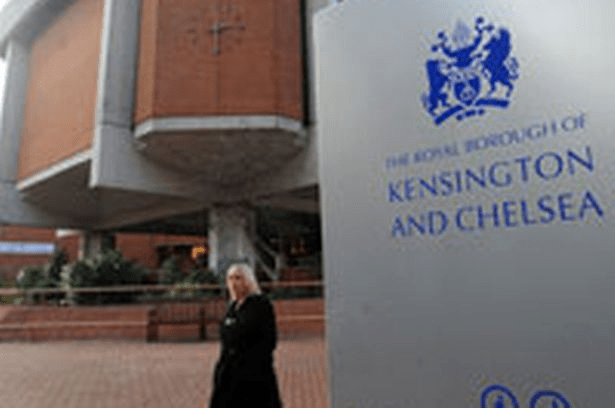
Kensington and Chelsea town hall

The latest casualty of the Grenfell Tower fire is local democracy

One of the key ideals of democracy – only ever half-heartedly observed in the United Kingdom – is the principle of subsidiarity, the notion that higher levels of government should take on only those duties which cannot be performed at a lower level by local officials more directly accountable to local people.

Most people would agree that local people are best placed to make decisions that directly affect them and their communities. Of course, in Britain this is balanced out by our terror at the thought of a “postcode lottery” when it comes to public service provision, that gnawing feeling that someone, somewhere might be getting a better deal from the government and that it would be far better if we all resign ourselves to the same low standard of uniform mediocrity than witness excellence in some places and failure in others (see the Cult of the NHS). But generally speaking, the principle of subsidiarity makes sense to people when it is explained in abstract.

It is sad, then, to see that the latest victim of the Grenfell Tower fire is (thankfully) not another person, but rather the ability of local councils, elected by local people, to manage their affairs in the way that suits them best. This was manifested today by Communities Secretary Sajid Javid’s request that the CEO of Kensington & Chelsea council submit his resignation as an act of public contrition for the council’s chaotic and disorganised response to the disaster.

From the Guardian:

The chief executive of Kensington and Chelsea council, Nicholas Holgate, has resigned after being asked to do so by the communities secretary, Sajid Javid. In a statement Holgate said that Javid “required the leader of the council to seek my resignation”.

His resignation comes after a tide of criticism of the council, not only for the way it responded to the Grenfell Tower tragedy but also for historical neglect of poorer residents of the borough and a neglect of social housing.

Holgate said: “Serving the families so desperately affected by the heartbreaking tragedy at Grenfell Tower remains the highest priority of the council. Despite my wish to have continued, in very challenging circumstances, to lead on the executive responsibilities of the council, I have decided that it is better to step down from my role, once an appropriate successor has been appointed.

He added: “Success in our efforts requires leadership across London that sustains the confidence and support of central government. There is a huge amount still to do for the victims of the fire, requiring the full attention of this council and many others. If I stayed in post, my presence would be a distraction.”

The local council has instead been instructed to “work in a new way with different partners” going forward until the disaster relief efforts are concluded.

In some ways this speaks to the urgent need to reform Britain’s lacklustre civil contingencies protocols, which (as this blog discussed yesterday in detail) were proven not fit for purpose, with contradictory guidance about who has ultimate ownership for disaster recovery and unclear lines of communication between local government, national government and the emergency services.

But more worrying, from a democratic perspective, is the fact that the Communities Secretary has the power to unilaterally intervene and demand that a local council fire one of its own officers – for any reason, let alone mere bad optics.

Personally, I have never seen the great wisdom in councils hiring Chief Executives to effectively run their jurisdictions. One wonders what the job of councillors is supposed to be, if not that very thing. Far better to have directly elected mayors with real executive responsibility – and in the case of London, powers should either be vested in the office of Mayor of London or in elected mini-mayors for each individual borough – who are then responsible for running the machinery of local government.

To separate out the roles of political leadership and administration is itself to subvert the democratic process, as elected councillors are essentially divesting themselves of any direct responsibility for running their own fiefdoms while giving considerable power to a typically overpaid and unremarkable individual who is not directly accountable to voters. This gives local elected officials “plausible deniability” when anything goes wrong – including disasters such as the Grenfell Tower fire. Rather than holding local politicians to account for their failures, instead the unelected CEO is offered up as a sacrifice to soak up the public rage while elected officials serenely glide on as though nothing had happened. This is no model for democracy.

But even though the CEO model is clearly flawed, it certainly should not be any business of central government in Westminster how the people of the London borough of Kensington and Chelsea manage their affairs. If people were politically engaged and had the will to do so – and if local elections were more than a glorified opinion poll in the gaps between general elections – then the local people could demand that the council dismiss their chief executive, or else punish the ruling party at the ballot box. But because we in this country look to central government to solve literally every one of our problems (and central government happily grants itself the authority to try), most people don’t care how their local government is organised. Turnout figures for any local election make this immediately plain.

Ultimately, there are two dangers here. The first is that by forcing the resignation of the Kensington & Chelsea Council chief executive – a huge overreach of authority by an already overcentralised Westminster government – we essentially paper over all of the cracks and flaws in our emergency response protocols. Rather than asking deep and searching questions about what went wrong at every stage of the process, we instead simply pat ourselves on the back for having forced one particular figurehead (or scapegoat) to resign and congratulate ourselves for a job well done.

But the second danger is the continued, seemingly limitless growth of the state. What is the point in having local elections or having a layer of local government if its decisions and appointments are to be arbitrarily second-guessed and overruled by Westminster? Sajid Javid is accountable to nobody in Kensington & Chelsea, and yet he saw fit to dismiss a local official whom local officials had entrusted with the running of the borough. This is appalling, and people should be outraged.

Never mind that the mere presence of an unelected borough chief executive is itself a shameful abdication of responsibility by local politicians and one of the key reasons why there are so few opportunities for elected officials to gain real executive experience in local government before seeking higher office. Ultimately, if Kensington and Chelsea Borough Council want to run their administration in this ludicrous way and the people are lethargic enough to allow it to continue, then Westminster has no business meddling in their affairs and picking and choosing who should be allowed to perform that role.

Some aspects of government – such as emergency response and disaster recovery – clearly require the close interaction of different levels of government and a variety of different agencies. But who Kensington and Chelsea council choose to keep in the position of chief executive should have absolutely nothing to do with Sajid Javid, Theresa May or anybody else in central government.

When it comes to designing protocols and procedures which clearly spell out how these different levels of government and different agencies work together during the emergency response and disaster recovery phases, there is clearly a vital role for national government. That is exactly the kind of high-level central planning that national government is designed to do. But when it comes to deciding who can and cannot serve in a position reporting to local government, Westminster needs to butt out. It sets a terrible precedent and undermines what little local democracy we actually have in Britain.

We are all outraged by the Grenfell Tower fire and we all want to see tangible actions taken to hold those responsible to account and prevent future occurrences. But mindlessly clapping along as the state makes yet another power grab and undermines the very idea of local democracy even further is not a sensible response to last week’s tragedy.

Theresa May’s beleaguered government has enough to be getting on with at the moment, without acting like a glorified parish council on top of everything else. We must stop encouraging Westminster to do so, and demand a revolution in local government instead.


Kensington Town Hall Protests - Grenfell Tower

Support Semi-Partisan Politics with a one-time or recurring donation:

Agree with this article? Violently disagree? Scroll down to leave a comment.

Follow Semi-Partisan Politics on TwitterFacebook and Medium.