General Election 2015: The Morning After The Night Before

David Cameron - Conservative Party - General Election 2015 - Tories Win

On the eve of the 2015 general election, this blog complained:

David Cameron, the Prime Minister I supported for much of these past five years – and for whose party I voted in 2010 – spent the last day of the election campaign not making a powerful case for real conservative stewardship of the country, but by indulging in petty scaremongering about a Labour victory and pre-emptive expectation setting around the “legitimacy” of rival claims to power in the certain event of a hung parliament.

Well, inspiring or not, the Prime Minister’s strategy worked magnificently. David Cameron may have failed to inspire the British people with a burning, urgent vision for conservative government, but at least he managed (through endless repetition) to remind us that the economy is growing again under the Tories, and that a Labour-SNP coalition could put it all at risk.

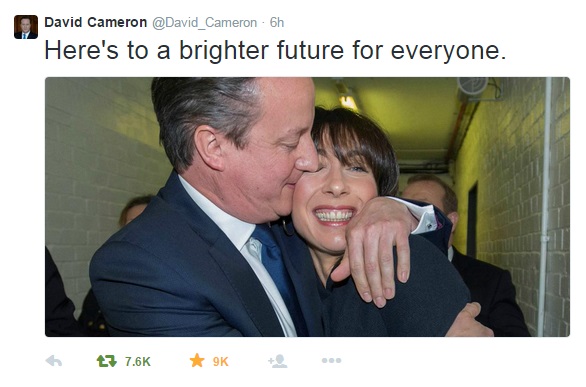
And now, where only hours ago we expected the political parties to be commencing the first of many fraught rounds of coalition negotiations, instead we see David Cameron being driven to Buckingham Palace to meet the Queen, while the other parties (save the astonishing SNP) quickly and mercilessly dispatch their failed leaders.

First and foremost, this election result is a resounding defeat for Labour, and the confused non-values it stood for during the 2015 campaign. Having both repudiated the centrism of New Labour and failed to return the party to its ideological roots, putting himself in the ludicrous position of being against the Tories but not for a tangible vision of his own, Ed Miliband has brought Labour to complete and utter electoral ruin.

Ed Miliband went to his political Armageddon today flatly refusing to accept that Labour had made any mistakes during their last thirteen year spell in government, at least as far as the economy and public spending were concerned. The electorate took one look at this outright denial of reality and determined that the Son of Brown could not be trusted to take stewardship of the finances again.

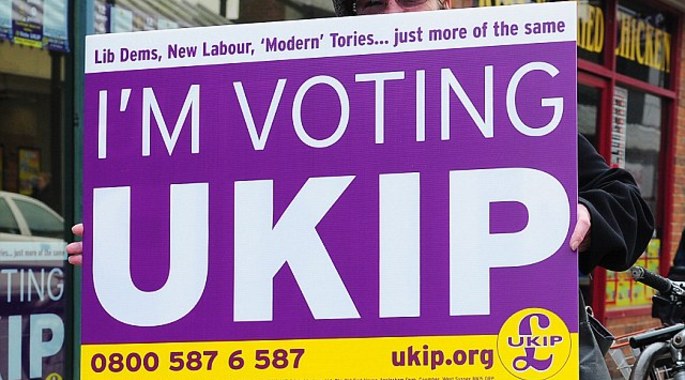
But almost nobody expected the Labour Party to perform this badly against the Conservatives – poll after poll showed the Tories and Labour in a virtual dead heat. So when the exit poll results were announced at ten o’clock last night, people scarcely believed them. Paddy Ashdown confidently remarked that he would eat his hat if the Liberal Democrats were reduced to ten MPs. They currently have just eight. UKIP supporters (including yours truly) were convinced that UKIP would win more than two seats, picking up at least Thanet South or Thurrock. But only Douglas Carswell now remains, cutting a lonely figure.

Continue reading

Why I’m Voting UKIP


David Cameron, the Prime Minister I supported for much of these past five years – and for whose party I voted in 2010 – spent the last day of the election campaign not making a powerful case for real conservative stewardship of the country, but by indulging in petty scaremongering about a Labour victory and pre-emptive expectation setting around the “legitimacy” of rival claims to power in the certain event of a hung parliament.

A real leader worth their salt would have been using those last precious hours to try to inspire people and positively win votes, rather than stoking fears about the other side and manoeuvring for position in the event of failure. But then David Cameron has repeatedly proven himself not to be a real leader.

From the London Times account of Cameron’s final pitch (+):

Speaking to reporters on his 36-hour tour of Britain, Mr Cameron accused Mr Miliband of ducking the question of whether he would refuse to enter No 10 rather than rely on SNP support.

“He has said so many different things about no deals or this or that. Basically what he’s doing is a con trick,” Mr Cameron said. “You can see what he’s doing: ‘Look at this strong language about no deals and no pacts, and ignore the fact that I can only become prime minister off the back of SNP votes.’

“The question he needs to be asked more directly is: ‘Are you saying that if there was a hung parliament, and Labour and the SNP had a majority of votes, you wouldn’t become prime minister?’ If asked that question, I suspect the answer is: ‘No, I’m not saying that.’

“At that moment he will in the eyes of the British people totally break with what he said about no deals and no pacts with the SNP. The last promise he made before the election will be the first promise he breaks after the election. He knows this and that’s why he is not answering this point. That’s why it’s the monkey he can’t get off his back.”

Incredibly, as the 2015 general election campaign draws to a close, all David Cameron can do is talk about Ed Miliband, Nicola Sturgeon and the SNP – not his own positive vision for Britain.

Continue reading

Anyone, Anyone But Boris Johnson For The Conservative Party Leadership

Boris Johnson - Conservative Party - Tory Leadership - General Election 2015


The Conservative Party of 2015 may be an ideologically confused shadow of its former self, but one instinct remains undulled: the hard-headed (some might say recklessly regicidal) way in which senior figures quietly position themselves, ready to quickly and ruthlessly dispatch their leader as soon as he or she is judged to have become an electoral liability.

Some have suggested that there are plans afoot to launch a “Keep Cameron” movement in the event that the Prime Minister fails to win the Conservatives an outright majority for two elections on the bounce, and fails to cobble together a workable coalition to keep the Tories in power. But this is extreme wishful thinking – David Cameron can barely muster the passion and commitment to conservatism to convince the British people he truly wants a second term, let alone that he has any bold new plans up his sleeve. If he struggles to show that he wants to remain Prime Minister after 7 May, he certainly will not want to return to the thankless job of being Leader of the Opposition.

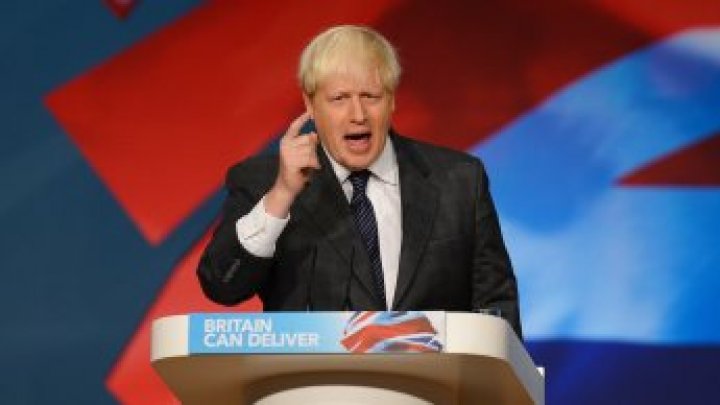
And now many Tories, eager to avoid a prolonged and damaging internal power struggle should Cameron go, are agitating for the swift coronation of London Mayor and Uxbridge parliamentary candidate Boris Johnson.

To be fair to Boris Johnson, he makes a decent pitch for the job, better than most. An a new interview with The Spectator, Johnson was asked why people should vote Conservative, and gave this mini stump speech in reply:

‘If they want Britain to be a strong independent nation, if they want Britain to lead in Europe, if they want an economy which is dynamic and competitive and is based on the spirit of enterprise, then they should vote Conservative. If they believe in a culture of aspiration and achievement rather than scrounging and trying to pull people down, if they believe in levelling up rather than levelling down, they should vote Conservative. If they believe that it is wrong in principle to try to settle the problems of the economy by decapitating the tall poppies in society, they should vote Conservative.’

[…] ‘If they believe that the job of government is to nurture all the flowers in the flower beds rather than attacking some, then they should vote Conservative. That is the essential difference between us and Labour. Every single policy of Ed Miliband and his lot is precisely calibrated to divide society, to foster a sense of injury and injustice. We want to heal any sense of injury and injustice, to bring society together.’

Most of this is good stuff, red meat for true conservatives.

Continue reading

What Kind Of Politician Has To Enshrine Their Own Promises In Law?

David Cameron - Conservative Party - NI VAT Income Tax Lock - General Election 2015


“No other chancellor in the long history of the office has felt the need to pass a law in order to convince people he has the political will to implement his own Budget”George Osborne, 2009

“We will legislate in the first hundred days to make sure these taxes can’t go up” – David Cameron, 2015


What kind of politician has to promise to enshrine their campaign pledges in law?

The answer, of course, is one who cannot be trusted – one who knows that their promises are quite unachievable, but desperately wants to portray a strong belief in their viability. And this is exactly the cheap trick now played by David Cameron and George Osborne, only five years after they mocked Labour Chancellor Alastair Darling for doing the same thing.

The Spectator drily summarised the Tories’ announcement in their Election 2015 Espresso bulletin:

The Conservatives would bring in a law to block rises in VAT, income tax and national insurance for the duration of the next Parliament, David Cameron said today. ‘Why can I make this pledge? Because I’ve seen the books, I know what needs to be done,’ the Prime Minister said. And evidently what needs to be done is to have a pointless law brought in by a leader who once promised to cut red tape. ‘If you trust me, vote for me,’ Cameron says – but his promise of legislation shows that he thinks the public don’t trust him to keep to his word. 

Of course, the Conservative promise to place a legal restriction on government preventing it from raising the “big three” taxes will do no such thing. There is already a legal requirement in place committing the government to eliminating the deficit by the year 2015, and yet here we are, about to go back into the polling booths, and the deficit was not even cut in half – with the national debt continuing to soar upwards.

Will George Osborne find himself on the wrong side of a prison door for having failed to eliminate the deficit? Will the coalition cabinet all receive criminal records? Or will they or the government face civil penalties (raising the hilarious prospect of the government having to pay itself a fine for breaking its own law)? Of course not. These “laws” aren’t worth the paper that the party press releases are printed on, or the air that emanates from the Prime Minister’s mouth as he patronises the British people.

Continue reading

David Cameron’s Creepy, Technocratic Passion Was Better Kept Hidden

David Cameron - Passion - Bloody Lively - General Election 2015 - Conservatives


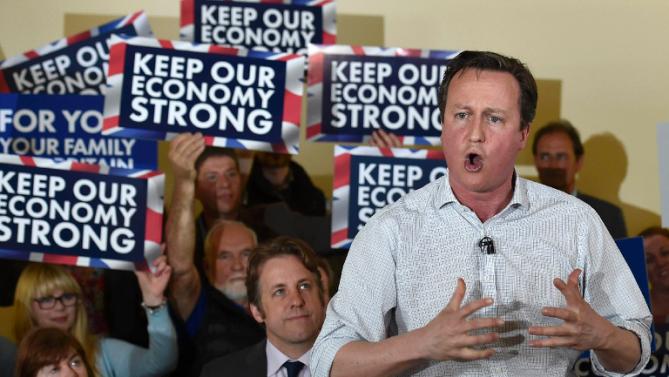
Conservative supporters can finally rest easy – apparently the Prime Minister has rediscovered his mojo, just in time to clinch the election next week. Or so say the national press, who all dutifully reported that David Cameron went through some kind of “dip” or “wobble” over the weekend, only to emerge with shirt sleeves rolled up looking as though he had chugged ten Red Bulls, oozing passion and energy from every pore.

The reality is a little different. What we actually saw was a fairly competent technocrat being told that droning on about a strong economy being the prerequisite for good public services was quite literally making voters fall asleep, and responding to this advice by delivering the exact same message ten pitches higher, at twice the volume and with more extravagant hand gestures.

From the ultra-loyal Telegraph:

The Prime Minister on Monday used a speech to reject claims that the Conservative campaign has lacked energy and passion.

He said that he is “pumped up” and has more desire to win this election than he did in 2010.

“If I’m getting lively about it, it’s because I feel bloody lively about it,” he said.

Insisting that he is “hungrier than five years ago”, he added: “I want this very badly. It’s not for me. It’s for people and the jobs in this country.”

You know we’re in for a mind-numbingly, spirit-sappingly uninspiring election campaign when patrician Dave Cameron tries to pump up support by declaring that he is “bloody lively”.

If anything, this awkward turn of phrase recalls Mitt Romney’s coining of the statement “I was a severely conservative Governor” during his last, ill-fated run for the US presidency. If Romney had been a zealous conservative he would never have had to say so, and he would have picked a more convincing word than “severe” when he did. Likewise, if David Cameron was really feeling bullish – and had anything to be bullish about – we would not need to be explicitly told.

Continue reading