The Last Word On Bain

Mitt Romney - Bain Capital

Between them, I think that Andrew Sullivan (writing at The Daily Beast) and Joe Klein (at Time) sum up perfectly the way that Romney’s tenure at Bain Capital can be reasonably and fairly framed in the forthcoming election debate.

First Sullivan:

The point is that a president cannot just maximize profts for shareholders. Being a CEO is not the same as being a president. Moreover, even if you think that Romney’s highly profitable adventures in private equity helped the economy more than hurt it, the rigged system in which he paid lower taxes, exploited other loopholes and made money regardless of the outcome in any specific case is not a pretty picture of real market capitalism.

And then Klein:

It seems to me that Obama’s immediate point is wrong: Romney wasn’t primarily about job destruction and corporate plundering. His larger point–that Romney was not so much about job-creation as he was about profit-creation–is correct, though. But the largest point of all is this: private equity capitalism was all about short-term profits–maximizing shareholder value–rather than long-term growth. It ushered in an era of massive executive compensation and bonuses. It prospered because of tax rules that made debt more profitable than equity, and a “carried interest” tax dodge that enabled Mitt Romney to pay a lower percentage in taxes than your average construction worker. It can be a useful tool in restructuring companies and steering them toward profitability, but it is not the sort of model you’d want to apply to the entire American economy.

A President has to be about long-term growth, not short-term profits–and to the extent that Barack Obama is using the Bain ads to make this larger argument, he is not “stumbling” or attacking “free enterprise,” but he is steering the conversation toward the most important topic this year: what sort of economy do we want to have and how do we get there?

There’s nothing in these arguments that sounds stridently anti-capitalist or envious of wealth creation. The point is simply one of short term vs. long term focus, and whether successful stewardship of a large nation requires additional skills over and above those required to succeed in business.

If – if – Obama can stick to this narrower line of attack, as he did at the recent NATO summit press conference, he will be much less vulnerable to the inevitable, tired charges of socialism and class warfare that are already being warmed up by some on the Right.

On Memorial Day


“Ragged Old Flag”, performed by Johnny Cash.

May God continue to bless the United States of America, the United Kingdom, and all those who have served and sacrificed in our armed forces.

Obama The Socialist

Barack Obama - Socialist - Socialism


Who knew: Apparently I would make a passable journalist, and could be well respected and remunerated for doing so. I know this because after I read Paul Roderick Gregory’s article in Forbes, “Is It Within Bounds To Ask: Is Obama A Socialist?” I did two things: I reminded myself of the definition of socialism using two readily available sources (I was smart and used two independent sources just in case one of them was leading me astray), and I cross-checked this definition against the policy positions set out on Barack Obama’s website.

Paul Roderick Gregory, who “journalists” for a living, did neither of these things; he is professionally negligent and apparently just whipped open his laptop and started typing. Either that, or he is professionally negligent and knows the information to be found on these websites very well, but thinks that all of his readers are idiots who are incapable or unlikely of doing the same. Now which could it be?

I am going to leave aside the semantic arguments about the meaning of the word “socialism” that Gregory employs in his companion piece “Is President Obama Truly A Socialist“, but basically Gregory holds his hands up and pleads that he doesn’t mean the traditional definition of socialism. No, he just means “socialism” as practiced by continental Europeans with their welfare states. Of course, this disclaimer is buried very deep within the article, so that the full impact of conflating Obama’s political philosophy with socialism is felt immediately, while the clarification is given only after the statement has had sufficient time to establish itself as fact:

By “socialist,” I do not mean a Lenin, Castro, or Mao, but whether Obama falls within the mainstream of contemporary socialism as represented, for example, by Germany’s Social Democrats, French Socialists, or Spain’s socialist-workers party?

By this criterion, yes, Obama is a socialist.

If Gregory wanted to make this more nuanced argument (still wrong, in my opinion) – that Obama’s policies are closely aligned to European social democracy – then he could go ahead and do so. But he has no interest in doing that. The only reason he even includes this tortured disclaimer is to clear the ground so that he can land his rhetorical punch on Obama, and label him a “socialist”.

From the stirring conclusion to the original article:

The upcoming November election offers American voters a choice that is starker than they understand. Obama brings to the table a deep distrust of free enterprise and a belief in government as the solution to most problems. Romney offers a vision of faith in private enterprise and a distrust of government intervention. Obama will disguise his views with “fair share” slogans and weak protestations of faith in private enterprise.

This is actually the closest that Gregory comes to cogency in either piece. I come from a centre-right perspective and do sometimes think that Obama is heavy-handed in his administration’s oversight of the free market. Interfering with private companies such as Boeing when they come to make decisions on where to locate their production, for example, strikes me as bullying and control-freakish. But I have never felt as though Obama was secretly yearning to nationalise Boeing and create a state-owned aerospace and defence company.

On the flip side, many of Romney’s contemporaries in industry are only too quick and happy to run to the government when it suits their needs, perhaps to ask for bailouts, favourable trading terms or tax loopholes, or to bring down the regulators on a rival that is becoming rather too successful. Hardly unheard-of.

Why am I even bothering to quote this trash? Only because it is emblematic and typical of the lazy type of charges that are levelled against Obama by some on the right. By calling out Gregory now, I free myself from the obligation do the same thing every time another right wing talking head repeats the same “Obama-Socialist” line on Fox News, or in a newspaper column.

So, Paul Roderick Gregory, the unfortunate person who I picked on to embody every die-hard tea partier and overenthusiastic Republican who is tempted to get carried away with the old rhetoric when disagreeing with President Obama’s economic policies: is it “within bounds to ask: is Obama a socialist?”

Sure, it’s within bounds. It’s just really, really dumb.

I had no idea that the bar for becoming a published Forbes contributor was set so low.

How To Waste Public Money 101

As I type, Tony Blair is giving evidence to the Leveson Enquiry. Why do I care? Because it is receiving wall-to-wall coverage on Britain’s rolling news channels, and as dull as the whole wretched thing is, I cannot bring myself to change channel to The Weakest Link or whatever other daytime television is on offer.

What is the Leveson Enquiry? For those unfamiliar, the enquiry has its own website. And logo. Funny how these things have become a kind of industry of their own in Britain.

http://www.levesoninquiry.org.uk/

I only tuned in toward the end of the session in which Tony Blair was giving evidence, but having subsequently seen the “highlights” repeated on BBC News, I am slightly concerned that we might just be paying a lot of people to sit around for no productive reason whatsoever.

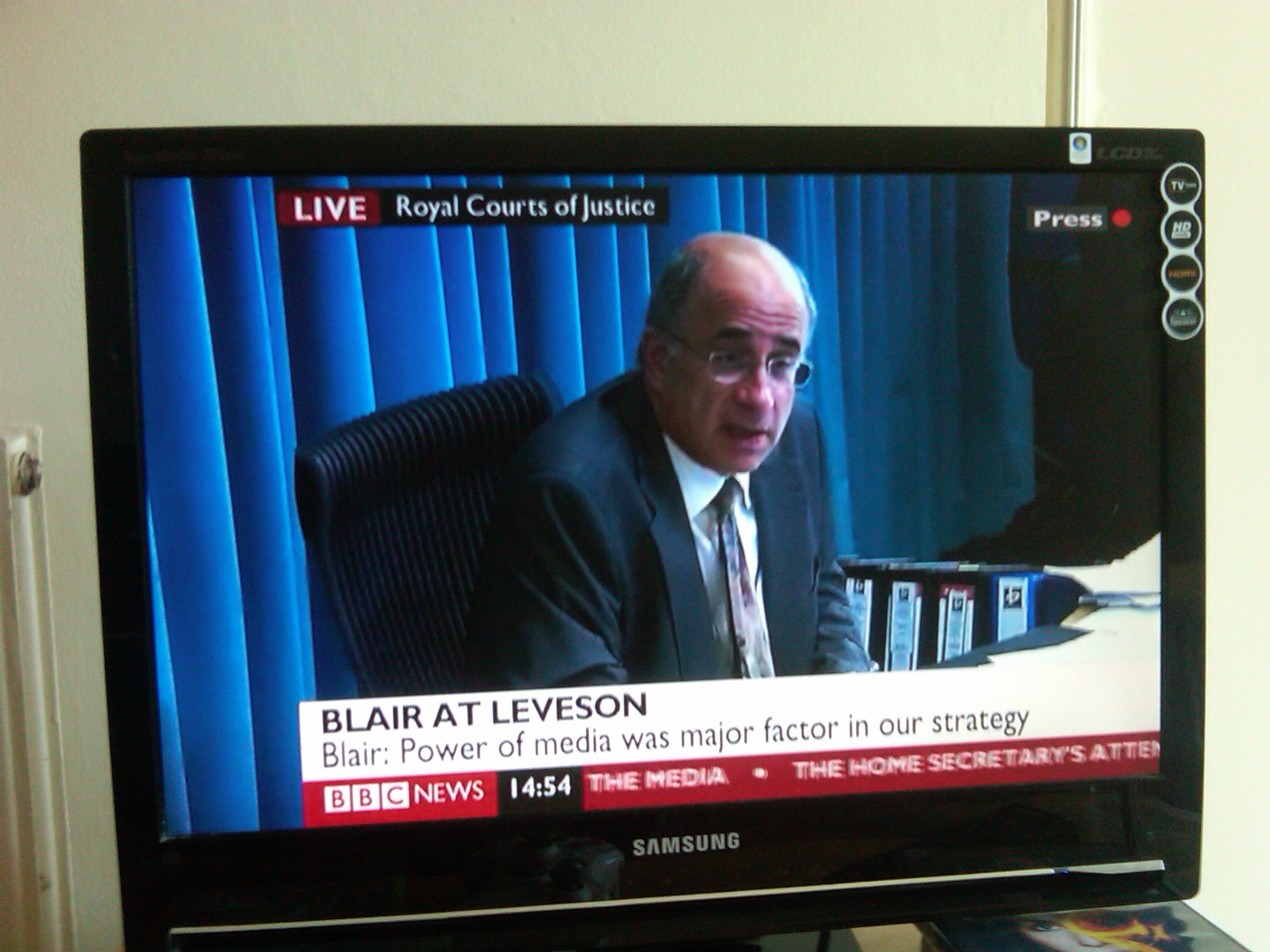
The world’s most tedious man embarks upon a ten-minute, multi-clause question seemingly designed to flatter himself and not to extract any remotely useful information from the witness

Television at its best here.

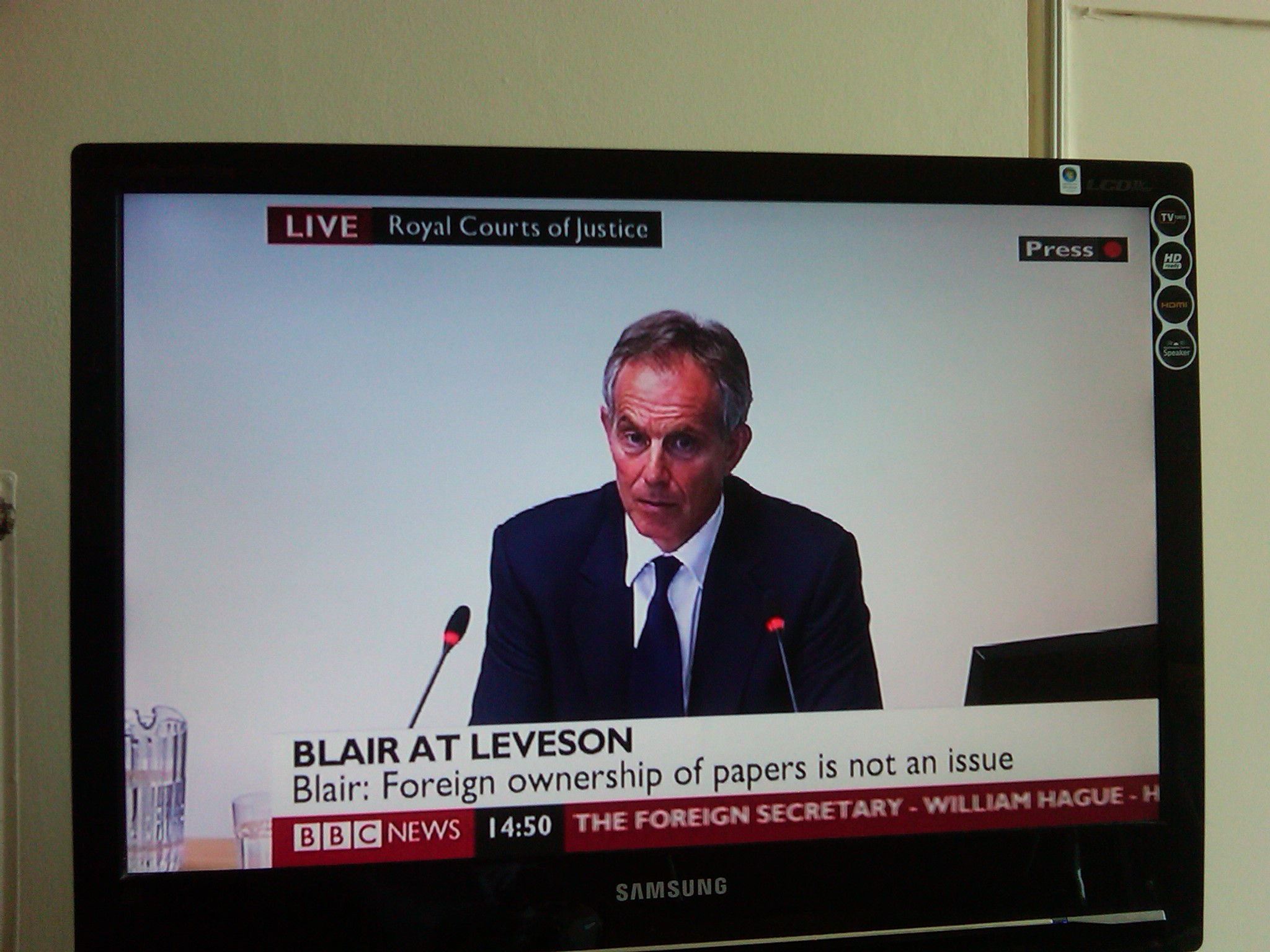
Tony Blair listens to the incredibly long, pompous question being addressed to him before realising that another 3 hours of this lie ahead, losing the will to live and giving another predictably bland answer.

And after all of this drama and posturing, what did we actually learn today from Tony Blair’s evidence? Essentially, that the media is very powerful and that Tony Blair recognised this when he was Prime Minister, and devised clever strategies to try to keep as much of the media as possible on his side. Oh, and that he didn’t think it was really very proper for the press to say nasty things about his wife and children. Fascinating.

We are paying for all of these people to sit in a room, surrounded by their lever-arch files and court stenographers, so that a glossy report can be published and life can continue exactly as it did before.

Here is all anyone needs to know about regulation of the press and freedom of speech in Britain. Quite literally, this is all anyone needs to know:

1. There is a small elite of powerful people in Britain whose families know each other, who attended the same schools, the same parties, and the same social events. Whether they end up in politics (in either of the main parties), industry (running big companies that do business in Britain) or the media (newspaper or television), their personal preferences, feuds and biases are reflected in the attitudes of their respective political parties / companies / newspapers to one another. Anyone surprised by this non-revelation is a simpleton.

2. We will never know whether any secret deals have been done between any prior governments and media entities in the past, because there are no robust rules about lobbying, declaring interests or exercising influence in place at the moment, and no one involved in such a scheme is very likely to blurt out the fact during an on-the-record, televised enquiry. If you are wondering whether this fact renders the whole enquiry a complete waste of time, you would not be alone.

3. Our libel laws are ridiculous and need urgent reform. Nothing to do with the Leveson enquiry, just a fact.

4. The division between news reporting and opinion is not as clear as it should be in British newspapers.

5. British media companies, like companies in general, sometimes hire bad people who do bad things while on the job. Sometimes this becomes endemic in the organisation concerned. We don’t need to create special new laws to prevent such things happening in the future. If phone hacking was illegal before, prosecute the people involved under the existing laws. Just as we don’t need to design new regulations when the misdemeanour happens in a construction company or a bank, so we don’t need to design new laws when it happens in the media. Tempting though it may be when everyone is a lawyer and wants to be paid for doing something.

6. Until we as a country codify at a very high, hard-to-amend level (i.e. in a constitution or bill of rights of some kind) exactly what, if any, restrictions we are willing to accept on free speech – both as individuals and as media – any time that anything happens to rock the boat, any time that anyone in the media does something improper, we will have another enquiry like this and pay a bunch of former and current lawyers and judges to sit around doing what they are doing at the moment.

7. That’s it.

Isn’t our unwritten constitution a wondrous, beautiful thing? Oh, how we must treasure and preserve it for all time.

UPDATE – Oh, here’s the best bit. Because Tony Blair was interrupted by a protester while giving evidence to the enquiry, Lord Justice Leveson has now ordered an enquiry into how his enquiry was interrupted by a protester. I’m not joking. Welcome to Britain.

Live-Blogging The Leveson Enquiry

22.38 – I’ll live blog about something worth covering next time

15.13 – Tony Blair’s evidence has finished, and immediately the BBC stops caring. I guess I missed all the “interesting” stuff.

15.11 – There are people who go out in the world and do things, and accomplish stuff, and change peoples’ lives for the better (or the worse), but leave an impact either way. And then there are the people sitting in this room at the Royal Courts of Justice. Tony Blair is the former; everyone else…not so much

15.09 – I DON’T KNOW WHAT’S HAPPENING OR WHY I AM PAYING FOR ALL THESE PEOPLE TO SIT HERE

15.07 – Oh geez, why don’t you just get a hotel room and invite Blair up if you like him so much, Leveson? Enough pointless flattery, let’s accomplish something today!

15.06 – Tony Blair is a broken man. William Hague and David Cameron at their fiery best never exacted such a toll on the former PM as Leveson’s pointless question

15.05 – Why is Leveson at pains to say he has no interest in imperilling the freedom of expression in the press? Isn’t the whole point of this goddamn enquiry to hear evidence from other people, not to hear this gasbag preening in front of a load of TV cameras? His so-called “question” just lasted 10 minutes

15.05 – Leveson has heard of the internet! He mentioned twitter and the internet just now! Gosh, isn’t he modern? Looking at all of the angles on press and media regulation here

15.04 – Why can’t Leveson just join his local bowls club like most old people? It seems cruel to the general population of the UK to devise this elaborate and boring way of keeping him occupied

15.03 – So glad I’m not a lawyer (sorry, solicitor or barrister), especially in this country

15.02 – I wish the director would show the expression on Tony Blair’s face as Leveson’s multi-part non-question enters its fifth minute…

15.01 – Leveson postulating about some bizarre scenario about what to do if someones’ leg is going to be chopped off. No idea.

14.59 – Leveson clearly thinks he is being paid by the word, God only knows what he is talking about at the moment.

14.58 – BBC News is showing rolling coverage of Tony Blair’s evidence to The Leveson Enquiry,  set up to analyse and recommend changes to press regulation in the wake of the “phone hacking” scandal. This is such a freaking exciting topic, and such great stewardship of our taxpayer money, that it seems to be the perfect candidate for the first live blog on SemiPartisanSam.